Can pets be allergic to each other? Reducing allergy triggers in multi-pet homes



Key takeaways
- Allergies to another pet, such as a dog reacting to cat dander, are not among the commonly recognized types of canine or feline allergic skin diseases. Flea saliva and environmental allergens such as pollen, mold, and mites are much more likely to lead to allergic dermatitis in cats and dogs.
- Most allergic pets can be treated successfully without identifying the exact trigger (allergen). Year-round flea prevention and appropriate veterinary treatment are often more important.
- Working with a veterinarian can help your itchy pet get relief sooner with appropriate treatment and guidance tailored to their needs.

True allergies between pets, such as a cat being allergic to a dog, are rare, and they aren't among the common causes of itchy skin in dogs and cats. Flea allergy dermatitis, allergies to other environmental triggers, and other skin conditions are much more likely explanations.
When your dog or cat starts itching, it's natural to look around the house for a cause, including another pet. But itching has many possible causes, and finding the real one is the first step toward providing effective relief.
If your dog or cat is constantly itching, you can talk to an online vet about your pet's allergy symptoms to help determine the most likely causes and next steps.
This article is intended for informational purposes only and does not constitute veterinary medical advice. Please work with a licensed veterinarian to determine the right diagnosis and treatment plan for your pet.
Can dogs and cats really be allergic to each other?
It's common for people to be allergic to cats or dogs, so it makes sense to wonder whether pets can be allergic to each other too. When a dog starts scratching soon after a cat moves in, or a cat starts overgrooming after a new puppy arrives, it's easy to assume the new pet is responsible.
Two things are worth knowing. First, allergies generally develop after repeated exposure to the trigger, or allergen, rather than immediately upon a pet's first exposure to something new.
Second, while many people are allergic to proteins in animal dander and saliva, these aren't commonly recognized allergens in dogs and cats. The best-documented triggers in pets are flea saliva, pollen, dust and storage mites, mold, and certain food proteins.
While it's theoretically possible for pets to develop allergies to another animal's dander, there's little evidence that this is a common cause of allergic skin disease. That's why it's important to consider other explanations for itching before assuming another pet is responsible.
People often assume that if their dog or cat is itching, they need to figure out exactly what it's allergic to. But we already know a great deal about the common causes of allergic skin disease in pets, and another pet's dander isn't high on that list. The good news is that identifying the exact allergen usually isn't necessary to provide effective treatment.
—Dr. Jo Myers, Vetster veterinarian
What are the common causes of itching in pets?
Instead of assuming another pet is to blame, it helps to look at the conditions that most often cause itchy, irritated skin. Many look alike, so a vet's guidance is key to finding the cause and the right treatment. Here’s how to identify skin problems in cats and dogs. You can also explore this quick overview of common causes:
| Conditions associated with itchy, irritated skin | What pet parents might notice | What to know |
|---|---|---|
| Flea allergy dermatitis | Intense itching, excessive grooming, scabs, or hair loss | Fleas may not be visible, even when they're responsible for severe itching. |
| Atopic dermatitis | Recurrent itching, paw licking, skin irritation, or ear problems | Usually triggered by common allergens in the environment, so symptoms may be seasonal or year-round, depending on when the allergens are present. |
| Food allergies | Persistent itching, recurrent skin or ear problems, sometimes digestive symptoms | A pet can develop a food allergy even after eating the same diet for years. |
| Skin infections and parasites | Redness, itching, rash, odor, or hair loss | Bacterial and yeast infections, mites, and ringworm are different conditions that require different treatments. |
| Stress-related overgrooming in cats | Excessive grooming, thinning fur, or bald patches | Stress may contribute, but itching, pain, and other medical causes must be considered first. |
| Contact irritants and grooming products | Redness or irritation, sometimes affecting the belly, paws, or areas where products were applied | Skin irritation from contact with a substance doesn't necessarily mean an allergy. |
Flea allergy dermatitis
Flea allergy dermatitis is one of the most common allergic skin diseases in dogs and cats. It's caused by an allergic reaction to proteins in flea saliva, and even a few bites can cause intense, prolonged itching.
You don't have to see fleas for your pet to have flea allergy dermatitis. Fleas can be difficult to find, especially on pets that groom or chew at their skin frequently. A pet with a severe flea allergy may not show any visible signs of fleas at the time of examination.
Fleas can also arrive with a new pet, so the timing might lead you to suspect that your dog or cat is allergic to its new housemate. Consistent, effective flea prevention for every pet in the household is essential for managing flea allergy dermatitis in dogs and in cats.
Atopic dermatitis
Atopic dermatitis, also called canine atopy, is a common allergic skin disease in dogs. In cats, a similar condition is called feline atopic skin syndrome (FASS). Both are allergic reactions to environmental allergens, most commonly pollens, dust and storage mites, and molds, rather than dander from other pets.
These allergens are widespread indoors and outdoors, and exposure is a normal part of everyday life, not a reflection of how clean you keep your home. Allergen types and levels vary by location, climate, and season, and symptoms can rise and fall with them.
You might also wonder whether your pet could be allergic to you. As with other animals, human dander isn't a commonly recognized allergen associated with allergic skin disease in dogs or cats.
Some dog breeds are predisposed to environmental allergies, including West Highland White Terriers, Labrador Retrievers, Golden Retrievers, Boxers, Bulldogs, and Pugs. However, any dog or cat can develop environmental allergies, regardless of breed. Learn more about seasonal triggers in understanding summer allergy triggers in dogs.
Food allergies
Unlike suspected allergies to another pet's dander, food allergies are a recognized cause of allergic skin disease in dogs and cats. Food allergies usually involve an immune reaction to proteins in the diet, such as beef, chicken, or dairy. They can develop even after a pet has eaten the same food for years without a problem. Symptoms often include persistent itching, skin irritation, or recurrent ear infections, and some pets also have gastrointestinal signs.
Because these symptoms overlap with other skin conditions, food allergies cannot be diagnosed based on symptoms alone. In order to help an affected pet get relief, veterinarians often recommend a carefully controlled elimination diet to determine whether food is contributing to the problem.
Skin infections and parasites
Allergies aren't the only cause of itchy skin in dogs and cats. Bacterial skin infections (pyoderma) and yeast overgrowth (Malassezia dermatitis) are important causes of itching, redness, and skin irritation. Other signs may include flaky or greasy skin, unpleasant odor, and hair loss.
Skin parasites, including mites that cause mange, can also cause itching, inflammation, and hair loss. Ringworm, despite its name, is a fungal skin infection rather than a parasite. It can cause patches of hair loss, scaling, and sometimes itching.
Because allergies, infections, and parasites can produce similar symptoms, a vet may recommend simple skin tests, such as looking at a skin sample under a microscope (cytology) or a skin scraping, to find the cause and guide treatment.
Stress-related overgrooming in cats
If your cat starts grooming excessively or developing bald patches after you bring home a new puppy, you might wonder if your cat is allergic to dogs. However, changes in the household, including the arrival of another pet, can cause stress that contributes to excessive grooming and hair loss.
When a cat starts developing bald patches after a new puppy arrives, it's understandable to suspect an allergy to the puppy. But there are several other possibilities to consider. A new pet might introduce fleas or a contagious skin condition, and changes in the household can sometimes contribute to stress-related overgrooming. The important thing is to investigate medical causes of itching and hair loss before assuming stress is responsible.
—Dr. Jo Myers, Vetster veterinarian
Contact irritants and grooming products
Shampoos, cleaning products, and other substances that come into contact with a pet's skin can sometimes cause irritation and itching, particularly on areas with less fur, such as the belly and paws. This is usually an irritant reaction rather than a true allergy. Allergic contact dermatitis can also happen in dogs and cats, but it’s uncommon. If your pet develops skin irritation after exposure to a new product, mention it to your veterinarian.
Managing allergy triggers in multi-pet homes
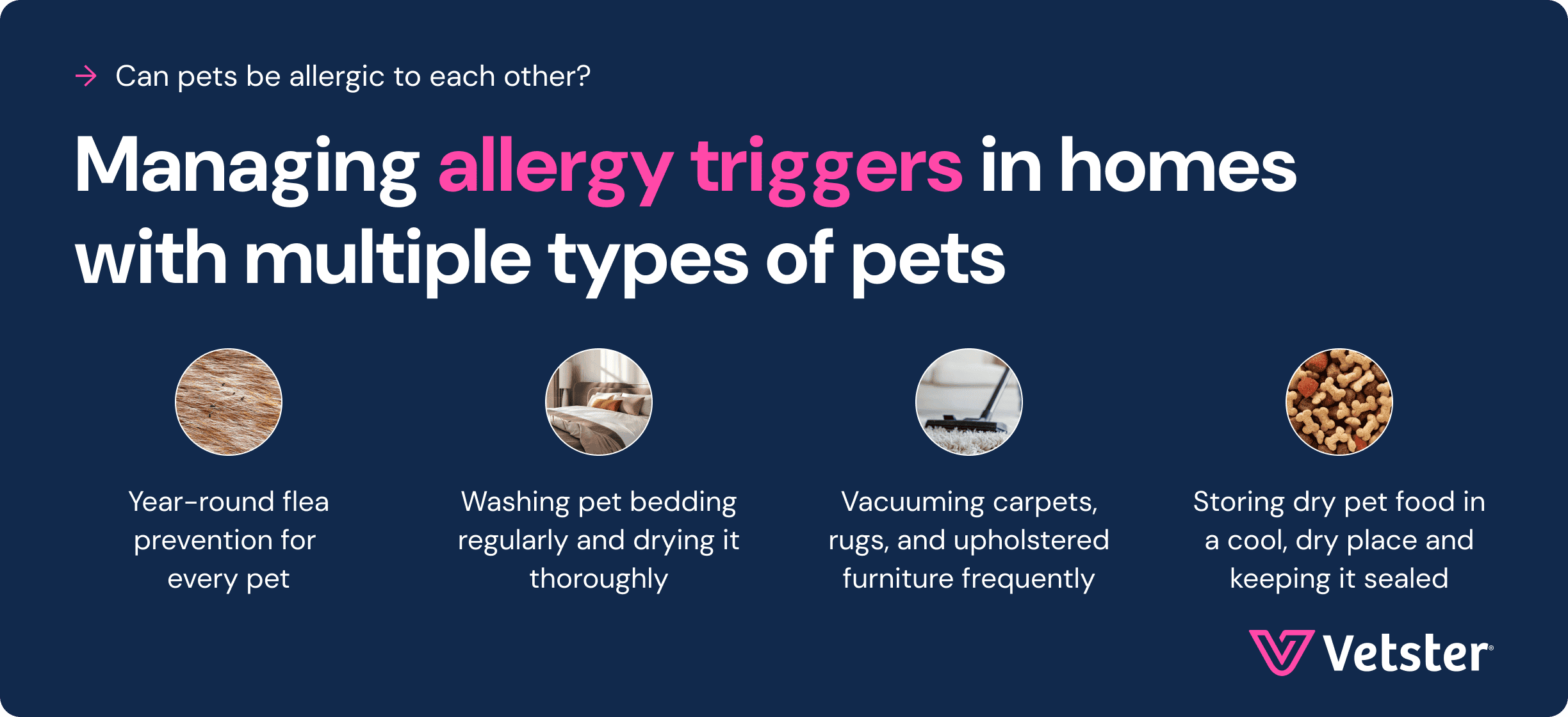 Even if another pet isn't the cause, there are practical ways to reduce more common triggers at home. Whether you have one pet or several, these steps can support your vet's treatment plan for treating and managing a dog's allergies or your cat’s.
Year-round flea prevention for every pet
If your dog or cat starts itching after another pet joins the household, fleas may be responsible rather than an allergy to the newcomer. Flea infestations involve the environment, not just the pet that's itching. Flea eggs and immature stages develop in the environment, so effective prevention means protecting every dog and cat in the home year-round, including indoor cats.
A veterinarian can recommend appropriate products for each pet's species, size, and health. See the best flea prevention for dogs and the best flea preventative for cats for more detail.
Some flea products made for dogs contain permethrin, which is highly toxic to cats. Never use dog flea products on cats, and keep cats away from recently treated dogs for as long as the product label or your veterinarian advises.
Reducing allergen levels indoors
For pets with environmental allergies, reducing the levels of common allergens inside the home may help support veterinary treatment. Practical steps include:
- Washing pet bedding regularly and drying it thoroughly
- Vacuuming carpets, rugs, and upholstered furniture frequently
- Using a HEPA air purifier to try to reduce airborne particles
- Storing dry pet food in a cool, dry place and keeping it sealed to limit moisture and contamination
- Controlling excess humidity and addressing damp areas where mold may grow
These steps may help reduce exposure to environmental allergens, but they don’t replace veterinary treatment and may not noticeably improve every allergic pet's symptoms.
Bathing and skin barrier support
Bathing with a gentle, veterinarian-recommended shampoo can help remove environmental allergens from a pet's coat while soothing irritated skin. Some topical products may also help maintain the skin's protective barrier. Essential fatty acid supplements may provide additional support for skin health in some pets, although their benefits vary.
Managing food allergy diet trials in multi-pet homes
If a veterinarian recommends an elimination diet trial to investigate a possible food allergy, it's important that the pet eats only the prescribed diet. In a home with multiple pets, this means preventing access to other animals' food and treats. Feeding pets separately can help keep the trial on track.
Do you need allergy testing to find the trigger?
Now that you know your itchy dog or cat is unlikely to be allergic to another pet in the household, you may be wondering how to find out what is causing the itching. Even when allergies are responsible though, identifying a specific allergen usually isn't necessary for effective treatment. Since allergies can’t be cured, what's more important is working with a veterinarian to determine the cause of your pet's symptoms and develop a plan to relieve the itching as quickly as possible.
The purpose of allergy testing in cats and dogs may be different from what you expect. These tests aren't generally used to determine whether an itchy pet has allergies. Instead, they're used when a pet has already been diagnosed with environmental allergies and you’re considering immunotherapy (custom allergy shots or oral drop), often because other treatments haven't brought enough relief. Testing helps identify which allergens to include in customized allergy shots or oral drops designed to reduce allergic reactions over time. If your vet recommends testing, check your pet insurance coverage for allergy testing.
How an online vet can help with multi-pet households and itchy skin
When your dog or cat has itchy skin, an online veterinary consultation can help you understand the possible causes, explore ways to provide relief, and decide on the next steps.
During a Vetster appointment, you can show the veterinarian your pet's skin, describe when symptoms started, and discuss changes in their environment or routine. Your veterinarian can help you review flea prevention, discuss appropriate ways to manage symptoms, and determine whether an in-person examination or diagnostic testing is needed. Before your visit, it helps to prepare for your online vet appointment with notes and photos.
Veterinarians may prescribe medications when a valid veterinarian–client–patient relationship (VCPR) is established and prescribing is permitted under applicable regulations. In some states and provinces, a VCPR can be established remotely; elsewhere, an in-person examination is required. Whether to prescribe medication is always up to the veterinarian's professional judgment. You can check this telemedicine map for information about where a VCPR can be established virtually. For personalized guidance for your pet’s allergy symptoms, talk with an online vet.
FAQ
Can cats be allergic to dogs?
Allergies to dog dander aren't among the commonly recognized causes of allergic skin disease in cats. If your cat is itchy or overgrooming, more common explanations include flea allergy dermatitis, environmental allergies, other skin conditions, or stress-related grooming. A veterinarian can help identify the cause and recommend ways to provide relief.
How do I tell if my dog is allergic to my cat?
You can't tell from symptoms alone. Itching, licking, redness, and ear problems can have many causes, and an allergy to your cat is unlikely to be the explanation. Even telling whether a dog has an ear infection or allergies can take a vet exam. When allergies are responsible, identifying the exact allergen usually isn't necessary to provide effective relief. A veterinarian can help determine what's causing the symptoms and recommend appropriate treatment.
Can my cat be allergic to my new dog?
It's unlikely that your cat is allergic to the new dog. However, the arrival of another pet can introduce fleas or contagious skin conditions, and changes in the household may contribute to stress-related overgrooming. If your cat develops itching or hair loss, a veterinarian can help identify the cause and recommend treatment to relieve the symptoms.
What can I give my dog or cat for an allergy to another pet?
The most effective treatment depends on identifying the underlying problem, whether it's fleas, environmental allergies, or another skin condition. Human allergy medications aren't always safe or effective for pets, so check with a veterinarian before giving anything.
Are some dog breeds allergic to cats?
No dog breed is known to be specifically predisposed to allergies to cats. Some breeds, including West Highland White Terriers, Labrador Retrievers, Golden Retrievers, Boxers, Bulldogs, and Pugs, are more prone to environmental allergic skin disease in general. However, any dog can develop allergies.
Do I need allergy testing to find out what my pet is allergic to?
Usually not. Even when allergies are responsible for itching, identifying the exact allergen often isn't necessary for effective treatment. Allergy testing is primarily used to select allergens for allergy shots or drops when a veterinarian has already diagnosed environmental allergies and immunotherapy is being considered.