How to prepare for your online vet appointment


Virtual care, which includes telemedicine and teletriage, is a convenient way to connect with a veterinarian for questions about your pet’s health, nutrition, behavior, and diagnostic test results. In many cases, a virtual visit can fully address your pet health concerns and provide a complete plan for next steps at home.
However, telehealth is not a substitute for emergency care. Pets with severe symptoms or distress should be seen in person right away. Because it can be difficult for pet owners to know what is urgent, many people use virtual care to speak with a veterinarian quickly and determine whether their pet needs in-person or emergency care.
Since online vet consultations can be brief, preparation is critical to get the most out of your virtual appointment. This guide will describe what to expect from virtual veterinary care and how to get ready for your online vet consultation.
Before the call
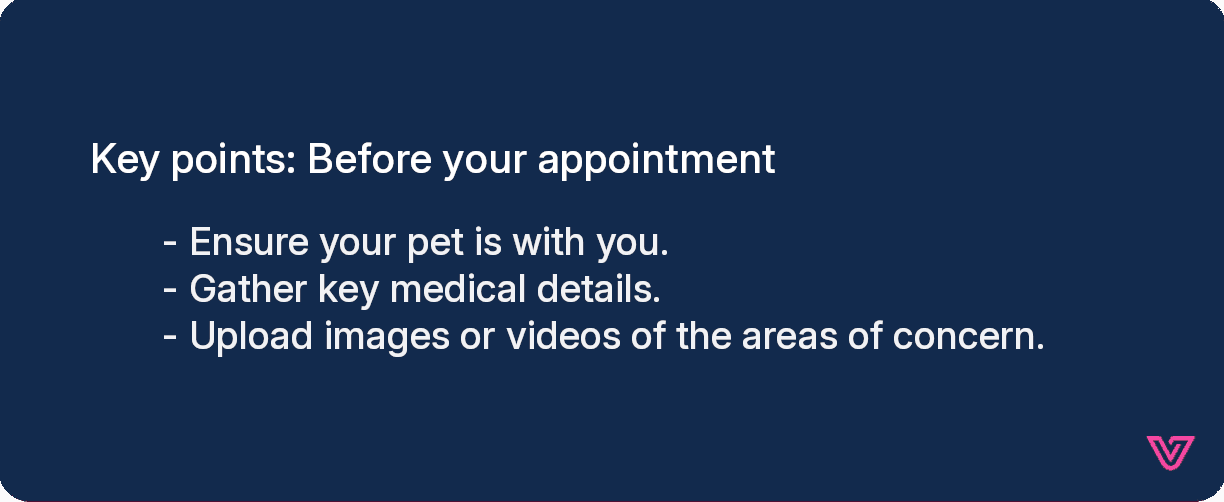
Ensure your pet is with you
Having your pet present and on-screen for as much of the online vet appointment as possible ensures that the vet can observe and assess your pet. Since your online vet cannot touch your pet as they would during an in-person consultation, they rely on what they see through their screen and may want to spend the majority of the appointment with their eyes on your pet.
When your pet is part of the online vet consultation, it creates a basis for a veterinary-client-patient relationship, which is required to practice veterinary medicine. If your pet is not present during your online vet consultation, the vet may be unable to provide you with a diagnosis or prescribe medication.
Many pet owners find it helpful to have a family member or friend assist in holding their pet to keep them still throughout the consultation, so that they can more easily focus on their conversation with the vet.
Gather medical details
The more information the vet has about your pet, the easier it will be for them to have a bigger picture of issues your pet is dealing with. Communication with the vet during your virtual appointment is key to ensuring the health and wellness of your pet.
Important details can include anything that has made a change to your pet’s life, from medical treatments, to a stay at a boarding facility.
Here are some examples of important medical details:
- A timeline of events (e.g. when the symptoms started, when symptoms worsened, diet changes, boarding, medical treatments)
- Medication and supplement labels
- A brief summary of key events in your pet’s past medical history
- An up-to-date weight
- General pet vitals like breathing rate, gum color, and temperature (if possible)
- Vaccination records
- Travel history
- A summary of what your pet usually eats, including commercial diets, treats, and other foods.
By having these details ready prior to your online vet consultation, your appointment time can be used to evaluate your pet and collaborate with you, instead of spending time searching for medical details.
Upload images and video before your appointment
Since live-video streaming can be blurry, slow to load, or lag, uploading a high-resolution up-to-date picture or video prior to the appointment can give the vet the best possible view of your pet.
Virtual veterinarians evaluate your pet through their device screen, so a high quality photo or video can provide them with a more detailed picture of your pet. This is especially important when it comes to smaller areas of their body, like their teeth, eyes, ears, and paws.
Pre-call checklist
Preparation for your online vet consultation can be started about 30 minutes before your appointment. Pet treats can be useful in keeping your pet still and on screen. Ensure that the equipment you will use for the video call is working and connected to the internet.
Here are examples of things you can get ready:
- Your pet
- A small, quiet room
- A second person to help hold your pet
- Pet treats
- An electronic device (phone, tablet, or computer) fully charged and with reliable internet access
- Your pet’s medical details
- A high-resolution photo or video to upload before the appointment
- An up-to-date weight
- General pet vitals like breathing rate and temperature (if possible)
As Dr. Jo Myers, a Vetster veterinarian, notes, “In many cases, it’s much easier to keep your pet on camera and move the camera around to clearly show the vet the areas of concern when you use a phone or similar small, handheld device.”
During the call
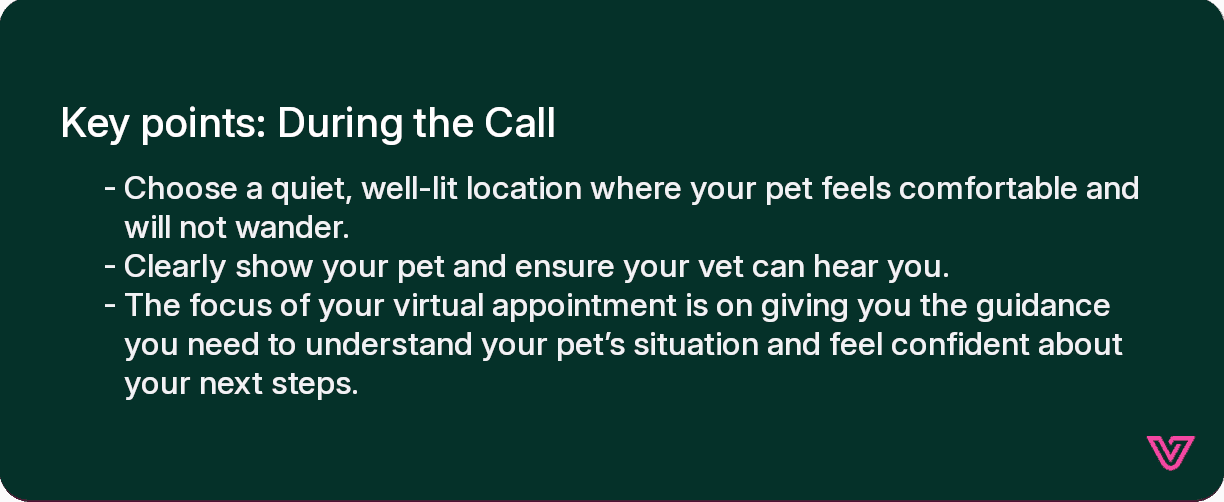
Online vet consultations are most effective when the vet can clearly see and hear you and your pet.
Unlike in-person veterinary care, where a vet can move closer or touch your pet, a virtual vet consultation relies entirely on what can be seen on the screen. Here are some easy tips to ensure an online vet can make a thorough assessment:
- Place your pet close enough to the camera to provide a detailed image, but not so close as to blur the image or cut off portions of the image of their body.
- Allow the vet to see your pet’s whole body throughout the appointment. This helps them evaluate important factors in your pet’s well-being, such as their behavior, weight, skin health, and posture.
- Keeping your camera focused on your pet also gives a vet insight into symptoms related to your pet’s condition, or ones that may be related to another condition altogether.
During your online vet consultation, the vet may ask you specific questions to gather more information, including:
- To see your pet a little more closely
- To change your pet’s position in relation to the camera
- To see your pet’s belly, in between their toes, in their mouth or under their tail
- To watch your pet walk
- For you to lift your pet’s upper lip up, to see the gum color or teeth
- If there is any odor
A good video examination approximates a head-to-toe, hands- on physical examination as closely as possible. As Dr. Myers says, “The vet needs to see your whole pet, and not focus just on the problem, just like they do in a physical exam room. That’s the best way to assess your pet fully, discuss your pet’s condition, and work with you to create a treatment plan that aligns with your values and budget.”
Lighting and location
As the veterinarian examines your pet virtually, they rely on having a clear, bright image to best visualize your pet. For that reason, we recommend choosing a location with good lighting, like in the image below. Avoid sitting with a window or bright light behind, as it can create shadows.

Choose a quiet room, where your pet feels comfortable. A smaller room can help limit your pet from wandering away from you.
What can an online vet do?
During an online vet consultation, a vet evaluates your pet and discusses your pet’s issues and treatment options with you. Virtual vet care can be used to support any species of pet, including rabbits, reptiles, and even larger animals like horses.
The veterinarian usually starts by listening to your concerns and learning more about your pet’s health, symptoms, and daily routine. They use what you share, and what they can see over video or photos, to get a clearer picture of what might be going on.
Online vet care can help with many concerns, but some problems do require hands-on care. An online vet can:
- Offer practical tips, such as how to monitor a symptom at home or adjust diet
- Give you more info to support a minor behavior concern
- Help decide how urgent a problem is or what kind of care your pet may need next
- Recommend follow-up virtual appointments to check in on your pet or to refill any prescription medications
- In some cases, diagnose and provide a treatment plan for your pet’s problem
Online vet care can help with many concerns, but some problems do require hands-on care. An online vet cannot:
- Always prescribe based only on a video examination
- Complete an in-person exam if issues involve significant pain, trouble breathing, major injuries, or if pets are very lethargic or not acting like themselves
Some of the most common cases seen in veterinary telemedicine appointments include skin and ear issues in dogs and litter box or urinary health concerns in cats. Other health concerns and areas that online veterinarians often provide medical support for include:
- Upset stomach and digestive issues
- Mobility concerns
- Behavioral concerns and training
- Nutritional concerns
- Palliative care guidance
- Preventative care and wellness
- Chronic issues, like joint pain
- Follow-up consultations
- Guidance for rescue pets
- Checking in to monitor progress between in-person visits
- Questions about a diagnosis or treatment plan
- Clarification regarding diagnostic test results
The value of a virtual visit is that a veterinarian can help you decide how serious a situation may be and how quickly your pet should be seen in person. Sometimes the next step is home care and monitoring. Other times, a vet may recommend an in-person visit to get clearer answers.
Prescribing during a virtual vet visit
While online vets can always provide advice, they might not always prescribe medication. If your pet is not present, has a condition that needs to be examined in person, does not allow a complete virtual vet exam, the video resolution is too low, or the vet is unable to thoroughly examine your pet for some other reason, the vet may also be unable to prescribe medications for your pet. Not all states allow vets to prescribe based only on a video examination.
When to skip the call
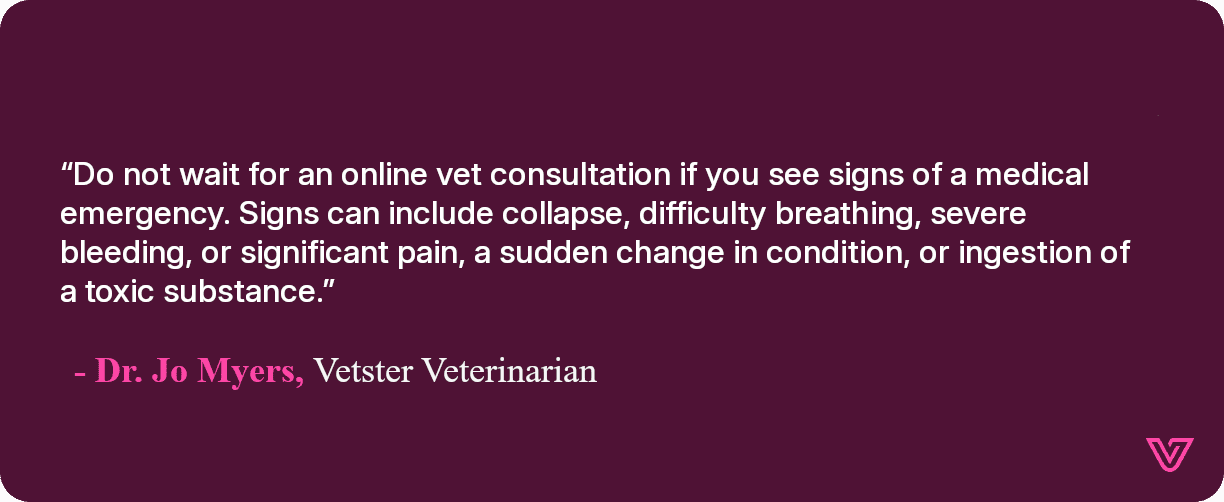
It’s important to know when to seek in-person veterinary emergency medical care. “Do not wait for an online vet consultation if you see signs of a medical emergency, “ says Dr. Myers. “Signs can include collapse, difficulty breathing, severe bleeding, or significant pain, a sudden change in condition, or ingestion of a toxic substance.”
After the call
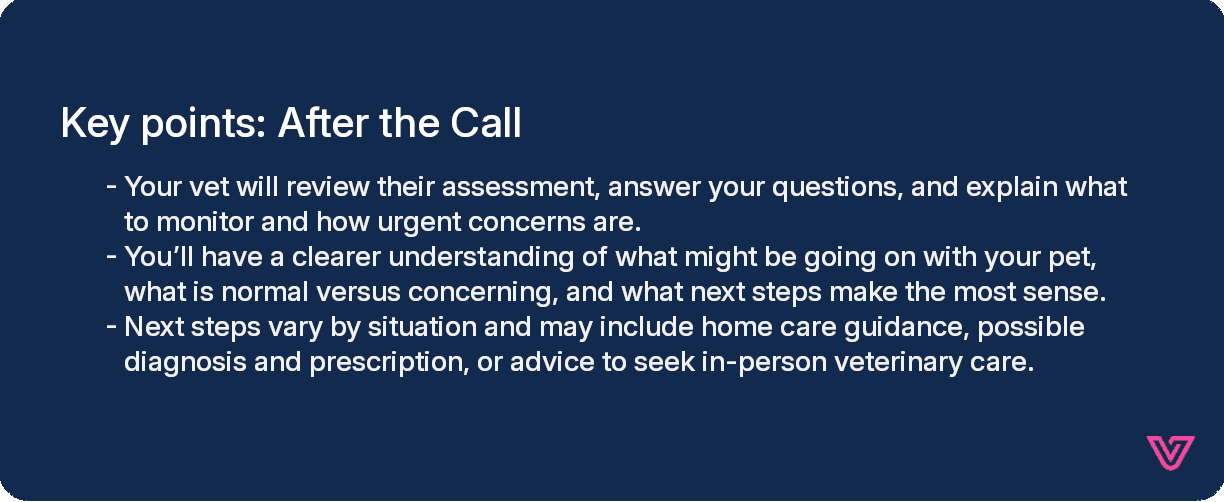
At the end of a veterinary telehealth appointment, the veterinarian typically reviews their assessment of your pet and answers your questions. They may talk through what could be contributing to your pet’s symptoms, what signs to monitor at home, and which concerns are more or less urgent based on what you shared and what they observed.
The goal is for you to leave the appointment feeling informed and supported. Even when a definitive diagnosis is not possible virtually, you should come away with a clearer understanding of what might be going on, what is normal versus concerning, and what next steps make the most sense.
Next steps
Next steps after your call vary by situation.
- In some cases, this may include home care guidance, behavior or diet recommendations, or monitoring for specific changes.
- In other cases, the veterinarian may be able to make a diagnosis and prescribe treatment. This could involve picking up a prescription at a local pharmacy and having medication shipped to your home.
- You will be advised to seek in-person veterinary care if hands-on care, diagnostics, or emergency treatment are needed.
For many pet owners, the biggest benefit is peace of mind. After the call, you know your pet has been evaluated by a licensed veterinarian, and you have reliable information to help you make thoughtful decisions about their care.
Making the most of your virtual vet visit
With a little preparation beforehand, your online vet consultation can give you accessible quality pet healthcare from home. Having your pet present for the appointment is a must. Setting up your electronic device in a small, quiet room, with good lighting helps the vet
By having medical details ready before your online vet consultation, your appointment time is able to be used to its full potential.
Book an online vet consultation with a licensed veterinarian any time on Vetster.
FAQ
How accurate are online vet consultations?
Many pet owners worry that something might be missed if a veterinarian sees their pet over video instead of in person. Veterinary diagnosis is not always exact or instant, even in a clinic. Pets can’t describe how they feel, and many conditions share similar signs. Even with a hands-on exam and advanced testing, veterinarians often work through a list of the most likely explanations, rule possibilities in or out over time, and start with the safest and most sensible first steps.
It is the veterinarian’s professional responsibility to be honest about what can and cannot be determined virtually. They should tell you whether they are offering an educated guess, a good starting plan, a working diagnosis, or whether your pet truly needs an in person exam or diagnostic testing.
How does a virtual vet visit work without a physical exam?
During a telehealth visit, your veterinarian will use your observations, your pet’s history, and what they can see on video or photos rather than a physical exam, lab tests, and diagnostic imaging. Based on that, they may give you a likely explanation of what’s going on with your pet, an initial plan to try, or clear guidance on what to watch for next.
What types of pet health concerns can be managed through virtual care?
There are many concerns that don’t depend heavily on hands-on exams or tests. Follow-up discussions after lab work, adjusting long-term treatment plans, nutrition guidance, behavior concerns, and quality of life assessments are just a few examples where virtual care can be very effective.
Does online veterinary care replace clinic visits?
The goal of an online consultation is not to replace in-person care when it is needed. It is to give you timely, professional guidance so you can make informed decisions and get your pet the right care at the right time.
How much do virtual vet visits cost?
Costs vary between pets and health conditions. Find out more information about how much an online vet visit costs and what factors impact pricing.