Protect your dog from fleas and ticks
Skip the clinic — talk to a vet online, get a prescription, and have flea and tick shipped to your door.

-
-
-
-
Pet parents say it best: Vetster makes flea & tick care easy


Common signs of fleas and ticks on dogs

Fleas are tiny, dark insects about one to three millimeters long. They’re easiest to spot where fur is thin, such as on the stomach and ears. You can also part the hair near the base of the tail to check the skin. Flea dirt looks like black specks on the skin and leaves red or brown streaks on a damp paper towel. Many dogs with fleas show no other signs, and not finding fleas or flea dirt doesn’t rule out an infestation.
Itching is the main symptom of fleas, especially in dogs that are allergic to flea saliva. Flea allergy dermatitis is a leading cause of itching in dogs. Dogs that are allergic to flea saliva can develop days or weeks of intense itching from just a few bites, and some react to a single bite. These dogs may seem extremely itchy even when no fleas are visible, because they often groom fleas off before anyone notices. Restlessness, rubbing, and licking or chewing at the skin are other common signs.
Flea allergy dermatitis is one of the most common allergic skin conditions in dogs. Signs include hair loss, redness, scabs, hot spots, and inflamed, crusty, or oozing skin, especially near the base of the tail. Skin damaged by scratching can develop secondary bacterial or yeast infections. Other conditions, such as mites, infections, and other allergies, can look very similar, so it’s best to have a vet confirm the cause.
Attached ticks look like small bumps on the skin. Smaller or recently attached ticks may be easier to feel than see, so run your hands over your dog’s skin, especially around the ears, the base of the tail, and between the toes. Finding a tick isn’t an emergency, but remove it promptly with tweezers: grasp it close to the skin, pull straight out with steady pressure, and wait for it to let go. Don’t twist or crush it. Skip petroleum jelly, lit matches, and other home remedies.
Most ticks don’t carry disease, and their bites usually leave an inflamed or scabbed sore. Tick bites can also cause itching and a localized allergic skin reaction. Irritation can take up to two weeks to heal, and open wounds from bites and scratching can lead to secondary infections. A vet visit usually isn’t needed after removing a few ticks, but contact a vet if your dog has a heavy infestation or severe skin irritation.
Heavy flea or tick infestations can cause anemia from blood loss, which can be life-threatening in small dogs and puppies. Watch for pale gums, weakness, low energy, and fast breathing. Tick-borne diseases are uncommon in dogs, though Lyme disease is the most common tick-borne illness in the US. Symptoms such as fever, lameness, swollen joints, and tiredness can appear weeks to months after a bite. See a vet if you notice any of these signs.
How flea & tick care works on Vetster
-
 1
Book a virtual vet visit
Pick a time that works for you and connect with a licensed veterinarian online.
-
 2
Get a personalized prevention plan
Your veterinarian will provide the most effective prevention and treatment options, tailored to your pet.
-
 3
Get your pet’s medication delivered
Easily order medication online with fast, convenient delivery through VetsterRx.
Simplify flea & tick prevention with Vetster
24/7 access to trusted vets
Connect with a trusted veterinarian any time with Vetster. You’ll get access to top-rated vets through a live video consultation and personalized recommendations for flea and tick prevention.

Book an appointment within minutes
Skip the wait. Choose a time that works for you and your dog and easily schedule a virtual visit in just a few clicks.

Easy online prescriptions with transparent pricing
If medication is prescribed for your dog, we’ll process it through VetsterRx and take care of all the details for you.* You’ll see full pricing before checkout.

Fast, reliable home delivery
VetsterRx ships your dog’s medication quickly — usually within two days.

Your guide to effective flea & tick treatments
Our veterinarians will help you choose the best flea and tick treatment based on your dog’s needs, age, and lifestyle — no hidden fees, just professional, transparent care.
Whether it’s monthly treatments or long-term solutions, there's a range of options to fit your needs:
-
Topical treatments can start at around $6–$10 per dose for some brands when bought in multipacks
-
Oral preventatives may cost around $20–$45 per month, depending on your dog’s weight, the product, and pack size
-
Long-lasting flea and tick collars vary in price by brand and retailer, with some over-the-counter options starting under $10


Explore flea & tick treatments
There are many products available to prevent and treat flea and tick concerns. The right approach depends on your dog’s specific condition, medical history, and environment.
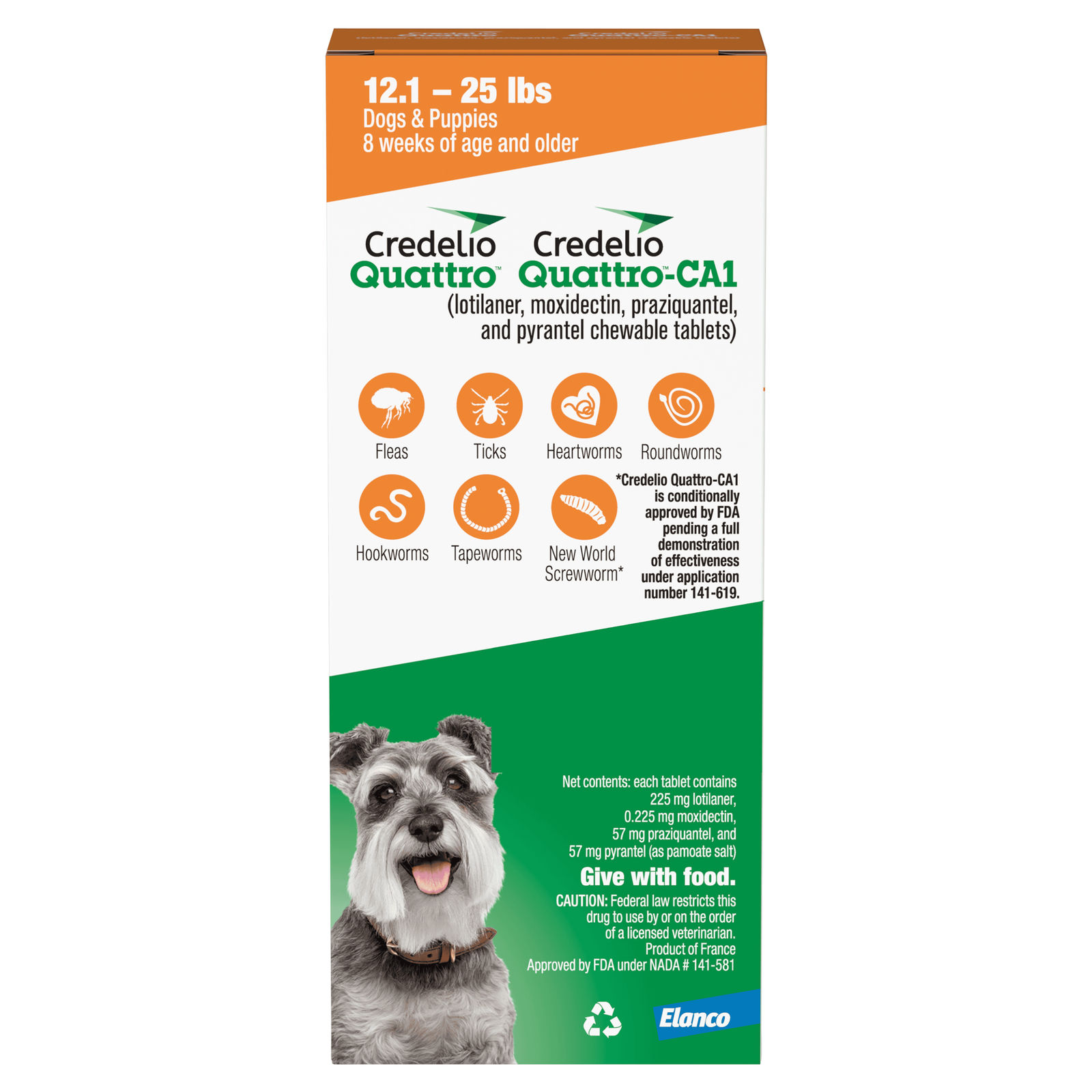
Credelio Quattro
-
Dogs -
Multiple options

NexGard® Plus
-
Dogs -
Multiple options

HEARTGARD® Plus
-
Dogs -
Multiple options

Simparica Trio
-
Dogs -
Multiple options
This information is provided for general informational purposes only and is not a substitute for professional veterinary care. Always consult a licensed veterinarian before starting any medication, as treatment plans should always be tailored to your individual pet's needs.
Product availability, appropriateness, and legal access to prescription medications may vary based on your location and the nature of your pet’s health issue. In some locations, a valid VCPR, must be established in person before prescription medications can be provided. The examples you may see here are not intended as medical advice or endorsements, and they may not be suitable for your pet.
Credelio® (lotilaner) Important Safety Information: Lotilaner is a member of the isoxazoline class. This class has been associated with neurologic adverse reactions including tremors, ataxia, and seizures. Seizures have been reported in dogs receiving this class of drugs, even in dogs without a history of seizures. Use with caution in dogs with a history of seizures or neurologic disorders. The safe use of Credelio in breeding, pregnant, or lactating dogs has not been evaluated. The most frequently reported adverse reactions are weight loss, elevated blood urea nitrogen, polyuria, and diarrhea. See full prescribing information.
FAQ
Vetster is an online veterinary platform that connects pet parents with licensed veterinary professionals through virtual appointments. With an internet connection, you can speak with a veterinarian from home, often within minutes, and get personalized guidance for your dog's flea and tick prevention needs.
Veterinarians on Vetster are licensed veterinary professionals, and their credentials are available on their profiles for you to review before booking. This makes it easy to choose a veterinarian who fits your pet's needs and gives you confidence in the care your dog receives.
Vetster can help with flea and tick prevention by connecting you with a veterinarian who can recommend a prevention plan based on your dog's age, lifestyle, and risk factors. During a virtual appointment, you'll receive personalized advice and treatment recommendations tailored to your pet.
A flea and tick prescription may be available through a Vetster appointment if the veterinarian determines it is appropriate for your dog. Prescription decisions are based on the veterinarian's clinical judgment as well as local regulations and prescribing requirements.
Getting flea and tick medication after your Vetster appointment is straightforward. If a prescription is provided, you can order through VetsterRx where available or fill the prescription at a local or online pet pharmacy, depending on your preferences and location.
Using Vetster for flea and tick care gives you convenient access to licensed veterinarians, flexible appointment scheduling, and transparent pricing from home. If medication is prescribed, VetsterRx can help streamline the prescription process and make it easier to access your dog's preventive treatment.