Identifying skin problems in cats and dogs: Pet owners know less than they think



Many pet owners feel confident they can tell the difference between allergies, parasites, and other common skin issues in dogs and cats. But when 2,000 U.S. pet owners were asked in a recent survey to identify real images of flea bite allergy, skin mites, or ringworm, most got it wrong.
This gap between confidence and reality highlights a significant pet health concern. Allergies, parasites, and fungal infections often look similar, and with fleas, ticks, and tick-borne illnesses like Lyme disease posing a growing threat, it is crucial for pet owners to know the difference between these conditions and understand the importance of veterinary care.
To help explain why these conditions can be difficult to recognize, we spoke with Vetster veterinarian Dr. Jo Myers about the most common skin issues affecting pets and when owners should seek professional guidance.
Here’s how cat and dog owners did with identifying skin problems

Survey respondents were shown six images of common pet skin conditions and asked to identify what they believed was causing the symptoms.
The results revealed a significant gap between confidence and accuracy.
Key findings include:
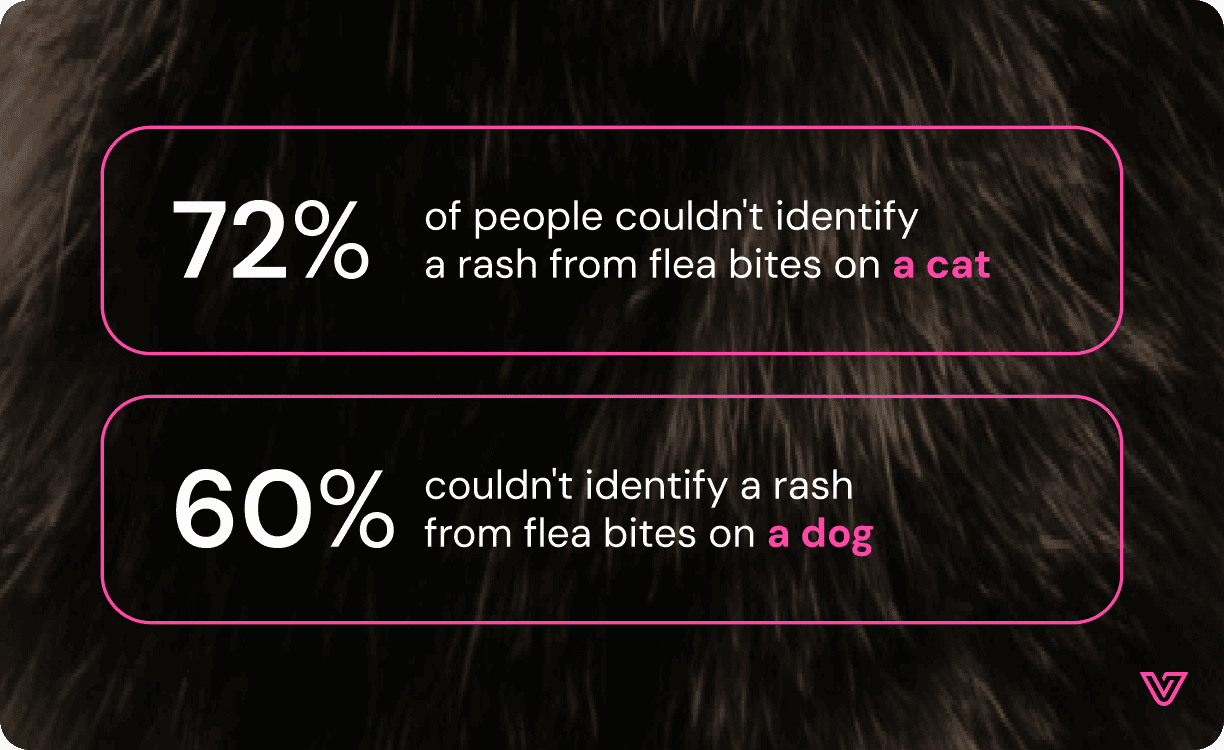
- 72% of pet owners could not identify a flea bite allergy rash on a cat
- 60% could not identify the same rash on a dog
- Only 1% of dog owners correctly identified ringworm from the image shown
- 44% said they would search Google before consulting with a veterinarian
And while many respondents (54%) felt confident in their ability to recognize skin problems, the majority of respondents selected the wrong answer to 10 out of 12 of the conditions shown.
“These results aren’t surprising," says Dr. Myers.
The most common skin symptoms, such as redness, itching, hair loss, thickened, grey, or scaly skin, can occur with parasites, allergies, infections, or hormonal disease.
“It’s also not unusual for more than one condition to be present at the same time, which makes accurate identification even more difficult.”
If a pet parent noticed that their pet started showing skin symptoms, nearly half (44%) would use Google or other search engines to find the answer, which can present a potential danger.
Dr Jo says: “Online search engines and AI tools can be useful for general education, but they have important limits when it comes to a real pet with real symptoms. They cannot examine your pet, perform diagnostic tests, or fully understand your pet’s medical history, environment, or risk factors. Because of that, their answers are informational, not diagnostic.”
While online information can be a helpful starting point, it should not be the final decision-maker for your pet’s health.

And with 72% of people unable to identify a rash from an allergy to flea bites on a cat, and 60% on a dog, it is important that pet owners keep their cat or dog on parasite control as recommended by their vet, and understand the role played by parasites, allergies, and fungi in itchy skin diseases in pets.
Dog and cat owner comparison
Dog owners
- The skin conditions that dog owners were least able to identify were an allergic reaction, ringworm, and skin mites
- A staggeringly low 1% of dog owners correctly identified the picture of ringworm, with the majority thinking it was fleas
- Allergies were confused with skin mites. When presented with allergies, dog owners picked skin mites, and vice versa
Cat owners
- Cat owners did much better at identifying skin problems than dog owners, with the most popular answer for all questions being the correct one
- With the correct answers, women got the answer right more than men, with a mix of ages
- And the region that would appear to have the most knowledgeable cat owners was the Southeast, with these respondents getting the answer correct the most times across the pictures
While cat owners are better at identifying skin problems than dog owners, these results continue to reinforce that owners aren’t supposed to be able to identify skin problems based on a photo, and that veterinary guidance is extremely important.
Regional results
- With cat owners getting more correct answers than dog owners overall, cat owners in the Northeast and Southeast regions of the U.S. performed better on the quiz.
- When asked how confident they would feel in their ability to manage various aspects of their dog’s health in relation to Lyme Disease, owners in the Northeast were the most confident, with those in the Southwest feeling the least confident. This may reflect the historical significance of Lyme disease in the Northeast, although the range of ticks and the incidence area for Lyme disease continues to expand.
- People from the Northeast were found to mix up skin mites and allergies in dogs, with 26% of dog owners identifying allergies as skin mites and a further 17% identifying skin mites as allergies
Why skin conditions in pets are so difficult to identify
Skin problems are one of the most common reasons pets are brought to veterinarians. At Vetster, these concerns account for roughly 22% of all telehealth appointments, making them the most common reason pet owners seek care on the platform.
However, identifying the underlying cause based on appearance alone can still be challenging. Many conditions can produce similar symptoms, which is why veterinarians typically evaluate visual signs alongside a pet’s history, environment, and additional symptoms to determine the most likely cause.
Many conditions produce similar symptoms, including:
- Itching or scratching
- Redness or irritation
- Hair loss
- Scaly or flaky skin
- Sores or scabs
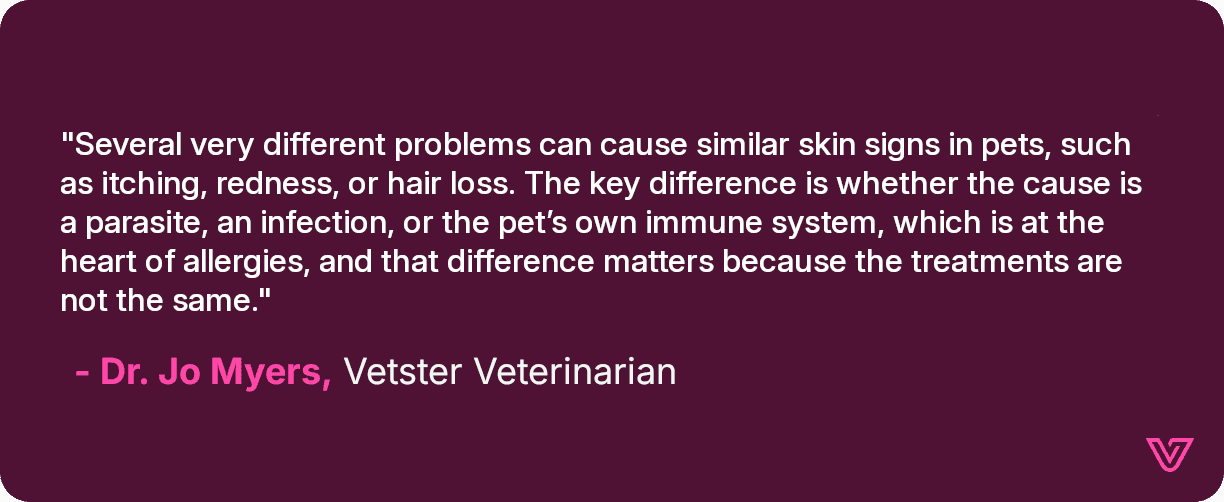
“Several very different problems can cause similar skin signs in pets, such as itching, redness, or hair loss. The key difference is whether the cause is a parasite, an infection, or the pet’s own immune system, which is at the heart of allergies, and that difference matters because the treatments differ.”
For pet owners, this means trying to diagnose a skin problem from photos online or search results can easily lead to confusion or delayed treatment.
Is it parasites, allergies, or a fungal infection?
Several different health issues can cause skin irritation in dogs and cats. While they may appear similar, they require very different treatments.

Parasites
External parasites are one of the most common causes of skin problems in pets.
Ticks
Ticks attach to the skin and feed on blood. They are usually visible to the naked eye and may feel like a small bump on the skin.
Having a tick itself does not automatically mean a pet is sick, but some ticks can transmit diseases. Ticks are different from many other skin problems because they are often seen and physically removed, and they stay attached to the skin only while feeding for a few hours to days.
Fleas
Fleas are small, jumping insects that also feed on blood. Unlike ticks, they move quickly and do not stay attached to one place on the skin. Fleas don’t necessarily always cause a pet to be itchy, but flea saliva is a very common trigger for allergies in both dogs and cats, and that’s when severe itchiness can happen.
Additionally, flea allergy dermatitis, which is the official name for the rash caused by an allergy to flea bites, can also cause severe itching, hair loss, and irritated red skin in pets.
Fleas reproduce rapidly, and a very minor exposure to fleas can quickly lead to a severe home infestation. The presence of fleas does not always mean disease, but - in addition to the concern for flea allergy dermatitis - fleas can also put pets and people at risk for flea-borne diseases.
Skin mites
Mites are microscopic parasites that live on or in the skin. They are not visible without magnification. Some mites cause intense itching and irritation, while others cause hair loss with minimal itching. Because they cannot be seen with the naked eye, diagnosis usually requires skin testing by a veterinarian.
Dr Jo says: “The key distinction between mites, fleas, and ticks is that mites are microscopic.”
Allergies
While parasites are often associated with skin irritation in pets, allergies are actually one of the most common underlying causes of skin disease in dogs. Allergies are caused by the immune system reacting to triggers such as:
- Pollen
- Dust mites
- Flea bites
- Mold
- Certain foods
Veterinary research estimates that roughly one in four dogs is affected by allergies, making them a leading driver of chronic itching, licking, and skin irritation.
“Allergies can be surprisingly difficult for pet owners to recognize,” says Dr. Jo Myers, veterinarian at Vetster. “Symptoms may simply appear as itching or licking at normal looking skin, and people often assume it’s normal behavior rather than a medical issue.”
Ringworm
Ringworm is not a parasite, but a fungal infection of the skin. Many of our survey respondents were unable to correctly identify the image showing ringworm, with dog owners in particular struggling to identify it. Only 1% of respondents identified ringworm correctly, with the majority opting for fleas instead.
This is further evidenced by global search data, which has 35k people searching every month for “What does ringworm look like?”.
Dr Jo notes: “From personal experience, a lot of pet owners' confusion about ringworm comes from how different it looks in animals compared to people. In pets, lesions are frequently more subtle, patchy, or irregular rather than distinctly circular. My veterinary dermatology professor used to tell us, ‘If it looks like ringworm, it probably isn’t.’"
Diagnosis often involves specific testing because other skin problems can look similar. Ringworm is also contagious between pets and can spread to people, and asymptomatic carriers are common. This means the fungus can be found on the skin, but doesn’t always cause disease. The body’s immune defenses usually keep an infection from developing - at least in healthy adults - but the infection can still spread to others.
The growing concern over Lyme Disease
Lyme Disease cases in pets continue to rise, yet pet owner recognition remains concerningly low. In 2024, there were 530,685 cases compared to 534,274 in 2025; this is a 7% increase year-on-year.
Vetster has also seen an increase in tick-related appointments year on year, with the volume of appointments doubling from 2024 compared to 2025.
Understanding prevention methods and the early signs of Lyme Disease is key to keeping your pet safe and knowing when veterinary care is needed. While both dogs and cats can be exposed to the bacteria that cause Lyme disease, dogs are much more likely to develop clinical illness. Lyme disease is one of the most recognized tick-borne infections in dogs and can lead to problems such as fever, shifting leg lameness, joint pain, and in some cases kidney complications if it is not identified and managed appropriately. Clinical Lyme disease in cats appears to be rare, and cats are not considered significant reservoirs for the bacteria.
Lyme Disease is present in all 50 U.S. states and all regions of Canada, but 95% of cases occur in the Northeast, Pacific Northwest, and Upper Midwest United States, as well as the southern and coastal regions of Canada.
Lyme Disease symptoms only show in 5-10% of infected dogs, and these include:
- Swollen joints or joint pain
- Swollen lymph nodes
- Lameness
- Fever
- Fatigue
- Loss of appetite
The best way to avoid dogs getting this disease is to prevent tick bites from occurring, and there are topical, or spot-on solutions, oral medications, and tick collars available that help repel and kill ticks to prevent disease transmission.
Dog owners can also limit exposure by destroying tick habitat around their homes, such as long grass, brush, and shrubs. They can also discourage wildlife, such as deer, from entering their yard, as many deer carry ticks that can drop off and hide.
When out walking, it is best to avoid tall grass and brushy areas and always check for ticks before returning home. During the warmer months, it is recommended to check your dog daily for ticks and remove them promptly, especially if you live in an area where ticks are abundant.
Some skin conditions can also affect people

Beyond causing discomfort for pets, some skin conditions and parasites can also affect human health.
Fleas can carry pathogens linked to illnesses such as tapeworm infections and cat scratch disease. Ringworm, which only 1% of dog owners correctly identified in the survey, is a fungal infection that can spread directly between pets and people.
Despite this, awareness among pet owners appears relatively low. In the survey, only 27% of respondents said they were concerned about parasites affecting themselves or their family.
“It’s easy to underestimate parasites because we don’t always see them, and pets may not appear very sick,” says Dr. Myers. “But prevention plays an important role in protecting the entire household.”
When should a pet owner seek advice from a veterinarian?
Because many skin conditions look similar, early veterinary guidance can help ensure pets receive the correct treatment sooner.
Increasingly, pet owners are turning to virtual veterinary consultations to help determine whether a skin issue needs treatment or an in-person examination.
During a virtual appointment, veterinarians can review symptoms, examine photos or videos of the pet’s skin, and help determine whether the problem may be related to parasites, allergies, infections, or another underlying condition.
In many cases, veterinarians can recommend treatment options or advise whether an in-person visit is necessary.
Signs a pet may need veterinary advice
Pet owners should look out for the following signs and symptoms:
- Ongoing itching, licking, or scratching
- Redness, rashes, scabs, or sores
- Hair loss or thinning coat
- Skin that looks painful, swollen, or irritated
- Signs of parasites, such as visible insects, small moving specks, or black debris in the coat
- Patches of hair loss or scaling
- Skin issues that are not improving with basic grooming or routine care
- Recurring ear or skin infections
These signs can have many causes, including parasites, allergies, infections, or other medical conditions.

Less commonly, some skin-related issues can signal a more serious problem. Prompt veterinary care is needed if a pet shows:
- Trouble breathing
- Facial swelling or hives
- Sudden severe lethargy
- Signs of significant pain
- Open wounds, draining infections, or rapidly spreading lesions
- Loss of appetite or refusal to drink
In general, it is always reasonable to seek veterinary input if you are uncertain or want reliable information tailored to your specific situation. Early guidance can prevent small skin issues from becoming larger problems and help ensure your pet gets the right care for the right reason.
Seeking professional support
Virtual vet appointments allow you to receive customized professional guidance from the comfort of your own home. At your appointment, you can upload photos or bring your dog or cat on camera so we can help you understand what may be going on with their skin.
Our veterinarians may ask about recent changes such as diet, environment, or new products, and help determine whether a problem may be related to allergies, parasites, or another issue.
If symptoms suggest an emergency or a condition that cannot be properly assessed virtually, an online vet will direct you to appropriate in-person care.
Could you identify the difference between skin mites and allergies?
To highlight how difficult these diagnoses can be, the same image-based quiz used in the survey has been opened for pet owners to try themselves.
Participants are asked to identify common pet skin conditions for real images.
Take the quiz and see how you score.