Can I use human eye drops to help my dog’s allergies?


Key takeaways
- Eye inflammation isn’t a common symptom in most allergic dogs.
- Using allergy eye drops intended for humans could potentially harm your dog.
- If your dog has itchy, red, or watery eyes, it’s important to talk to a vet to find out the cause and to get an effective treatment plan.
While allergies can sometimes cause conjunctivitis, or pink eye, in dogs, most allergic dogs do not develop eye inflammation as part of their symptoms. Red or irritated eyes in dogs are more often caused by other problems, such as dry eye or eyelid and eyelash disorders. Instead of reaching for over-the-counter human allergy eye drops, which are unlikely to help and may even be harmful, it’s best to have your dog’s eyes examined by a veterinarian, who can determine the cause of your dog’s symptoms and recommend safe, effective treatment.
Because dogs with inflamed eyes often appear uncomfortable and quick relief is key, it’s important to have accurate information about common questions like these:
- What are the most common causes of eye irritation in dogs?
- What is allergic conjunctivitis?
- Can eye drops help my dog’s allergy symptoms?
- Can eye drops prevent allergic conjunctivitis in dogs?
- What should I do if my dog has itchy, pink eyes?
If your vet diagnoses allergic conjunctivitis, treatment usually involves prescription eye drops formulated for dogs rather than anything available over the counter. These may include anti-inflammatory eye drops, sometimes combined with antibiotics if there’s concern for secondary infection. In some cases, antihistamines are also included to relieve eye itching and minimize allergic inflammation. Managing environmental triggers, such as cigarette smoke, may also help reduce flare-ups.
Because conjunctivitis can be caused by so many different things and treatment depends on the underlying cause, the best way to help your dog is by working with a vet. A vet can examine your dog’s eyes, run tests if needed, and identify the underlying cause of symptoms so the most appropriate treatment can be prescribed. An online vet can be a helpful part of managing your dog’s overall health by discussing symptoms, virtually examining their eyes, and giving professional advice on what to do next. They can also work with your in-person veterinarian to support your dog’s ongoing eye care and allergy management.
What are the most common causes of eye irritation in dogs?
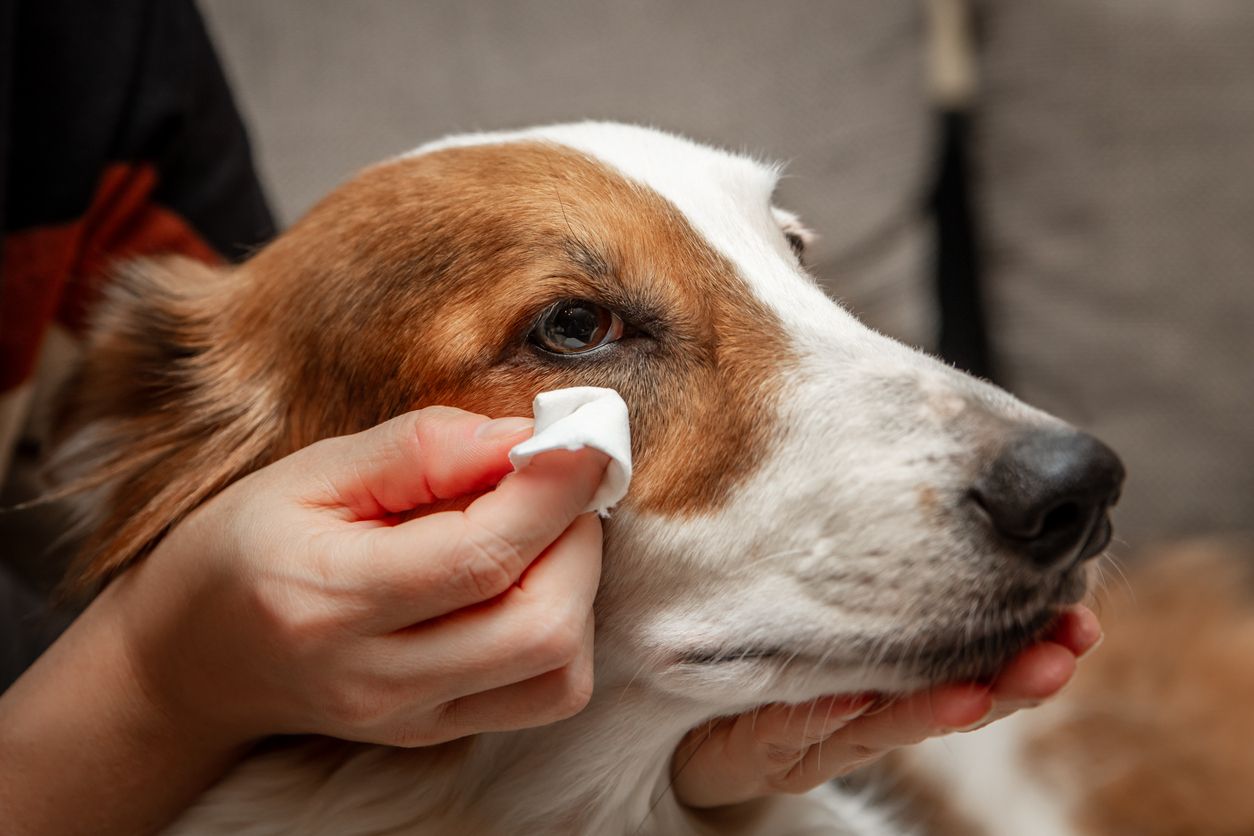
Conjunctivitis, also known as pink eye, is the inflammation of the conjunctiva, the thin, sensitive tissue that lines the eyeball and inside of the eyelids. Symptoms of canine conjunctivitis can look like:
- Red eyes — specifically, swollen, red membranes between the lids and the eyeball itself
- Red or swollen eyelids
- Watery or mucous eye discharge (epiphora)
- Squinting or keeping the eye partially closed (blepharospasm)
- Elevated or protruding third eyelid
Conjunctivitis in dogs can be caused by many underlying factors, including:
- Dry eye (keratoconjunctivitis sicca)
- Eyelid or eyelash disorders, especially in brachycephalic breeds
- Trauma to the eye from foreign bodies or eye irritants, such as smoke or pollutants
- Viral infections, such as canine distemper or canine herpesvirus
- Bacterial infections
- Tumors or growths on the eye or eyelid
- Allergies
Dry eye and eyelid or eyelash disorders are among the most common causes of conjunctivitis in dogs. Brachycephalic breeds, with their short muzzles and prominent eyes, are especially prone to eyelid and eyelash abnormalities that cause irritation to the surface of the eye. Although allergies are included among the possible causes of conjunctivitis, most allergic dogs do not develop eye inflammation. More typical signs of canine allergies are itchy skin, rashes, and ear problems rather than red or swollen eyes.
What is allergic conjunctivitis?
Allergic conjunctivitis is the inflammation of the eye’s conjunctival tissue caused by an allergic reaction. An allergy occurs when the body’s immune system overreacts to a normally harmless substance (an allergen) in the environment or in a dog’s food. The immune system mistakenly treats pollen, dust, or food proteins as threats, which leads to inflammation. Common allergens in dogs include:
- Flea saliva
- Environmental allergens, such as pollen, dust mites, and mold spores
- Certain food ingredients, especially specific animal proteins
Flea allergy dermatitis is the most common allergy in dogs, followed by environmental allergies. Food allergies are uncommon. Allergy symptoms in dogs most commonly include:
- Itchiness that leads to scratching, licking, or biting at the skin
- Hair loss or sores from trauma due to overscratching or -licking
- Chronic ear infections or itchy ears
Eye symptoms are less common than other allergy symptoms, and dogs with allergic conjunctivitis usually also have skin symptoms. Conjunctivitis without skin symptoms is unlikely to be due to allergies.
Can eye drops help my dog’s allergy symptoms?
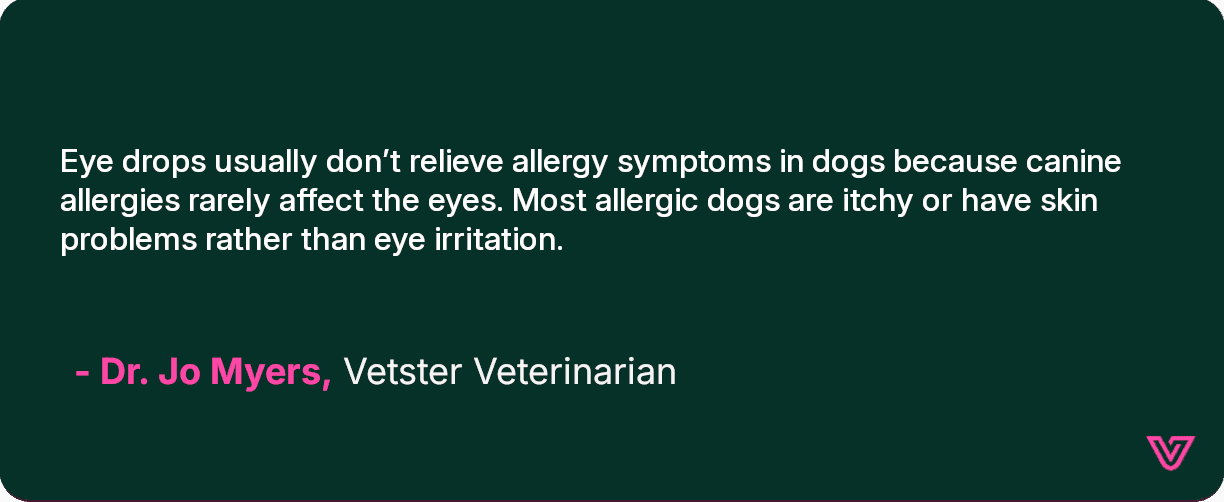
“Eye drops usually don’t relieve allergy symptoms in dogs because canine allergies rarely affect the eyes,” explains Dr. Jo Myers, a veterinarian on the Vetster platform. “Most allergic dogs are itchy or have skin problems rather than eye irritation.” If a dog is diagnosed with allergic conjunctivitis, it’s most often treated with medicated dog eye drops or eye ointments prescribed by a veterinarian. These eye medications usually contain anti-inflammatories to reduce swelling and redness, and antibiotics in cases where a secondary eye infection is suspected.
Eye drops containing antihistamines are sometimes used to help reduce itching and inflammation associated with eye allergies, but they’re typically used alongside other treatments, such as corticosteroids or allergen management, rather than as sole therapy.
Over-the-counter eye drops may be recommended in some instances. However, human allergy eye drops are not usually appropriate for dogs with allergic conjunctivitis. These medications are not tested or approved for use in animals, and some contain additional ingredients, such as decongestants, antihistamines, and preservatives, that may be irritating or harmful. In certain situations, a veterinarian may recommend a specific product, but it’s best to avoid over-the-counter eye drops without professional guidance.
Can eye drops prevent allergic conjunctivitis in dogs?
Eye drops alone do not usually prevent allergic conjunctivitis in dogs. The most effective allergy prevention comes from managing a dog’s allergy symptoms overall rather than just focusing on the eyes. One of the primary goals of allergy management is to control inflammation so well that secondary problems, such as conjunctivitis, ear infections, or hot spots, never develop or are much milder and less frequent. Allergy prevention plans for dogs typically include:
- Flea prevention and other strategies to reduce exposure to allergens
- Hypoallergenic or other special diets if a food allergy is suspected
- Medications that reduce allergic inflammation or itching
- Immunotherapy (allergy shots or drops)
In some cases, a veterinarian may recommend regular use of eye drops or ointments to help maintain comfort and reduce the frequency of allergy-related flare-ups. These products may be used proactively to support eye health rather than only after irritation develops. Working with your vet is the best way to ensure your efforts to keep your canine companion comfortable are safe and effective.
What should I do if my dog has itchy, pink eyes?
It’s important to talk to a veterinarian any time you notice changes in your dog’s eye health. Treating allergies in dogs can be complex and often requires multiple treatment methods. Working with a vet is the best way to quickly get your dog’s allergy symptoms under control.
How an online vet can help with dog eye allergies
Eye issues can be worrying and uncomfortable, and pet parents often want answers quickly. An online veterinarian can provide timely guidance and help you decide what to do next, saving stress for both you and your canine companion. A virtual vet can:
- Review your dog’s symptoms and history
- Visually assess your dog’s eyes through video chat and photos that you upload
- Discuss possible causes, including common breed-specific disorders
- Explain whether supportive care at home may help or if an in-person exam is needed right away
- Demonstrate and offer tips and tricks on how to administer eye medications
In some cases, state or provincial regulations allow vets to establish a veterinary-client-patient relationship (VCPR) through a virtual appointment. When a valid VCPR is in place, the vet can prescribe medications to treat eye problems or other health issues directly through the online platform.
FAQ - Eye drop use with dog allergies
What are the best allergy eye drops for dogs?
When a veterinarian diagnoses allergic conjunctivitis in a dog, the most effective and safest treatments are prescription medications formulated specifically for veterinary use. These often include steroid eye drops or ointments, antibiotic eye drops or ointments, and lubricating medications. Because dosing and formulation differ between species, these products typically require a prescription to ensure they are appropriate for your dog’s specific needs and safe for long-term use. Human over-the-counter allergy eye drops, even those marketed for “redness relief” or “itchy eyes,” are usually not recommended for dogs. They rarely address the true cause of canine allergic conjunctivitis and may contain ingredients, such as decongestants or preservatives, that can be irritating or harmful.
Can dogs use human eye drops?
Human eye drops are not formulated for dogs and may be ineffective, irritating, or even toxic depending on the ingredients. Products that contain certain decongestants, antihistamines, or steroids can cause adverse effects. Even seemingly harmless products, like saline eye washes or lubricating drops, may not be helpful depending on the underlying cause. There are many different eye problems in dogs, including infection, injury, and allergy, and they can all share similar symptoms, so it’s best to consult a veterinarian before using any eye medication so the underlying condition can be properly diagnosed and treated.
How can I treat my dog’s eye allergies at home?
Eye symptoms in dogs are usually caused by health issues like upper respiratory infections, physical disorders, irritation, or injuries rather than by allergies. It’s best to talk to a veterinarian to get a definitive diagnosis before attempting to treat your dog’s symptoms. If your dog does have allergy symptoms that affect the eyes, allergy treatments that address the entire body are the best way to address them.
Disclaimer: This article, its content, and its related references do not constitute veterinary advice and should not be considered a substitute for veterinary care. If your pet is showing any symptoms that could indicate a medical emergency, please seek immediate emergency care.