Is human allergy medication ever safe for cats?


Key takeaways
- Many over-the-counter (OTC) allergy medications commonly used by people are not the best option for cats, and some combination products contain ingredients that may be harmful.
- Antihistamines target a different pathway than the one driving chronic feline allergic skin disease, so they tend to offer only limited relief compared with other medications used to treat a cat's allergies.
- Consulting a veterinarian is the most effective way to find a safe, effective allergy plan for your cat.

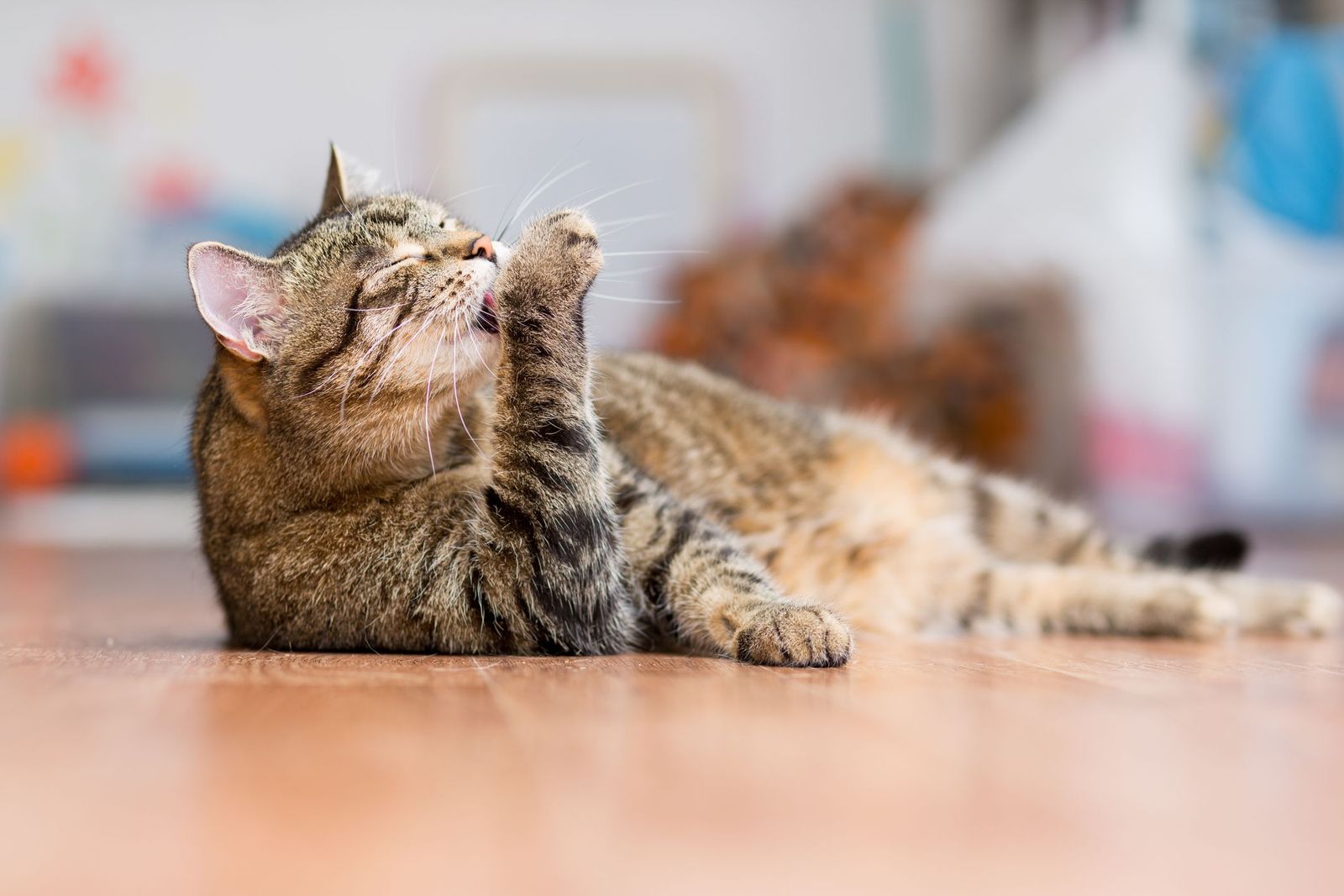
If your cat has itchy skin, is grooming excessively or suddenly sneezing intensely, your first instinct may be to reach for an allergy medication that's already in the house. Even though many common over-the-counter (OTC) allergy medications commonly used by people are occasionally used in veterinary medicine, they're not always effective for feline allergies and may contain ingredients that are unsafe for cats.
This guide walks you through what to know about human OTC allergy medications for cats and their potential risks, as well as how an online vet visit can help you find an effective allergy treatment plan.
The hidden dangers of human allergy medication for cats
 OTC allergy medication labels and dosing charts are written for people. They don't tell you whether a product is safe for cats or appropriate for treating your cat's symptoms.
This is especially risky with "dual-action" allergy and sinus medications, which combine an antihistamine with a decongestant such as pseudoephedrine. In cats, these decongestants can stimulate the cardiovascular and nervous systems, increasing heart rate and blood pressure and causing agitation, tremors, and, in severe cases, seizures.
Some allergy and sinus products also contain pain relievers such as acetaminophen (Tylenol®), which can be life-threatening to cats even in relatively small amounts. To learn more about everyday products that could be harmful, see our guide to household items that are neurotoxic to cats.
Topical treatments carry risks as well. Products formulated for people may contain ingredients that aren't appropriate for cats, and because cats groom themselves so thoroughly, they may ingest medication applied to their skin.
If a vet does recommend a topical product, our guides to applying allergy creams, oils, and topical treatments to cats safely and home itch-relief remedies for cats can help you reduce risks at home.
When to seek emergency care
If your cat has swallowed a medication that contains a decongestant or is showing signs like a racing heart, tremors, seizures, extreme agitation, vomiting, or collapse, contact your nearest emergency vet clinic or an animal poison control hotline.
Why scaling by weight is unsafe
It's tempting to assume a human medication dose can simply be scaled down by a cat's weight. In practice, weight is only one of several factors that determine whether a dose is appropriate.
Age and existing health conditions can affect how a cat handles medication. Liver or kidney disease, for example, may change how some drugs are metabolized or eliminated, while other medications a cat is taking can affect whether a particular drug is safe to use.
Dosing decisions should be based on the individual cat rather than weight alone. A veterinarian can help you understand what medication is appropriate by considering your cat's age and any existing conditions along with the exact medication and formulation.
Antihistamines vs. targeted veterinary treatment
Cats and people develop allergy symptoms through different biological pathways, which is one reason medications that help people often provide limited relief for cats.
In cats, allergies most often show up as skin problems, like persistent itching or small crusty bumps known as miliary dermatitis, and less commonly respiratory symptoms like coughing or wheezing. Antihistamines work by blocking histamine, which often plays a relatively small role in chronic feline allergic skin disease.
Cats and people can develop allergy symptoms through different inflammatory pathways, which is why a medication that works for human hay fever often does very little for a cat's itch. It's not that antihistamines never work. They're just often not targeting the most important part of the problem.
—Dr. Jo Myers, Vetster veterinarian
For cats with allergic skin disease, veterinarians often turn to other types of medication. Prednisolone is commonly used for rapid relief of allergic itching, while modified cyclosporine oral solution (Atopica® for Cats) is FDA-approved for the control of feline allergic dermatitis. These medications work differently than antihistamines and often provide more effective relief. For a full comparison of allergy treatment options, see the best medicines for allergy symptoms in cats.
Common human allergy medications
The table below summarizes commonly asked-about antihistamines and key considerations for cats. A veterinarian can help confirm if the product is right for your cat.
| Medication (generic/brand) | Drug class | Considerations for cats |
|---|---|---|
| Diphenhydramine (Benadryl®) | First-generation antihistamine | Sometimes used for acute allergic reactions; generally provides limited benefit for chronic allergic skin disease. Combination products may contain ingredients that are dangerous for cats. |
| Loratadine (Claritin®) | Second-generation antihistamine | Limited evidence of meaningful benefit for chronic feline allergic skin disease. Claritin-D® contains a decongestant that can be harmful to cats. |
| Cetirizine (Zyrtec®) | Second-generation antihistamine | Occasionally used off-label; evidence for chronic feline allergic skin disease is limited. |
| Hydroxyzine (Atarax®) | First-generation antihistamine | A prescription antihistamine sometimes used as part of an allergy treatment plan; effectiveness varies and dosing must be individualized. |
| Fexofenadine (Allegra®) | Second-generation antihistamine | Less commonly used in feline medicine; evidence supporting its effectiveness and appropriate dosing in cats is limited. |
This table is intended as a general guide. A veterinarian should always confirm that the specific product and formulation are appropriate for your cat.
Diphenhydramine (Benadryl®)
Diphenhydramine is a first-generation antihistamine that people commonly use for hay fever, hives, and mild allergic reactions. Veterinarians sometimes recommend it for cats experiencing acute allergic reactions, such as hives, swelling from an insect bite or sting, or some vaccine reactions. It generally provides limited benefit for chronic allergic skin disease.
Some cats become sleepy after taking diphenhydramine, while others may become unusually restless or excited. If your veterinarian recommends diphenhydramine, make sure you're using the exact product they recommend.
Loratadine (Claritin®)
Loratadine is a second-generation antihistamine that causes less drowsiness than diphenhydramine in many people. It may be recommended for some cats in selected situations, but evidence that it meaningfully improves chronic feline allergic skin disease is limited.
Avoid combination products such as Claritin-D®, which contains a decongestant that can be harmful to cats.
Cetirizine (Zyrtec®)
Cetirizine is another second-generation antihistamine that veterinarians sometimes recommend for selected cats. While it may be appropriate in some situations, studies suggest it has limited effectiveness for managing chronic feline allergic skin disease.
Hydroxyzine (Atarax®)
Hydroxyzine is a prescription antihistamine that's been used in veterinary medicine for many years. It may be part of an allergy treatment plan for some cats, although, like other antihistamines, its effectiveness varies.
Because hydroxyzine is available only by prescription and dosing must be individualized, it should be used under veterinary supervision.
Fexofenadine (Allegra®)
Fexofenadine is a second-generation antihistamine commonly used by people for seasonal allergies but used less often in cats. Evidence supporting its effectiveness in cats is limited, and appropriate dosing has not been well established.
There isn't one antihistamine that's "best" for every cat. The right treatment depends on your cat's symptoms, overall health, medical history, and the specific product being considered. Your veterinarian can help determine whether an antihistamine is appropriate or another type of allergy medication is likely to provide better relief.
How an online vet can help with your cat's allergies
Figuring out whether a human allergy medication is safe for your cat starts with understanding what's causing their symptoms. A virtual appointment gives you the chance to discuss your cat's symptoms, medical history, current medications, and any allergy product you're considering with a veterinarian.
Your vet can help determine whether an antihistamine is likely to help or whether another treatment, including supplements or dietary changes could be more appropriate. For example, if your cat's main symptom is watery or irritated eyes, a targeted eye treatment may make more sense than an oral antihistamine. Your vet can also advise you when your cat's symptoms warrant diagnostic testing or an in-person examination.
If you're also caring for a dog with allergies, see our companion guide, "Is human allergy medication ever safe for dogs?"
Book a virtual allergy appointment to learn more about medication safety for your cat.
FAQ
What can you give a cat for allergies?
The right treatment depends on what's causing your cat's symptoms. Some cats may benefit from an antihistamine, but chronic allergic skin disease often responds better to other medications, such as prednisolone or cyclosporine. A veterinarian can help determine what's causing the symptoms and which treatment is most likely to help.
Can I give my cat a human allergy pill?
Talk with a veterinarian before giving your cat a human allergy pill. Some human antihistamines are used in cats, but they're often not very effective for chronic allergic skin disease, and some products contain additional ingredients that can be dangerous. Your veterinarian can determine whether an antihistamine is appropriate and recommend the right product and dose.
Is allergy medicine toxic to cats?
Some human allergy medications can be toxic to cats, particularly combination products containing other medications. Some allergy and cold products contain acetaminophen (Tylenol®), and even very small doses can cause life-threatening poisoning in cats. Others contain decongestants such as pseudoephedrine or phenylephrine, which can cause a dangerously fast heart rate, high blood pressure, agitation, tremors, or seizures.
Which allergy pills are safe for cats?
There's no human allergy pill that's universally safe or appropriate for every cat. Some single-ingredient antihistamines are used in cats, but the right choice depends on your cat's symptoms, health, other medications, and the exact product formulation.
Can you give human Claritin® to a cat?
Loratadine, the active ingredient in Claritin®, is sometimes used in cats, but evidence that it provides meaningful relief for chronic feline allergic skin disease is limited. Claritin-D® and similar combination products contain a potentially dangerous decongestant and should not be given to cats.
How much Benadryl® can I give my cat?
There isn't a one-size-fits-all dose of Benadryl® (diphenhydramine) for cats. When veterinarians recommend it, they consider factors including weight, age, overall health, other medications, and the exact product being used. A veterinarian can determine whether Benadryl is appropriate for your cat and, if so, recommend the correct product and dose.
Why can't I calculate my cat's allergy medication dose based on weight alone?
Weight is only one factor in safe dosing. Age, liver and kidney function, underlying health conditions, other medications, and the specific drug and formulation can all affect whether a medication and dose are appropriate. That's why simply scaling down the human dose according to your cat's weight isn't a reliable way to determine a safe dose.