The best medicines for allergy symptoms in cats


It’s normal to want to help relieve your cat’s allergy symptoms at home when they start to itch and scratch. Cat allergies can be treated in many ways, including with prescription or over-the-counter medications, dietary supplements, and immunotherapy injections. A veterinarian is your best resource when looking for answers about your cat’s allergies. They can help answer questions like:
- What are the symptoms of allergies in cats?
- Which allergy medication is best for my cat?
- What types of allergy medications are available for my cat?
- How can a vet help my cat’s allergies?
An allergy develops when the immune system overreacts to a typically harmless substance in the environment. Allergy symptoms in cats aren’t necessarily the same as they are in people, and treating feline allergies safely and effectively can be complicated, often involving several different treatment methods. Some medications work better than others for certain types of allergies or symptoms, and individual cats respond differently to various treatment methods.
When your cat shows signs of allergies, a veterinarian can determine whether the cause is environmental or food-related, or if there’s another health problem, and recommend the right care. An online vet can help you manage your cat’s allergies from home by reviewing symptoms, recommending safe over-the-counter options, guiding next steps for ongoing treatment and relief, and, in some cases, prescribing medications.
Feline allergy symptoms
Allergies are the immune system’s overreaction to normally harmless substances in the environment (allergens), leading to widespread inflammation, which causes allergy symptoms. Unlike in people, sneezing, runny nose, and watery eyes are not common symptoms of feline allergies. Instead, the most common cat allergy symptoms involve the skin, with itchy skin (pruritus) being the most common symptom. Other common allergy symptoms in cats include:
- Excessive grooming, scratching, or biting at the skin
- Hair loss
- Skin redness or rash
- Scabbed, crusty skin
Excessive scratching, grooming, and chewing at the skin can lead to secondary skin infections (including hot spots) or patches of thickened, dark, or otherwise inflamed skin. Ear infections are also common in cats with allergies.
Less commonly, some allergic cats may show respiratory signs, such as:
Asthma in cats occurs when the immune system overreacts to inhaled allergens, such as dust, mold, pollen, or smoke. This leads to inflammation and narrowing of the airway and lungs, producing respiratory symptoms like those listed above. Feline asthma, like all allergies, is a chronic condition that requires lifelong management. Most of the time, however, upper respiratory symptoms in cats are caused by bacterial or viral infections rather than asthma.
What is the best medication for my cat’s allergy symptoms?
There is no single “best” treatment when it comes to cat allergies. Allergies cannot be cured, and ongoing management usually involves more than one method, including trying to avoid the things that trigger allergies. This might mean regularly using a parasite control product to manage flea allergy dermatitis or avoiding specific ingredients in the case of food allergies.
Cats can develop different types of allergic skin disease:
- Flea allergy dermatitis
- Atopic dermatitis, or environmental allergies (triggered by things like pollen, dust, or mold)
- Food allergies
- Contact allergies from direct skin exposure to certain materials or chemicals
Each type has different triggers and treatment approaches, which is why identifying the source of your cat’s allergy symptoms is so important.
Because other conditions — such as bacterial or fungal skin infections, hormonal disease, and ringworm, ear mites, and other parasites — can cause similar symptoms, an accurate diagnosis from a veterinarian is the first step before starting treatment.
Every cat is different and responds to treatments differently, so it’s important to talk to a vet when navigating allergies in cats. A vet can confirm whether or not your cat’s symptoms are due to allergies before safely exploring various treatment methods, including prescription medications that you can’t get over the counter.
Types of allergy medication for cats
Pet allergies are chronic, lifelong conditions and can’t be cured. The goal of allergy treatment is to keep your cat comfortable and maintain their quality of life by focusing on:
- Avoiding allergens
- Relieving symptoms
- Optimizing skin health
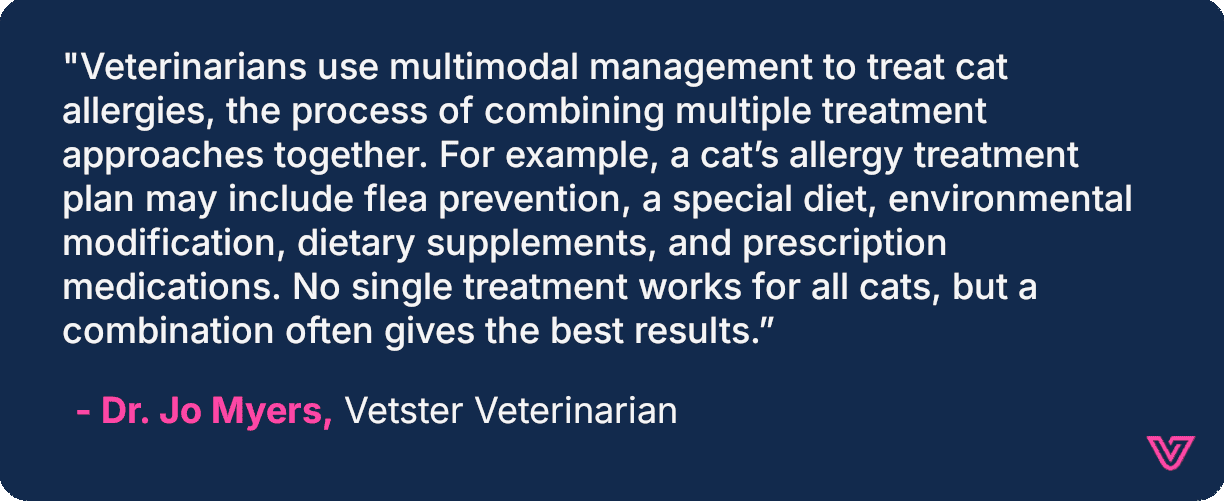
Symptoms can be expected to return any time treatment efforts are stopped. “Veterinarians use multimodal management to treat cat allergies, the process of combining multiple treatment approaches together,” explains Dr. Jo Myers, a veterinarian on the Vetster platform. “For example, a cat’s allergy treatment plan may include flea prevention, a special diet, environmental modification, dietary supplements, and prescription medications. No single treatment works for all cats, but a combination often gives the best results.”
Prescription medications
There are a variety of prescription medications that are used to treat allergies in cats. Different drugs target different allergy types and symptoms, so management methods depend on what’s causing the allergy and how your cat responds to the treatment.
Flea control products are commonly part of a cat’s allergy treatment plan, even if they do not appear to have fleas. This is because flea allergies in cats are very common and can be triggered by a single flea bite. It’s also essential that all pets in the home are included in an ongoing flea prevention plan.
Prednisolone is a steroid used to quickly reduce inflammation that’s causing itchy skin or airway restriction from feline asthma. Steroids are most appropriately used short term to get symptoms under control before switching to a safer medication for long-term management. Long-term steroid use is associated with side effects like weight gain, diabetes, increased thirst/urination, and higher infection risk.
Atopica for cats (cyclosporine) is a prescription medication approved to treat allergic skin disease in cats over the age of six months. The medication works by calming the immune system’s overreaction to allergens, thereby reducing itch and inflammation. Atopica is good for long-term control of skin allergies, though it may take several weeks to show results. Atopica doesn’t work for every cat, however, and the treatment carries risks (such as increased infection susceptibility), so regular monitoring by your vet is essential.
In cats with asthma, inhaled steroids (such as fluticasone) are used as a daily “controller” therapy to reduce airway inflammation over time, ideally with fewer systemic side effects than pills. Because inhaled steroids act slowly, they’re not effective in emergencies. Rescue inhalers, often containing albuterol, are used during an acute asthma flare-up to relax airway muscles quickly and ease breathing. However, rescue inhalers don’t treat the underlying inflammation, so they’re best used in conjunction with steroid therapy or other long-term treatments.
Long-acting steroid injections (Depo-Medrol, i.e., methylprednisolone acetate) can provide symptom relief for several days to weeks at a time and are especially helpful for cats who are difficult to pill. Steroid injections can also calm severe flare-ups of allergic skin disease quickly. However, like oral steroid medications, steroid injections are most appropriately used for the short term due to their potential side effects. Steroids can increase thirst, urination, and appetite, raise diabetes risk, and may predispose to infections. Once injected, the dose can’t be taken back or tapered. Changes to the area around the injection site can also occur. Because allergies are a lifelong condition, long-term management usually involves avoiding triggers as well as alternatives to injectable steroids, such as cyclosporine for skin allergies or inhaled steroids for asthma.
Dietary supplements
Supplements can play a supportive role in managing allergic skin disease, though they’re not stand-alone cures.
Omega-3 fatty acids, such as fish oil, may reduce skin inflammation and itch and can sometimes reduce the amount of prescription medication a cat needs. Topical ceramide products (creams or shampoos) are commonly used to help repair the skin barrier in cats, but the benefit of oral ceramide supplements or extra vitamins for treating allergies is not well established. Some research suggests that probiotics can provide immune-balancing benefits, though results are mixed.
While vitamins and minerals are important for overall skin and immune health, there’s limited evidence that they help allergy symptoms in cats. Always consult a veterinarian before adding supplements to your cat’s routine, especially if your cat is already taking medications or has an underlying health issue. If you are considering giving your cat a supplement, talk to a veterinary professional to ensure you’re choosing a safe and effective option.
Special diets
While medications control itching and inflammation, diet plays a key role in maintaining a healthy skin barrier, supporting skin health and reducing flare-ups in allergic cats. Some cats benefit from foods formulated for skin support, while others need diets that avoid specific ingredients.
Food allergies are a specific but less common cause of allergic skin disease in cats. They develop when the immune system reacts to certain ingredients, usually proteins, and causes symptoms similar to other allergies, such as itching, hair loss, and ear infections.
Diagnosis requires a strict eight- to 12-week diet trial using a hydrolyzed or novel-protein food, with all other foods and flavored treats avoided. If symptoms improve, the diet may become part of long-term management.
Some cats have both food and environmental allergies, so a special diet may be used alongside medications or other therapies. Veterinary guidance ensures the diet your cat is on is safe, balanced, and appropriate for their condition.
Special shampoo and topical care
Vet-recommended or prescription shampoos, sprays, wipes, and other topical products can help soothe itchy skin, clear infections, and improve overall comfort. Leave-in mousses or wipes are often easier for cat owners to use than full baths. Topical anti-itch products won’t manage full-body allergies or asthma alone, but they can be useful for localized problem spots.
Immunotherapy
Allergen-specific immunotherapy, or allergy shots, is a treatment made from a small amount of the allergen your cat reacts to, like pollen, dust, or mold. They’re given as injections under the skin or as drops under the tongue. Allergy shots help retrain your cat’s immune system to stop overreacting to allergens.
The goal of immunotherapy is to reduce allergy signs over time rather than just treating symptoms. Allergy immunotherapy takes several months to see improvement. Some cats may show improvement after three to six months, while others may show no improvement for more than a year. Some cats may show no change at all.
Allergen-specific immunotherapy is best for long-term management of environmental allergies. Not every cat responds, but many improve enough to need fewer medications. It’s considered the only treatment that can change the course of allergic disease rather than just controlling its symptoms.
Other treatment methods
Some vets may prescribe Apoquel (oclacitinib) for cats, though it isn’t officially approved for them. Research on the efficacy of the drug is more limited in cats than in dogs. Over-the-counter antihistamines, such as Benadryl (diphenhydramine), don’t usually help with the common forms of feline allergies but are sometimes used to manage rare acute allergic reactions to vaccines, bee stings, and other situations.
How an online vet can help your cat’s allergies
A virtual vet can adjust your cat’s treatment plan, and determine whether a medication may be beneficial or unnecessary, and help you avoid potentially harmful options. Virtual appointments can often be made more quickly than an in-person appointment and may be more convenient for your schedule. Vets can prescribe medications or therapeutic diets if there is a valid veterinarian–client–patient relationship (VCPR). In some states or provinces, this relationship can be established remotely. If your pet has already seen the vet in person, a remote visit may still be eligible for prescriptions. Please note that writing a prescription is always up to the veterinarian’s professional judgment.
Why working with a vet is best to treat cat allergy symptoms
There are many health problems that can cause the symptoms typically associated with allergies in cats, like itchy or scabby skin, sneezing, and discharge from the nose or eyes. A vet can give a definitive diagnosis for the cause of the symptoms and create a safe and effective treatment plan. Different allergy treatment methods are more effective for certain types of allergies, and what works for one cat may not work for another. As a result, it often takes some trial and error to find the best approach for each individual cat. Attempting to treat the problem at home is unlikely to help and may make things worse.
FAQ - The best medication to help cats with allergy symptoms
What do vets recommend for cats with allergies?
Veterinarians use a multimodal approach to treat allergies in cats, meaning they use multiple treatment methods to address allergy symptoms. This can include environmental modification, prescription medication, special diet, dietary supplements, flea control, and other approaches. Not all treatment methods are appropriate for every cat, so it’s important to talk to a veterinarian about your cat’s allergies.
Can cats have over-the-counter allergy medication?
Some over-the-counter antihistamines are safe to give to cats, but their effectiveness for managing allergies is limited. Antihistamines may help mild, short-term allergic symptoms like hives, but they rarely provide meaningful relief for chronic allergic skin disease. Some over-the-counter allergy medications are dangerous for cats. Because dosing and safety vary between products, it’s important to consult a veterinarian before giving your cat any medication to ensure it’s appropriate.
How can I treat my cat’s allergies at home?
It’s best to work with a veterinarian to treat your cat’s allergies. Each cat is different and needs an individualized treatment approach. Many allergy treatments are given at home, such as flea prevention, prescription medications, special diets, and supplements.
Disclaimer: This article, its content, and its related references do not constitute veterinary advice and should not be considered a substitute for veterinary care. If your pet is showing any symptoms that could indicate a medical emergency, please seek immediate emergency care.