Can eye drops help a cat’s allergies?


If your cat has irritated eyes, you may wonder if it’s because of allergies. But unlike humans, cats don’t commonly develop watery, red, swollen eyes as a result of allergies. While allergic conjunctivitis does occasionally occur in cats, it’s more often due to things like irritants, eye injuries, and viral or bacterial infections, so over-the-counter human allergy eye drops are unlikely to help and may even cause harm.
The best way to help your cat if they show signs of conjunctivitis (inflammation of the sensitive tissue lining the eye) is to work with a veterinarian to identify the underlying cause. Because cats with inflamed eyes often appear uncomfortable and quick relief is key, it’s important to have accurate information about common questions:
- What are the most common causes of irritated eyes in cats?
- What is allergic conjunctivitis?
- Do eye drops help cats with allergies?
- Can eye drops prevent allergic conjunctivitis in cats?
- When should I seek veterinary care for my cat’s eye symptoms?
It’s important to talk to a vet any time your cat has irritated, red, or watery eyes. If your vet diagnoses allergic conjunctivitis, treatment usually involves prescription medications rather than anything available over the counter. These may include anti-inflammatory topical eye medications sometimes combined with antibiotics if there’s a concern of secondary infection. Treatment is tailored to your cat’s specific needs, since the eye tissue is delicate and not all drops are safe for cats. Managing environmental triggers, such as cigarette smoke, strong fragrances, or dusty litter, may also help reduce flare-ups.
Because allergic conjunctivitis is uncommon in cats and its symptoms overlap with other, more common eye problems, the best way to help your cat is by working with a veterinarian. A vet can examine your cat’s eyes, run necessary tests, and identify the underlying cause so the most appropriate treatment can be prescribed. An online vet can help by virtually examining your cat’s eyes and offering advice on the next steps to take.
What are the most common causes of eye irritation in cats?
Cat conjunctivitis is the inflammation of the eye’s conjunctiva, a thin, sensitive tissue that covers the surface of a cat’s eyeball and the inside of the eyelids. Symptoms of conjunctivitis in cats include:
- Red eyes, specifically swollen, red membranes between the lids and the eyeball itself
- Swollen eyelids
- Eye discharge (epiphora)
- Squinting or keeping the eye partially closed (blepharospasm)
- Elevated or protruding third eyelid
There are many common health problems that can cause conjunctivitis in cats:
- Upper respiratory infections, including feline herpesvirus and calicivirus
- Environmental irritants, such as smoke or pollutants
- Foreign bodies or eye injuries
- Bacterial infections, such as Staphylococcus
- Other eye conditions, such as dry eye syndrome or corneal ulcers
- Eyelid or eyelash disorders
- Tumors or growths on the eye or eyelid
Viral or bacterial upper respiratory infections are the most common causes of conjunctivitis in cats. Feline herpesvirus is an especially common viral disease that can repeatedly flare up and go away on its own. The flare-up pattern of feline herpesvirus can appear similar to that of seasonal allergies.
What is allergic conjunctivitis?
Allergic conjunctivitis happens when an allergic reaction causes the inflammation of the eye’s conjunctival tissue. Eye allergies are much less common in cats than in dogs or people. An allergy is the body’s immune system overreacting to a normally harmless substance in the environment (allergen) that leads to widespread inflammation. Common allergy triggers in cats include:
- Flea bites
- Environmental airborne allergens, like pollen, dust mites, and mold spores
- Certain food ingredients, especially specific animal proteins
Flea allergy dermatitis is one of the most common allergies in cats.
Common symptoms associated with allergies in cats include:
- Itchy skin, scratching, or overgrooming
- Hair loss or sores from self-trauma
- Scabs, especially around the head and neck
- Ear infections or itchy ears
Ocular allergy symptoms, such as allergic conjunctivitis, are rare compared to more typical clinical signs involving the skin.
Do eye drops help cats with allergies?
Eye drops don’t usually help allergies in cats because feline allergies rarely cause eye problems. Instead, most cats with allergies show skin or respiratory symptoms. If your cat does have allergic conjunctivitis, prescription eye medication may be recommended. These drops or ointments typically include anti-inflammatories to reduce swelling and redness, and antibiotics if a secondary bacterial infection is suspected.
Medicated eye drops with antihistamines sometimes play a supportive role by reducing inflammation, but they’re typically used alongside other treatments, such as corticosteroids or allergen management, rather than as sole therapy.
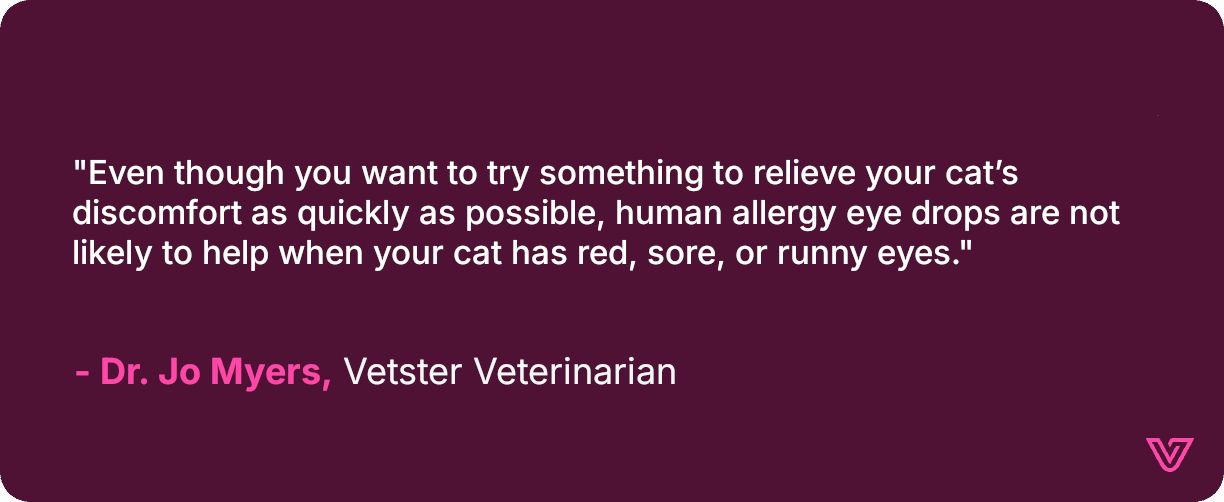
“Even though you want to try something to relieve your cat’s discomfort as quickly as possible, human allergy eye drops are not likely to help when your cat has red, sore, or runny eyes,” explains Dr. Jo Myers, a veterinarian on the Vetster platform. Human allergy eye drops may be ineffective, irritating, or even toxic depending on the ingredients. Products that contain decongestants, antihistamines, or steroids can have serious adverse effects in cats, and depending on the underlying cause of your cat’s eye symptoms, even seemingly harmless things like saline or lubricating drops may not be helpful. In certain situations, a veterinarian may recommend a specific human product, but it should only ever be used under professional supervision.
Can eye drops prevent allergic conjunctivitis in cats?
Eye drops alone don’t usually prevent allergic conjunctivitis in cats. The most effective prevention comes from managing your cat’s allergies overall rather than focusing on their eyes. One of the primary goals of allergy management is to control inflammation so well that secondary effects, like conjunctivitis, ear infections, or skin flare-ups, never develop or are milder and less frequent. Strategies may include:
- Reducing exposure to allergens, like using flea prevention
- Feeding hypoallergenic or other special diets for food allergies
- Medications that reduce allergic inflammation
- Immunotherapy (tailored allergy shots or drops)
In some cases, a veterinarian may recommend regular use of prescription eye drops to help keep the eyes comfortable and to reduce flare-ups. This can mean using drops proactively rather than waiting until the eyes are already irritated. Whether you’re using them for treatment or prevention, working with your vet ensures your efforts to make your cat comfortable are safe and effective.
What to do if your cat has irritated eyes
It’s important to talk to a veterinary professional any time you notice changes in your cat’s eye health. Successfully managing allergies in cats often requires multiple treatment methods, and working with a vet is the best way to quickly get symptoms under control.
How an online vet can help with your cat’s allergies
Eye issues can be worrying for you and uncomfortable for your cat, and pet parents often want answers quickly. An online vet can provide guidance and help you decide what to do next, saving stress for both you and your cat. A virtual vet can:
- Review your cat’s symptoms and history
- Visually examine your cat’s eyes through video chat and with photos
- Discuss possible causes, including common conditions like feline herpesvirus (FHV-1), which often causes repeated conjunctivitis flare-ups
- Explain whether supportive care at home may help or if an in-person exam is needed right away
- Offer tips on or demonstrate how to give your cat eye drops
FAQ - Allergy eye drops for your cat
What can I do to help my cat’s eye allergies?
Eye symptoms are usually caused by health issues like upper respiratory infections or eye irritation rather than allergies. It’s best to talk to a veterinarian to get a definitive diagnosis before attempting to treat your cat’s symptoms. If your cat does have eye allergies, allergy treatments that address the entire body are the best way to manage them.
Can I give my cat human allergy eye drops?
Human allergy eye drops are not formulated for cats and may be ineffective, irritating, or even toxic depending on the ingredients. Products that contain decongestants, antihistamines, or steroids can cause serious adverse effects if used in cats. Even seemingly harmless products, like saline or lubricating drops, may not be helpful depending on the underlying cause. Even though eye problems in cats can look similar to those in humans, they often have very different causes, such as infection, injury, or allergy. It’s best to consult a veterinarian before applying any eye medication so the underlying condition can be properly diagnosed and treated.
What are the best eye drops for cats with allergies?
When a veterinarian has diagnosed allergic conjunctivitis in a cat, the most effective and safest treatment is prescription eye drops formulated specifically for use in cats. These drops often include anti-inflammatories and sometimes contain antibiotic or lubricating medications. Because dosing and formulation differ between species, medicated eye drops typically require a prescription to ensure they’re appropriate for your cat’s specific needs and safe for long-term use.
Human over-the-counter allergy eye drops, even those marketed for redness relief or irritated eyes, are not recommended for cats. They rarely address the true cause of feline allergic conjunctivitis and may contain ingredients, such as decongestants or preservatives, that can be irritating or harmful. For that reason, veterinarians generally do not advise using human allergy eye drops in cats with allergies. Instead, they prescribe or recommend veterinary products that have been proven effective and safe for your cat’s eyes.
Disclaimer: This article, its content, and its related references do not constitute veterinary advice and should not be considered a substitute for veterinary care. If your pet is showing any symptoms that could indicate a medical emergency, please seek immediate emergency care.