Chicken allergy in dogs: Symptoms, triggers, and treatment


Chicken allergies in dogs can cause uncomfortable skin-related symptoms that are frustrating for both you and your pet. If you’re concerned that your dog has an allergy to chicken, this article will discuss steps you can take, including:
- Getting itch relief for your dog
- Determining if chicken is the underlying cause, and whether doing so is practical, or even necessary
- Keeping your dog’s allergy symptoms controlled long term
For most dogs, chicken is a great source of nutrition, and it doesn’t contribute to any type of health issue. Food allergies are not as common in dogs as other types of allergies, but when they occur, chicken is one of the most common triggering ingredients.
Because allergies aren’t always straightforward to diagnose and treatment can be complex, speaking with a vet is likely the quickest way to help your pet feel better and find the answers you are looking for.
Signs your dog might be allergic to chicken
Every dog responds differently to food allergies, so the symptoms can differ. Chicken allergies in dogs frequently cause skin-related symptoms and, less often, cause gastrointestinal symptoms.
It’s also important to know that a food allergy is different from a food intolerance. A food allergy involves the immune system, and usually results in skin problems, not digestive symptoms. A food intolerance on the other hand, involves the digestive system and is more likely to cause symptoms like diarrhea or vomiting.
Some of the most common symptoms include:
- Excessive scratching or biting at the skin
- Licking or chewing the paws
- Hair loss
- Hot spots
- Crusty or scabbed skin
- Red, inflamed skin
- Chronic ear or skin infections
- Thick or dark skin or other skin changes
“You can’t diagnose a chicken allergy just by assessing symptoms,” says Dr. Myers. “This is because symptoms of chicken allergies in dogs can be similar or even identical to symptoms that are caused by an environmental allergy, or another condition altogether.” With a physical exam, diagnostic testing, and a careful review of your dog’s history and symptoms, a vet can help you to determine the underlying cause of your dog’s symptoms and develop a treatment plan for speedy relief.
Why are dogs allergic to chicken?
The honest answer is that we do not fully know. Allergies in dogs are caused by an inappropriate immune response to a trigger that’s actually harmless. When allergies are caused by food, it is most often a specific protein that triggers the reaction. Several factors are believed to contribute to chicken allergies in dogs:
- Genetics likely play a role: Some dogs are simply more prone to allergic disease overall. Certain breeds such as German Shepherds, Labrador Retrievers, French Bulldogs, and West Highland White Terriers are often affected, which suggests inherited immune system differences may increase risk.
- Repeated exposure over time may matter: Chicken is one of the most common proteins used in commercial dog foods and treats. Because many dogs eat chicken regularly for years, their immune system has more opportunities to develop sensitivity to it. This does not mean chicken is “bad.” It reflects how common it is in the diet.
- There are underlying allergic tendencies: Dogs with environmental allergies or other allergic conditions may be more likely to develop food allergies. Their immune systems are already predisposed to reacting more strongly to harmless substances.
Importantly, chicken itself is not uniquely allergenic. It is often reported as a common food allergen simply because it is widely fed to dogs.
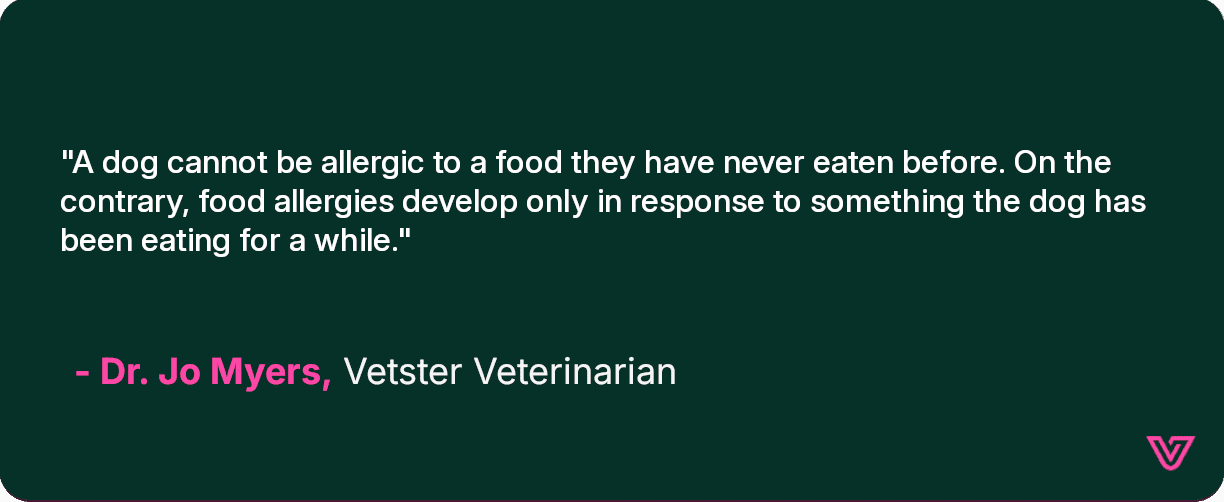
Food allergies in dogs may seem to arise spontaneously, but they actually develop over time from repeated exposure to that specific ingredient. “A dog cannot be allergic to a food they have never eaten before,” says Dr. Jo Myers, a Vetster veterinarian. “If you’re wondering if your dog’s itchy skin is due to a food allergy, it isn’t helpful to ask yourself what’s new about your dog’s diet. On the contrary, food allergies develop only in response to something the dog has been eating for a while.”
Why a ‘grain-free’ diet won’t fix a chicken allergy
Food allergies are triggered by one or more specific ingredients, usually a protein. “Fixing” a food allergy means avoiding foods that contain that specific trigger, which means avoiding chicken for a dog with a chicken allergy. Avoiding grains is only helpful for a dog with a grain allergy. Grain allergies do occur, but they aren’t as common as an allergy to a protein, such as beef or chicken.
How to spot hidden chicken on dog food labels

A dog food manufacturer is required by the Association of American Feed Officials (AAFCO) to list all of its ingredients on the dog food package label. If your dog has a confirmed chicken allergy, your vet may recommend avoiding dog food that lists any type of chicken-related ingredient including:
- Chicken
- Chicken meal
- Chicken or poultry byproducts
- Chicken flavoring
- Chicken fat
- Chicken liver (or other chicken organ meat)
- Meat meal
Regardless of whether chicken is listed first or last on the ingredients list, even small amounts can provoke a reaction in a dog with allergies to chicken.
Diagnosing a chicken allergy
Chicken allergies, like all food allergies, are diagnosed through a process called a dietary elimination trial. This trial can take several months to complete, with various steps along the way.
There is no single test that will give you a simple yes or no answer as to whether or not your dog’s symptoms are being caused by allergies. Instead, allergy testing, including dietary trials, is done to try to identify the specific triggers in an individual dog. Most of the time, the priority is getting itch relief and preventing complications, not testing.
When allergies are first suspected because a dog develops itchy skin or other common allergy symptoms, environmental allergies (not food) are often considered first, since they are more common. That means it’s not usually practical or necessary to start with a dietary elimination trial. Instead, the diagnosis of allergies is supported by:
- Diagnostic tests to rule out other conditions that cause itchy skin or a rash
- Improvement in response to standard, first-line allergy treatment
As Dr. Myers notes, “If a dog responds well to the treatment, it’s reasonable to simply stay on that plan and never do a dietary elimination trial. Even though the first question many owners often have is to wonder what their dog is allergic to, answering that question usually isn’t necessary for effective treatment.”
What is a dietary elimination trial?
A properly conducted dietary elimination trial attempts to isolate foods that provoke allergy symptoms. It is currently the only reliable way to diagnose food allergies in dogs, though it may not lead to a diagnosis in all cases. The goal isn’t just to change the diet but to eliminate allergens. Switching diets without veterinary guidance is unlikely to achieve this.
Strict dietary control is critical to a dietary elimination trial. Everything the dog puts in their mouth is closely monitored and controlled. In addition to using an appropriate diet, this also means eliminating accidental exposure to potential allergens, like licking crumbs off the floor or chewing a flavored toy.
Most trials are conducted for 8 to 12 weeks, and they require patience and careful interpretation. Even when performed correctly, they do not always provide simple or immediate answers. If you decide to do a dietary elimination trial, it is important to follow the guidelines closely from a vet to get meaningful results, since simply changing your dog’s diet cannot confirm food allergies.
Other ways to manage the itch
It’s best to avoid using anti-itch medications just prior to and during a dietary trial so you can watch to see if the elimination diet helps the dog. If your dog is too itchy to tolerate that, or if you simply want to see if they can get adequate relief without a dietary trial, you have options. Vets commonly recommend a treatment plan that includes multiple strategies to reduce allergy symptoms and treat complications such as:
- Flea prevention
- Topical medications
- Antibiotic medication
- Antifungal medication
- Anti-inflammatories
- Anti-itch medication
- Ear cleansing
- Skin support supplements
When allergies are suspected, instead of wondering if the trigger is in the food or the environment, vets often start by putting the dog on a reliable form of flea control and prescribing an anti-itch medication like Cytopoint or Apoquel. Flea control is important, even if you don’t think your dog has fleas, because saliva is one of the most common triggers for canine allergies. It only takes a couple of flea bites to trigger severe itching, so there may not be any obvious signs that fleas are present. By reducing exposure to flea saliva and prescribing anti-itch medication, most dogs get rapid relief. It then becomes unnecessary to go through a dietary elimination trial.
Following guidance from a veterinarian can ensure that any allergy treatments are both effective and safe for your pet.
What to feed a dog with a chicken allergy
The best diet for a dog with chicken allergies is one that is nutritionally complete and doesn’t contain any chicken. Eliminating exposure to chicken can be easier said than done, because of its frequent use in pet products. Check product labels for chicken or chicken flavor.
Examples of items that can contain chicken are:
- Dog treats
- Pill administration treats
- Rawhide chews
- Table food
- Flavored parasite prevention tablets
- Flavored supplements
- Shared food or water bowls with another pet who eats chicken
However, just because a product doesn’t list chicken in its ingredients list doesn’t mean that it is risk-free. Many foods and treats are produced on shared equipment that allows for cross contamination with other proteins. For dogs with a chicken allergy, even a minute amount of exposure to the chicken protein can result in symptoms.
Diet options for dogs with chicken allergies can include novel protein, limited-ingredient, or hydrolyzed diets:
| Diet Type | Description |
|---|---|
| Regular commercial diets that avoids chicken | A diet that doesn’t contain chicken in its ingredients list may help symptoms improve for some dogs. Some alternative proteins may include turkey or lamb. |
| Limited-ingredient dog food | These diets contain only one protein, often a novel protein, and one carbohydrate source that the dog hasn’t been exposed to before, which helps reduce the number of potential allergens. |
| A hydrolyzed or elemental diet | The protein in hydrolyzed and elemental diets is broken down into smaller molecules, so that the immune system no longer recognizes them as allergens. |
Some owners wish to try home-prepared meals as a method of eliminating chicken from their dog’s diet. To ensure that they are nutritionally complete, homemade diet recipes are best created with the help of a board-certified veterinary nutritionist (DACVN).
What to know about "hypoallergenic" dog foods and dog allergies
Pet foods labeled as “hypoallergenic” may be marketed as helpful for allergies, but there is no strict, universal regulatory definition of “hypoallergenic” for over-the-counter pet foods. A diet may still contain intact proteins that can trigger an allergic reaction if your dog is sensitive to one of those ingredients.
Even if chicken is not listed, other protein sources could still cause symptoms in a dog with food allergies. In addition, most over-the-counter diets are manufactured on shared equipment, which means trace amounts of other proteins can sometimes be present due to cross-contact during production.
For dogs undergoing a true dietary elimination trial, veterinarians typically recommend prescription therapeutic diets, because they are formulated and manufactured with stricter controls to reduce the risk of unintended ingredients.
What about just switching my dog’s food?
Simply switching foods, or rotating between different protein sources, is not a reliable way to diagnose or prevent food allergies. “There is no evidence that rotating diets prevents a dog from developing an allergy,” says Dr. Myers. “Food allergies develop because of how an individual dog’s immune system responds to specific proteins, not because a dog has eaten the same food for too long.”
In fact, frequently rotating between multiple protein sources can make future diagnostic testing more difficult. A proper dietary elimination trial relies on feeding a protein your dog has truly never eaten before, or a hydrolyzed protein diet. If your dog has already been exposed to many different proteins over time, there may be fewer suitable options left for a meaningful trial.
If your veterinarian recommends changing diets, they will typically advise transitioning gradually over several days to reduce the risk of digestive upset. However, when evaluating food allergies, the key is not just changing foods, but doing so in a structured and controlled way under veterinary guidance.
Suspect a chicken allergy? Your next steps for relief
If you suspect a chicken allergy in your dog, here are some steps to consider:
- Talk to a vet: Itchy skin can be tricky, with many potential underlying causes. Professional guidance is the best way to get relief for your dog. A vet can help you investigate if allergies are the cause of any symptoms, or if they are related to another condition altogether. They can guide you through the safest and most effective treatment plan.
- Read your labels: Check all food, treats, chew toys, and medication labels for any mention of chicken, including byproducts and flavorings.
- Decide if an elimination trial is right for you: Veterinary guidance can ensure that you do the trial correctly, get meaningful results, and interpret those results correctly.
The priority in addressing a potential allergy to chicken is giving your dog relief from irritating and uncomfortable symptoms. Once your dog has relief from their symptoms, your vet can help you decide if a dietary elimination trial makes sense. If your dog has a confirmed diagnosis of chicken allergies, your vet can discuss the options for a diet change, in addition to treatments to support your dog’s skin and coat health.
Through a virtual appointment with a Vetster veterinarian, you can get relief for your dog’s skin from irritation, discuss possible causes of your dog’s skin issues, and get guidance on a long-term management plan.
FAQ
Can feeding a vegetarian diet help with my dog's chicken allergies?
Though a vegetarian diet should not contain chicken, it still has the potential for cross-contamination with chicken during its manufacturing. A vegetarian diet should be fed under veterinary guidance to ensure that the diet is complete and balanced. Dogs require specific amounts and types of amino acids to meet their nutritional needs. These amino acids are more readily found in meat sources.
Your vet is the best source of guidance as to whether a vegetarian diet can meet the nutritional needs for your individual dog.
What dog breeds are usually allergic to chicken?
Any dog can develop an allergy to chicken. German Shepherds, Labrador Retrievers, French Bulldogs, and West Highland Terriers are more commonly reported to have food allergies. Chicken is a common trigger for food allergies, so it’s possible that those breeds may be predisposed.
Which foods are best for dogs with itchy skin?
Because food allergies are relatively uncommon compared to other causes of itchy skin, changing your dog’s diet alone rarely solves the problem. Itchy skin in dogs can have various causes, including environmental allergies, flea bites or other external parasites, skin infections, and occasionally food allergies.
For dogs with diagnosed food allergies, a veterinary-formulated, limited-ingredient, or hydrolyzed-protein diet is often recommended. Diets that provide complete and balanced nutrition with adequate levels of essential fatty acids (such as omega-3 and omega-6), high-quality protein, vitamins, and minerals may help maintain a healthy skin barrier and reduce inflammation.
If your dog has itchy skin, it’s best to work with a veterinarian to identify the underlying cause, and choose a diet that supports overall skin and coat health as part of a broader treatment plan.
What is the most effective allergy medicine for dogs?
There is no single most effective allergy medicine for dogs. Each dog can display allergy symptoms and respond to medications differently, so allergy treatment isn’t one-size-fits-all. This is why veterinarians adjust treatments to the individual patient and often recommend a combination of approaches to control symptoms, like medications, flea prevention, skin support therapies, and allergy avoidance.
Logistical and practical considerations like how the medication is administered, how often you have to give it, and how much it costs are also important factors.
Can Vetster help with my dog’s allergies?
Yes. Allergies are one of the most common reasons pet parents use virtual veterinary care, and a Vetster veterinarian can help. Through a detailed history and video assessment, a veterinarian can evaluate whether allergies may be contributing to your dog’s symptoms and determine the best next steps.
Because allergies are chronic and symptoms often fluctuates, virtual care can be especially helpful for:
- Early evaluation of itching
- Managing flare-ups
- Monitoring response to treatment
- Adjusting a multimodal plan over time
Allergy care is rarely one-and-done. Ongoing follow-ups are often needed, and virtual visits can make that process more convenient and consistent. Virtual care does not replace hands-on exams when they are medically or legally required, but it can be a valuable tool for ongoing allergy management and continuity of care.
In addition to providing clear guidance on next steps, veterinarians on Vetster can prescribe medications in some cases. Prescribing always requires a valid Veterinary-Client-Patient Relationship (VCPR) and is always at the discretion of the veterinarian. In some areas, an in-person exam is required before medications can be prescribed. In-person care is also necessary to perform diagnostic tests such as skin cytology or ear exams.