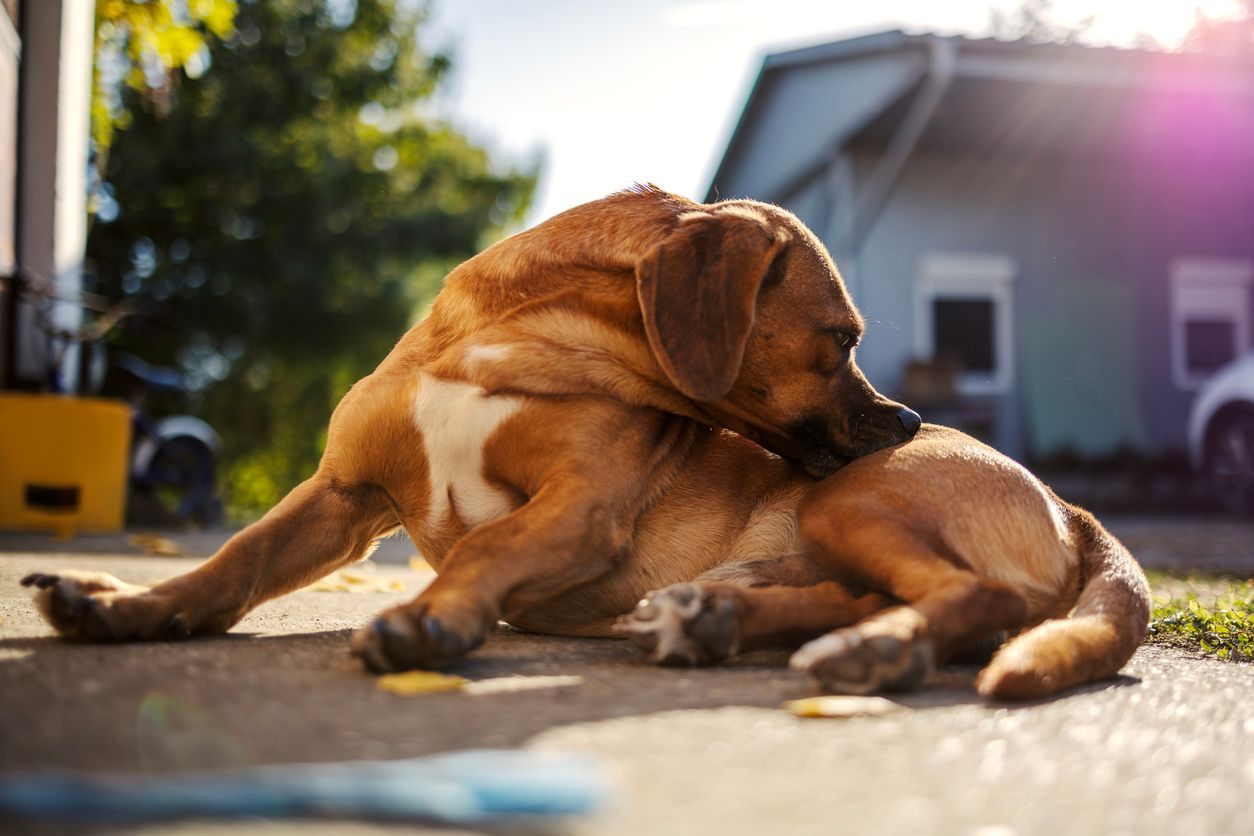
Paw licking in dogs: Allergies, anxiety, or something else?


Key Takeaways
- Paw licking in dogs has many possible causes, and allergies are the most common. Anxiety and compulsive behaviors are much less common, and they’re usually considered only after medical issues have been ruled out.
- Early detection of excessive paw licking can help improve outcomes. Careful observations about when and how often the licking happens provide valuable information for veterinarians.
- Effective treatment depends on identifying the underlying cause. Early intervention helps prevent raw paws, secondary infections, and ongoing discomfort.

Paw licking is a common concern reported by dog owners during veterinary visits. It can be upsetting to watch your dog lick their paws until they’re red or irritated, especially when you’re not sure why it’s happening or how to help. Evidence shows that environmental, flea, and food allergies are the most common causes of excessive paw licking; however, anxiety can also play a role. To understand why your dog is licking their paws and how a vet may treat it, it’s good to know:
- The causes of excessive paw licking in dogs
- How to tell if licking is caused by allergies or anxiety
- How vets diagnose and treat excessive paw licking in dogs
Many owners assume paw licking is nervous behavior, but because the underlying cause is often allergic disease, this assumption can delay treatment. Flea and environmental allergies in dogs are very common and cause widespread inflammation that leads to itchiness, which your dog may attempt to relieve by licking. As your dog continues to lick at their paws, they’re more at risk for bacterial or yeast skin infections, sores and wounds, and other complications that may make itching and licking even worse.
If you notice your dog licking their paws, helpful details to share with a vet include how often the licking occurs, how much of the day your dog spends doing it, whether they interrupt play or daily activities to scratch or lick, and whether the symptoms change with the seasons. Mention any other signs of skin irritation or illness you’ve observed, since this information can help identify the underlying cause. An online vet can help with the initial assessment and offer advice on whether or not prompt in-person care is warranted. Virtual vet appointments are also convenient for regular check-ins to determine how well your dog is responding to therapy.
Why dogs lick their paws and why it matters
There are a number of reasons why a dog may lick at their paws or legs excessively, including:
- Food or environmental allergies
- Secondary skin infections
- Pain or injury
- Parasites
- Irritants or contact dermatitis
Anxiety and boredom are often mentioned as possible reasons for paw licking, but studies show they’re far less common than medical causes. Anxiety and allergic skin disease can share similar signs, which can lead to the assumption that the behavior is due to anxiety, but true anxiety-driven paw licking is uncommon, and a vet will usually only consider it after skin disease and pain have been ruled out. “Allergies are the most common cause of excessive licking and scratching in dogs,” explains Dr. Jo Myers, a veterinarian on the Vetster platform. “Some dogs with allergies also develop anxiety-like behaviors because the itch is frustrating, meaning licking from allergies and anxiety can overlap.”
How to detect the underlying cause of your dog’s excessive paw licking
Noting what your dog’s paws and licking behavior look like can reveal a lot about what’s going on. When examining the paws, look for:
- Redness, swelling, raw spots, moist areas, or odor
- Dark or grey skin in licked areas
- Brown staining of the fur between toes
- Crusts, scabs, or thickened skin
- Broken or torn nails
- How many paws are affected
It also helps to note exactly where your dog is licking. For instance, if the licking is focused on the front of the lower part of the leg (the carpus, or “wrist” area), it can point to conditions like acral lick granuloma and is different from paw licking.
In addition, pay attention to:
- When it happens (e.g., at night, after walks, or paired with other apparent triggers)
- How often it happens and the intensity of the behavior
- Whether it interrupts sleep or active play
- If there have been any new stressors or routine changes in your or your dog’s life
The paw licking may point to allergies if:
- Your dog is licking multiple areas, not just their paws
- The licking has seasonal trends or worsens after outdoor time
- Your dog also has ear redness or recurrent ear infections
- Your dog isn’t on regular flea control
- Paws look irritated even before your dog starts licking
- There are signs of itch elsewhere (e.g., face rubbing, belly scratching)
Canine allergies cause widespread itchiness. Allergic dogs often scratch at their ears, face, and belly as well as lick at their paws.
True anxiety-related licking is uncommon and is usually considered only after medical causes have been ruled out. Anxiety may play a role when:
- Licking occurs during or immediately after stressful events
- Licking starts when your dog is resting quietly, not actively itchy
- There is minimal redness or inflammation early on
- The behavior appears habitual, repetitive, or difficult to interrupt
- Licking coincides with other anxiety indicators, such as pacing, whining, hiding, or clinginess
Because some outward signs of anxiety and allergic skin disease can look similar, it’s easy for owners to confuse them. In addition, dogs with allergies may lick more during anxious moments, which can make the behavior seem anxiety-based even when the underlying problem is actually itchiness.
While this overlap can occur, true anxiety-driven paw licking is far less common than paw licking caused by medical issues, and it’s one reason a veterinary assessment is important for determining the source of the problem.
Why allergies cause paw licking
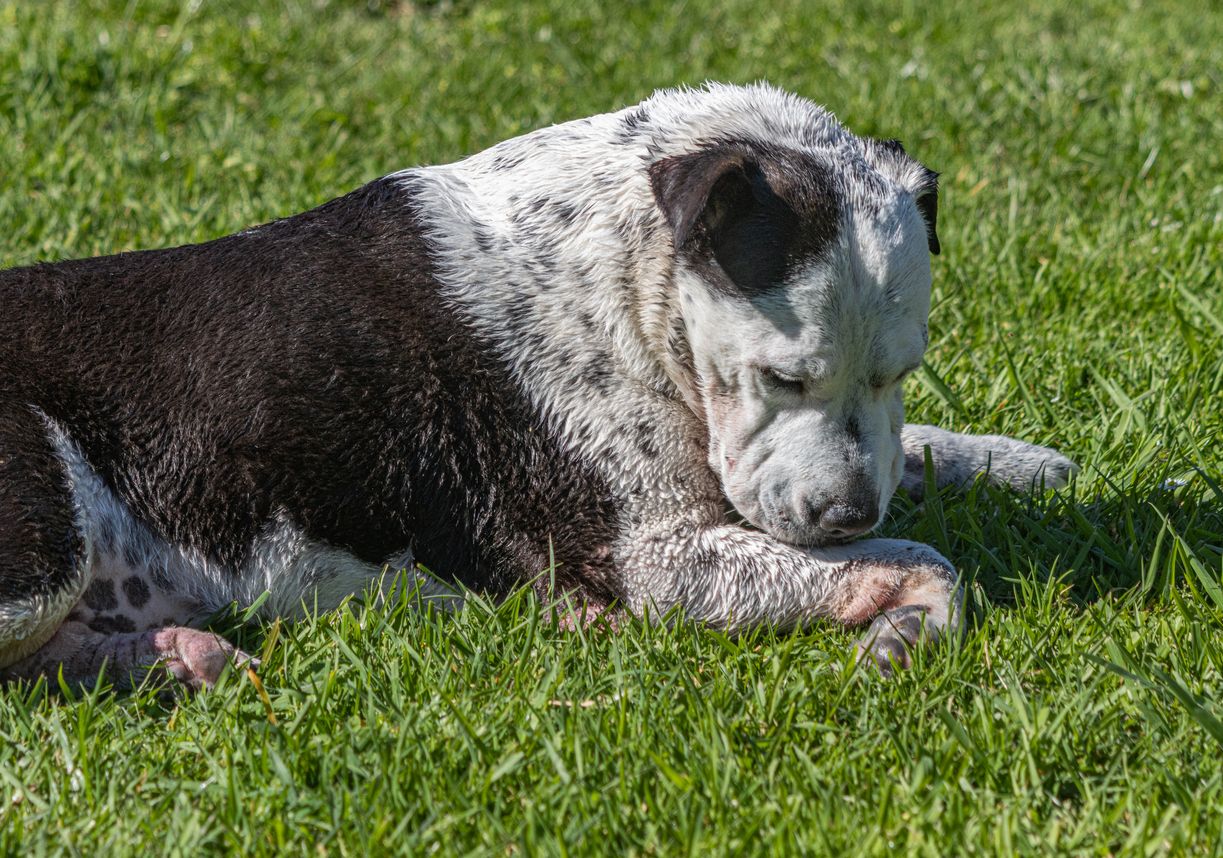
Canine allergies develop when the immune system overreacts to normally harmless substances in the environment or food or to flea saliva. This exaggerated response leads to skin inflammation and itchiness, which commonly affects the paws. As a dog licks or chews to relieve the itch, the heat, moisture, and abrasion created by repeated licking can damage the skin barrier and allow bacterial or yeast infections to develop. These secondary infections make the skin even itchier, creating a cycle of irritation, licking, and worsening inflammation. Allergies are the most common overall cause of chronic paw licking in dogs.
Why anxiety causes paw licking
Anxiety is an uncommon cause of paw licking in dogs, especially compared with medical conditions like allergies, infections, or pain. However, in a small number of cases, anxiety or stress can play a role in repetitive licking behaviors. Some dogs may lick as a displacement or self-soothing behavior, and the temporary release of endorphins can reinforce the habit over time.
Anxiety-related licking usually begins on normal-appearing skin, then may lead to hair loss or irritation if the behavior becomes repetitive. Although far less common than medical causes, anxiety may be considered after dermatologic disease and pain have been ruled out, particularly when clear stressors or routine changes are present.
What veterinarians look for when diagnosing excessive paw licking
An initial assessment usually begins with a full physical examination, and a review of your dog’s medical history and your observation notes. During the physical exam, a vet examines your dog’s paws for signs of inflammation, infection, and irritants as well as checking for parasite infections that could be causing irritation.
Diagnostic tests may be recommended depending on what’s seen during the physical exam. Diagnostics may include:
- Skin cytology
- Allergy testing
- Elimination diet, if food allergies are suspected
- Testing for pain-related causes
How veterinarians determine if paw licking is caused by a behavior problem
Behavioral causes of paw licking are much less common than medical causes, and veterinarians consider them only after ruling out conditions like allergies, infections, pain, and injuries. If a thorough physical examination and diagnostic testing do not reveal a medical explanation, a vet may explore whether anxiety, stress, or a compulsive disorder is contributing to your dog’s behavior.
A behavioral assessment focuses on identifying patterns, such as:
- When the licking occurs
- Whether the dog shows other signs of anxiety, like pacing or clinginess
- Whether the behavior is repetitive or difficult to interrupt
Compulsive licking usually begins on normal-looking skin and evolves into irritation only after repeated licking over time. Anxiety-related licking may also occur, but this is uncommon and usually happens alongside clear stressors or changes in the dog’s routine.
Because behavioral causes are diagnoses of exclusion, meaning the diagnosis is only reached after other causes are ruled out, veterinary input is important. In rare cases where anxiety or a compulsive disorder is most likely, treatment may involve behavior modification, environmental changes, and sometimes medication.
Treatment for paw licking in dogs
Treatment options vary depending on the underlying cause of your dog’s excessive licking. Allergies are the most common cause of paw licking in dogs. Treatment for canine allergies may include:
- Reducing allergen exposure
- Managing inflammation and itch
- Special diet or diet change
- Immunotherapy (for environmental allergens)
Allergen exposure can be reduced through:
- Year-round parasite prevention
- Wiping off paws and fur after walks
- Avoiding contact with irritants
- Environmental control for dust, pollen, or mold
Anti-itch medications, such as Apoquel or Cytopoint, can help manage inflammation, and oral or topical treatments for secondary infections can help reduce irritation. For dogs with food sensitivities, limited ingredient or hydrolyzed protein diets may be recommended to prevent exposure to food allergens.
If a dog is diagnosed with anxiety or a compulsive disorder, treatment may involve:
- Reducing stressors
- Introducing a consistent daily routine
- Behavior modification strategies
- Medication
Reducing stressors and improving environmental support can be enough to help some dogs with mild anxiety. Helpful measures may include creating a consistent daily routine, providing quiet resting areas, and increasing mental and physical enrichment.
Dogs with more significant anxiety, such as separation anxiety or true compulsive behaviors, often require structured behavior modification in addition to environmental changes. Techniques such as counterconditioning and desensitization can help dogs become less reactive to their triggers by reintroducing the triggers gradually and pairing them with positive experiences. Behavioral treatment plans are most effective when developed with guidance from a vet or a qualified professional in dog behavior.
In some cases, a vet may recommend anti-anxiety medication. Medication can be used short or long term and is typically combined with training and environmental management.
When to quickly seek veterinary care
Seek prompt veterinary care in the case of:
- Raw, bleeding, swollen, or foul-smelling paws
- Sudden onset of severe licking
- Lameness or pain
- Licking that doesn’t improve after removing likely stressors
- Licking so frequent it interrupts sleep
- Recurrent episodes despite home care
These can be signs of a more severe underlying problem that needs prompt attention.
How an online vet can help
An online vet can help by:
- Reviewing photos or videos to identify visible irritation
- Explaining the differences between allergies, anxiety, and other likely problems
- Offering early strategies for itch control or stress reduction
- Advising when in-person diagnostics are needed
- Providing ongoing support for behavior-related licking
In order to provide a diagnosis, treatment plan, or prescription medication, a vet needs to establish a veterinary-client-patient relationship (VCPR). In many regions, this can be established virtually with telemedicine. In some cases, a vet needs to see the dog in person before they can offer virtual treatment.
FAQ - Why dogs lick their paws, and when it’s a problem
When should I worry about my dog licking his paws?
Occasional paw licking can be normal, but persistent or excessive licking is often a sign of an underlying medical issue, such as allergies, irritation or injury, pain, or a developing infection. It becomes more concerning when you notice redness, hair loss, swelling, discharge, a bad odor, or other signs of itchiness or illness, or when your dog interrupts normal activities to lick or chew. Behavioral causes, like anxiety or boredom, are uncommon and usually considered only after medical problems have been ruled out. If you’re unsure why your dog is licking or if the behavior is increasing, it’s best to talk with a veterinarian for guidance and appropriate care.
How do you treat a dog that licks its paws a lot?
Treatment for paw licking in dogs depends on the underlying cause. The most common cause is allergies, which may be managed with flea prevention, prescription anti-itch or allergy medications, and reducing exposure to environmental allergens. If a bacterial, yeast, or parasitic infection is present, veterinarians may prescribe oral or topical medications to clear the infection and relieve discomfort. Pain, injury, and foreign material in the paw also require targeted treatment. Behavioral factors, like anxiety, are much less common and are addressed with environmental adjustments, behavior modification, and sometimes medication. Because many conditions can lead to excessive paw licking and several may occur at the same time, the best approach is to work with a vet to identify the root cause and choose the most effective treatment plan.
How do I stop my anxious dog from licking their paws?
Before assuming your dog’s licking is caused by anxiety, it’s important to work with a veterinarian to rule out medical problems, such as allergies, infections, or pain. If anxiety is confirmed to be the cause, treatment focuses on reducing stress and teaching healthier coping behaviors. This may include environmental changes, behavior modification or training, and sometimes anxiety medication. Providing appropriate outlets, such as puzzle toys and enrichment activities, can help redirect the behavior while treatment is underway.
Disclaimer: This article, its content, and its related references do not constitute veterinary advice and should not be considered a substitute for veterinary care. If your pet is showing any symptoms that could indicate a medical emergency, please seek immediate emergency care.