Myth-busting: Do nutritional deficiencies cause pica in cats?


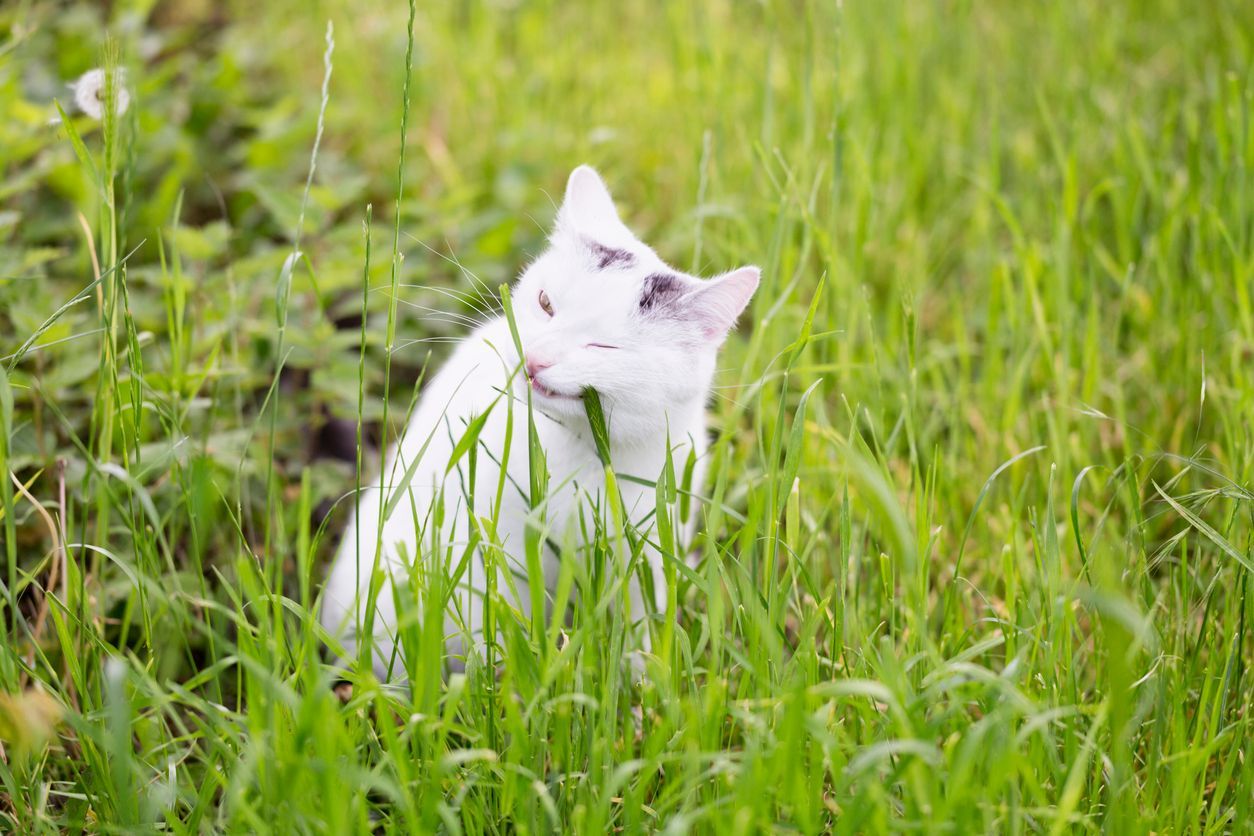
It’s common for cats to be interested in biting, chewing, licking, sucking, or even occasionally ingesting nonfood items, especially as young kittens. It’s normal for cat owners to wonder if this means there’s something lacking in their pet’s diet. Though this behavior can be concerning for pet parents, most of the time it’s normal environmental exploration or play. This is different from pica, a behavioral disorder characterized by obsessively and routinely ingesting nonfood items. There is no strong evidence to suggest that nutritional deficiencies or an issue with a cat’s diet causes feline pica. If you’re concerned about your cat’s interest in nonedible items, read on to learn:
- Why some cats like to eat nonfood objects
- Causes and symptoms of nutritional deficiencies in cats
- How to prevent your cat from eating nonfood items
- When to contact a veterinarian about your cat’s behavior
Nutritional deficiencies are rare in otherwise healthy cats eating most commercially available diets, and there is no strong evidence to support the idea that they cause a cat to ingest inedible items. Prevention of nutritional deficiencies involves feeding a balanced diet and addressing any medical conditions, while treatment focuses on managing the underlying illness and supplementing nutrients under veterinary guidance. The cause of pica isn’t well understood, so it’s difficult to prevent, but it’s usually managed with behavioral therapy, environmental enrichment, and, sometimes, medication rather than with a diet change.
Why do cats eat nonfood items?
Interest in nonedible objects, such as rubber bands, plastic, houseplants, and string, is common and often normal in many cats. Chewing on these items as well as wool sucking are common oral obsessions of cats. However, this does not mean that it’s safe for a cat to be ingesting these items. Cats who chew, lick, or ingest inedible items are often doing it for various reasons, such as:
- Curiosity
- Attention seeking
- Mental or physical enrichment
- Enjoyment of the taste, texture, or sound of the item
- Stress or anxiety from environmental factors
Although the term pica is sometimes used informally to describe any instance of a cat chewing or eating nonfood items, true pica is a specific behavioral disorder characterized by compulsive, repeated ingestion of nonfood items that have no nutritional value. It’s relatively rare and distinct from more common behaviors, such as curiosity-driven chewing or stress-related mouthing.
Cats may eat nonfood items for a variety of reasons, including behavioral, environmental, or medical factors. Identifying the underlying cause is essential to effectively prevent a cat from continuing to eat nonfood items and to ensure their safety and well-being.
What is feline pica?
Pica is a behavioral disorder involving compulsive, obsessive ingestion of nonfood items that provide no nutritional benefit. It’s a rare disorder in cats, but certain breeds, such as Siamese, Burmese, and Oriental, may be more predisposed to developing it. The disorder is different from a cat being interested in nibbling, licking, chewing, or occasionally ingesting nonedible materials and objects. In cases of true pica, the affected cat may engage in the behavior on a daily basis and it may appear as if they can’t stop themselves from eating the item.
Eating feces (coprophagia) is generally considered separately from pica
Nutritional deficiencies and pica in cats
It’s common for cat owners to worry if there’s something lacking in their pet’s diet if they’re ingesting nonedible items. While some theories have proposed a potential link between nutritional deficiencies and pica, studies have not consistently supported this. The majority of cases are better explained by behavioral and environmental factors.
Nutritional deficiencies are rare in healthy cats who are eating commercially available food. When a cat develops a nutrient deficiency, it’s usually due to a health issue, often a gastrointestinal disease, rather than something lacking in their diet. Factors increasing the likelihood of a deficiency include:
- Certain medical conditions that affect how nutrients are absorbed, utilized, or expelled
- A diet mainly made up of snacks, toppers, or treats
- A diet that is not nutritionally complete or balanced, including homemade diets formulated without the guidance of a board-certified veterinary nutritionist
- A cat not eating a large enough portion of their diet, even if it is nutritionally complete and balanced
The best way to determine if a cat’s food is giving them the nutrition they need is to check for a statement of nutritional adequacy from the Association of American Feed Control Officials (AAFCO) on the food’s label. It’s also important to feed your cat the proper portion based on their size to ensure they receive enough nutrients from the food. If a food is labeled as a supplement, topper, treat, snack, mixer, or base, it usually means it’s not intended for use as a complete diet. Many of these foods may be marketed as gourmet, specialty, or otherwise exotic foods, but that doesn’t imply anything about their nutritional value.
Symptoms of nutrient deficiencies in cats
Nutrient deficiencies are unlikely to cause a cat to eat nonedible household items, soil, rocks, or other material. Clinical signs of nutrient deficiencies in cats vary depending on the specific nutrient and how severe the deficiency is, but may include:
- Crusty, scaly skin
- Hair loss
- Poor wound healing
- Bone fractures
- Weakness
- Neurologic signs, such as muscle tremors, spasms, seizures, and difficulty walking
- Vomiting/diarrhea
- Lethargy
- Loss of appetite
- Weight loss
- Poor skin and coat condition
Other clinical signs may be present depending on whether an underlying condition is causing the deficiency. The ingestion of inedible items is not considered a symptom of a mineral deficiency or any other kind of nutrient deficiency in cats.
How to prevent your cat from eating nonfood items
Because the underlying cause of pica is not well understood, it’s difficult to prevent through changes to your cat’s care or diet. Instead, environmental management tends to be the most effective approach:
- Reduce the risk of ingestion by keeping tempting nonfood items, such as hair ties, rubber bands, wool fabrics, string, yarn, houseplants, and plastic, safely out of reach
- Alleviate boredom and encourage safer exploration by providing additional enrichment in the home, such as scratching posts, cat trees, perches, and various types of toys
- Introduce cat-safe toys that have a similar shape, texture, or sound to the item your cat tends to target
Changing your cat’s food isn’t likely to be an effective preventative strategy since it doesn’t address the underlying cause. Every cat is an individual, and an online vet can help offer tailored advice on the best way to prevent your cat from eating nonfood items based on your individual situation.
Is eating nonfood objects dangerous for cats?
Ingesting foreign items can be dangerous for cats, depending on the item. Risks of eating inedible material can include:
- Dental fractures
- Gastrointestinal obstructions or perforations, or other complications
- Toxicosis
- Choking
Even if a cat is naturally exploring their environment, it’s important to keep potentially hazardous items out of reach. An item does not have to be large to cause a foreign body obstruction. For example, long, thin items, such as yarn, string, ribbon, and tinsel, are some of the most hazardous.
“Cats often enjoy playing with string-like objects, but these items can easily get caught on their tongues, which have backward-facing barbs,” explains Dr. Jo Myers, a veterinarian on the Vetster platform. “Once something like yarn or ribbon sticks to the tongue, those barbs push it further down the throat each time they lick or chew, making it very difficult — if not impossible — for the cat to spit it out.” If swallowed, these items can anchor themselves in one spot while the intestines continue to move, causing the intestines to bunch around the item. This can lead to a life-threatening obstruction or damage to the intestinal wall. Even playful chewing can become hazardous, so it’s best to keep these items out of reach and opt for a safe cat toy instead.
When to talk to a veterinarian about a cat’s ingestion of a nonedible item
It’s important to seek medical attention any time your cat has consumed an item that puts them at potential risk of:
- Toxin exposure
- Foreign body obstruction
Veterinary attention is warranted if a cat is persistently or obsessively eating, licking, or sucking on nonfood items, or showing other signs of stress or illness, such as:
- Hiding more often than usual
- Abnormal, aggressive, or irritable behaviors
- Signs of illness, such as vomiting or lack of appetite
An online vet can help you understand what to watch for and whether a cat needs immediate in-person veterinary care. Whether it’s a one-time incident or an ongoing behavior, the vet can talk through your cat’s history, ask questions about their environment and habits, examine them via video, and help you figure out any next best steps. While a full diagnosis or treatment might require an in-person exam, many pet owners find virtual appointments helpful for getting expert guidance quickly, especially when they’re unsure whether their pet’s symptoms or behaviors are serious or not.
FAQ - Myth-busting: Do nutritional deficiencies cause pica in cats?
How do you treat pica in cats?
Pica is a specific compulsive behavioral disorder in cats characterized by obsessive, compulsive ingestion of nonfood objects. The occasional ingestion, licking, chewing, or biting of nonedible items is not true pica. Because pica is rare and can resemble other behavioral or medical conditions, it’s important to consult a veterinarian for an accurate diagnosis. Professional guidance is essential to rule out underlying health issues and to develop an appropriate treatment plan, which may include behavioral therapy, environmental enrichment, avoidance strategies, and, in some cases, medication.
Is pica in cats caused by nutritional deficiencies?
The underlying cause of feline pica is not fully understood, but it’s believed to be complex, much like other behavioral disorders. While pica is most often associated with compulsive behavior, especially in certain breeds, such as Siamese, Burmese, and Oriental, multiple factors may contribute, including genetics, stress, environmental influences, and individual temperament. Some theories suggest a potential link to dietary deficiencies, but no consistent nutritional cause has been identified. Because of this complexity, treatment typically focuses on managing the behavior through a combination of environmental enrichment, behavioral therapy, and, sometimes, medication rather than relying on diet changes alone.
How can I tell if my cat has a nutritional deficiency?
Nutritional deficiencies are rare in otherwise healthy cats that are eating a commercially available diet. Deficiencies are normally caused by an underlying health issue, such as gastrointestinal disorders. Clinical signs of nutritional deficiencies include changes to the skin and fur, poor wound healing, neurologic issues, vomiting, diarrhea, and other signs of illness. However, these signs are common in many medical issues, so it’s important to talk to a veterinarian before attempting to change your cat’s diet or attempting any other treatment method.
Disclaimer: This article, its content, and its related references do not constitute veterinary advice and should not be considered a substitute for veterinary care. If your pet is showing any symptoms that could indicate a medical emergency, please seek immediate emergency care.