Do fireworks and other loud noises upset cats?


Key takeaways
- A brief fear response to loud noises is normal in cats. If a cat’s reaction is intense, lasts longer than expected, or continues after the noise has stopped, it may indicate heightened stress or an underlying issue that deserves attention.
- If your cat seems especially bothered by loud noises, help them cope by avoiding exposure whenever possible, masking outside sounds with steady background noise, and providing quiet, secure places for them to hide. Let your cat choose whether to seek comfort or be left alone, and avoid pulling them out of hiding or offering reassurance they don’t want.
- Some cats are especially sensitive to sound, showing stronger or longer-lasting reactions to loud noises than others. While this can resemble noise aversion in dogs, a comparable disorder isn’t well defined in cats, so any persistent or worsening sound sensitivity should be discussed with a veterinarian.

Cats have sensitive hearing, and it’s very common for them to become startled and hide when there are sudden, loud sounds, like thunder or fireworks. This can be understandably stressful for cat owners who want to soothe their scared cat. Cats do have fear and stress responses to noise, but unlike with dogs, there’s no formally defined or widely accepted diagnosis of feline noise aversion or noise phobia. Even so, some cats show intense fear that resembles these conditions. If you have an easily frightened cat, it’s good to know:
- What normal and abnormal fear responses look like in cats
- How to help your cat when they’re frightened of loud noises
- When to talk to a veterinarian about your cat’s fear response
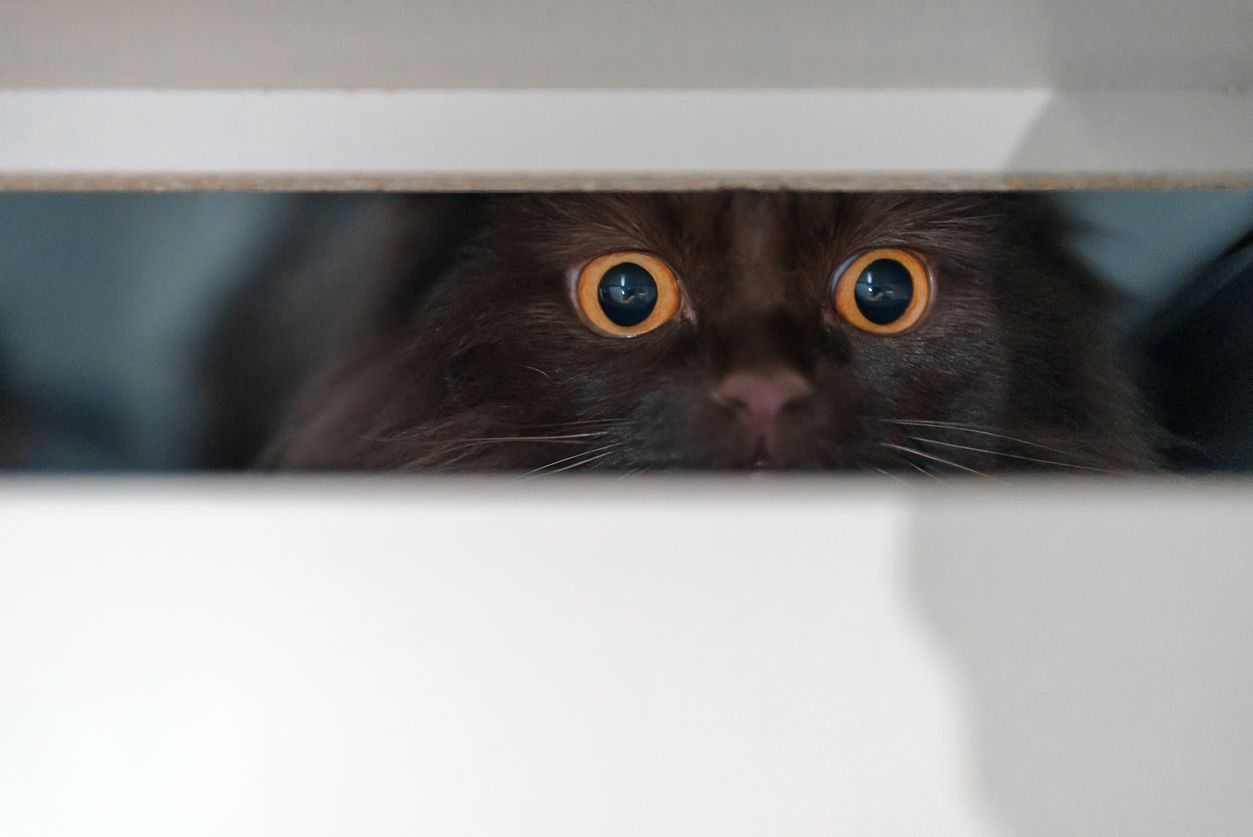
Running to hide in a safe space is a normal fear response in cats. Hiding can help a cat feel secure, especially in unfamiliar, noisy, or stressful environments. Providing a quiet, dark, and easily accessible hiding place (e.g., a covered bed, cardboard box, or elevated perch) helps your cat manage stress and can improve their overall welfare by giving them control over when and how they retreat. Because hiding is a method of coping, it’s usually best to respect your cat’s space rather than forcibly draw them out or try to comfort them. Trying to coax a frightened cat out of hiding before they’re ready may increase their anxiety or prolong their instinct to withdraw.
Signs of severe anxiety, whether triggered by fireworks or other loud noises, include refusing to eat after the noise has subsided, extreme aggression, and other continued behavioral changes after the event has ended. If you’re concerned about whether your cat’s fear response is normal and how best to support them, a virtual vet visit is a convenient and less stressful way to get advice on calming methods and to determine whether an in-person visit is warranted.
Do loud noises scare cats?
Cats have extremely acute hearing and can hear a wider range of frequencies than either humans or dogs. Their hearing evolved for detecting small prey and rapid movement, making them more sensitive to sudden, loud, or high-frequency sounds. Because their hearing is so sensitive, sudden, loud noises, such as storms and fireworks, can easily startle or frighten them. A brief, involuntary defensive response to loud, sudden noises, called the acoustic startle reflex, is a normal, adaptive response in mammals that protects the animal and typically resolves quickly once the noise ends.
Some cats take longer to recover from a startling noise or may become more watchful or defensive afterward. When a cat’s response is intense, lasts longer than expected, or begins to occur with everyday household sounds, it can indicate a high level of stress or an underlying behavioral concern. A short-lived startle response, temporary vigilance, or briefly hiding after an abrupt noise is normal in a healthy cat. It becomes a welfare concern when the severity, duration, or generalization of the response causes ongoing distress or interferes with your cat’s normal daily activities.
Common reactions cats have to sudden, startling noises
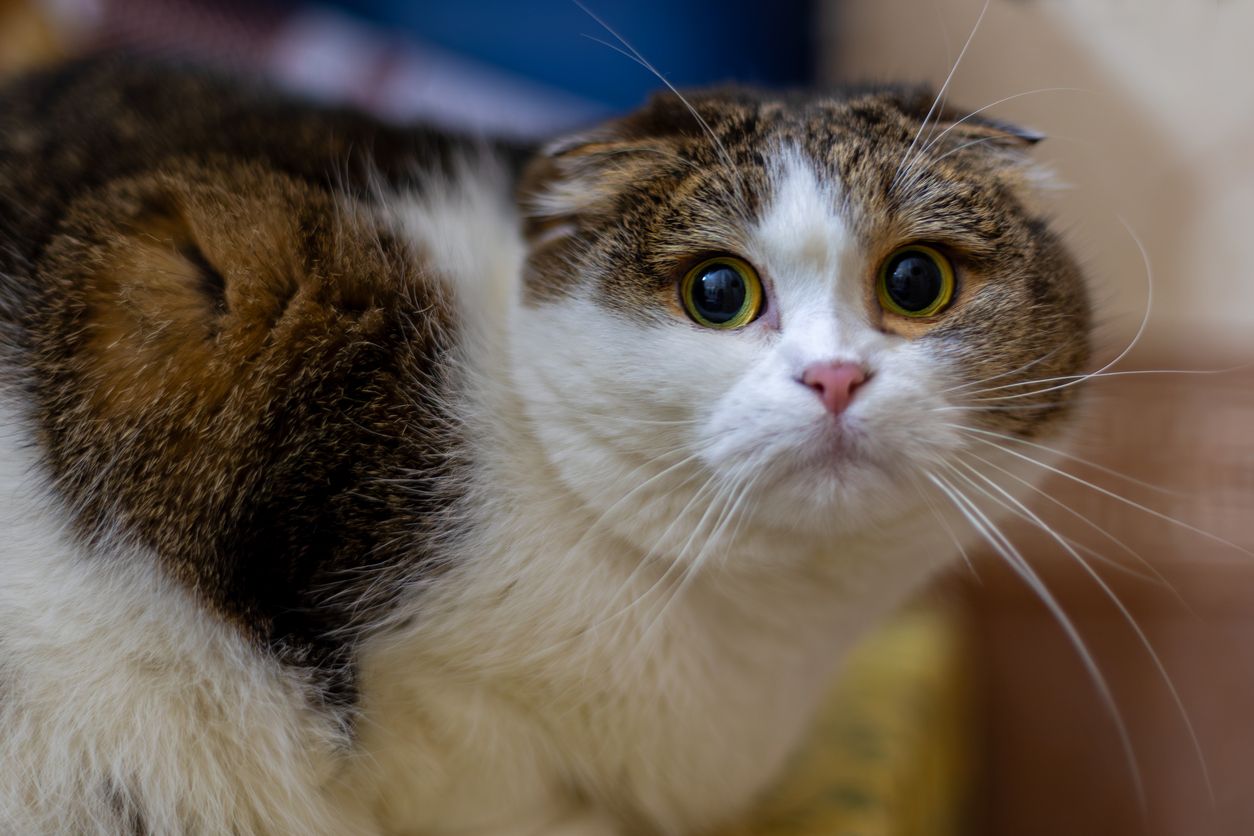
Typical feline reactions to stress and fear fall on a spectrum. Reactions can include:
- Orienting to the sound source by rotating their ears
- A small jump or full-body flinch
- Vigilance
- Crouching or hiding
- Freezing
- Rapid flight to a safe space
- Dilated pupils
- Refusing to eat or use the litter tray
- Pacing
- Trembling or shaking
- Vocalization
- Inappropriate elimination
- Aggression
“Age, prior learning, genetics, and current environment all influence whether a cat startles briefly and recovers or remains vigilant longer,” explains Dr. Jo Myers, a veterinarian on the Vetster platform. “Some cats associate other cues with loud sounds and may begin reacting before the noise actually starts.” For example, cats may hide when it rains even without thunder and lightning or when you pull out the vacuum cleaner before turning it on.
Can cats have noise phobias?
Noise aversion, or a phobia triggered by loud noises, is an intense fear of a particular sound that elicits an exaggerated, persistent, or disproportionate fear response. While noise aversion is well recognized in dogs, no equivalent diagnostic category exists for cats; as a result, there are no established tools, large studies, or approved medications that specifically evaluate or treat noise-related fear in cats. Behaviorists consider feline noise sensitivity to be part of generalized fear or anxiety.
Anecdotal reports and limited studies suggest some cats develop conditioned fear responses, especially after traumatic or repeated exposure. Clinically, veterinarians describe these cats as “highly noise-sensitive” or “fearful” rather than phobic. Medical issues that cause pain and sensory changes as well as neurologic and metabolic diseases can lower stress tolerance, and this in turn can amplify a cat’s reaction to sounds. A basic medical evaluation should rule out these conditions before concluding the behavior is due solely to anxiety or noise sensitivity.
How to help support your cat during storms and firework displays
While brief, fear-based responses are normal in cats during periods of loud noises, there are ways to help your cat stay as calm as possible. This is especially important for cats with health issues that may flare up in times of stress, such as idiopathic cystitis.
Create a safe space for them to hide
Cats often hide when they’re afraid and may prefer to stay hidden until the sound subsides. Make sure your cat has access to dark, quiet, enclosed hiding spots throughout the house. Studies have shown that fear in cats increases if they cannot escape to somewhere they feel safe. These spaces can be:
- Cat caves
- Boxes
- Under the bed
- In closets
Allow your cat to hide as long as they need to, and do not force them out unless absolutely necessary for their safety, such as in the case of an emergency evacuation.
Cover loud sounds with white noise
Sound masking may help cover noise from storms and fireworks. You can create white background noise with:
- Fans
- White noise machines
- Calming music
These sounds can help drown out outside noises and may help calm some cats.
Avoid the temptation to comfort your cat if that’s not what they want
When cats are frightened, many prefer to retreat and stay hidden until the environment feels safe again. While it is natural to want to comfort them, picking them up, coaxing them out of hiding, or following them from room to room can increase their stress; cats cope best when they can control where they go and how much interaction they have.
Allow your cat to choose whether they want to seek reassurance or hide, and offer quiet companionship only if they approach you on their own. Respecting your cat’s preferred way of coping helps them feel more secure and can shorten their recovery time once the noise has passed.
Use pheromones and other calming techniques
Some cats respond well to calming pheromone products to reduce generalized anxiety. These pheromones can be used as diffusers or sprays around your cat’s safe hiding place. Storm shirts and other wearable products are available, but it may be difficult or dangerous to attempt to put anything on your cat while they are fearful, and handling them may increase their stress.
Consider anti-anxiety medication
For severe fear and anxiety, a veterinarian may prescribe short-acting medications, such as gabapentin or trazodone. These medications are most effective when given before the stressful event starts, such as before a storm or firework show begins. Once a cat is already fearful, they’re unlikely to take medication, and it may be stressful or even dangerous to attempt to medicate them. Prescribing these medications is always up to your vet’s discretion.
When to talk to a veterinarian about your cat’s noise anxiety
Talk to a veterinarian if:
- Fear leads to long periods of hiding, loss of appetite, or inappropriate elimination
- There are multiple triggers (e.g., visitors, travel, noise), suggesting generalized anxiety
- You suspect pain or illness is contributing to heightened sensitivity
A vet can rule out medical causes and, if needed, refer you to a veterinary behaviorist. A video of your cat’s reactions, logging their triggers, and noting how long it takes for them to return to normal can be helpful for the diagnostic process. An online vet is a good way to get help for your cat without adding to their stress. A virtual vet can:
- Review observed behaviors and discuss possible triggers
- Suggest environmental or behavioral strategies that may reduce fear
- Help determine whether an in-person exam is likely to be useful
Depending on regional regulations and the type of veterinarian-client-patient relationship (VCPR) established, some online vets may be able to formulate a diagnosis and prescribe medications during a virtual appointment. What is allowed varies by location and is always at the vet’s discretion. An online vet can also advise on next steps when additional support is recommended. When a hands-on evaluation is needed, a virtual vet can guide you on arranging in-person care, and if specialized help is needed, they may recommend consultation with a veterinary behaviorist.
FAQ - How to help a cat with storm and firework noises
Can fireworks stress cats out enough to make them sick?
Stress can contribute to certain health problems in cats, even when the stressor itself is temporary, like fireworks. Some medical conditions, such as feline idiopathic cystitis, are known to flare up during periods of increased stress. Stress can also affect appetite, activity, and litter box habits.
Fireworks can be stressful because the loud, sudden noises and bright flashes are unpredictable and may cause cats to feel threatened. Some cats may become significantly stressed or anxious while the fireworks are happening and may take a long time to settle afterward.
Most healthy cats recover quickly once the noise stops, but if your cat shows persistent behavior changes or has a medical condition that’s sensitive to stress, it’s a good idea to talk to a veterinarian about ways to reduce stress and monitor for flare-ups.
Should I medicate my cat during fireworks and thunderstorms?
Medication can help some cats cope with stressful events like fireworks or thunderstorms, especially if the cat’s reactions are intense or prolonged. A veterinarian can help determine whether your cat’s response to loud noises falls outside the range of normal fear and whether medication might be useful as part of a stress-reduction plan.
Because noise-related anxiety is not well defined in cats, a veterinary evaluation is important before considering medication. Never give your cat any over-the-counter or prescription medication without consulting a veterinarian, as some medications can be dangerous for cats.
Do cats ever get used to fireworks and thunderstorm noises?
Cats vary widely in how they react to loud noises like fireworks and thunderstorms. Some are mostly unbothered, while others hide until the noise stops. These reactions can also change over time with age, health, and overall stress levels. Rather than expecting a cat to get used to sudden, unpredictable sounds, it’s better to help them cope.
You can support your cat by giving them quiet, secure places to hide, keeping them indoors during noisy events, closing windows and curtains when loud noises are expected or happening, and using steady background noise, such as a fan or soft music, to mask sudden sounds. Avoid pulling your cat out of hiding or trying to comfort them in ways they do not want, since this can increase stress. Let your cat choose whether they prefer to hide or seek companionship.
If your cat remains frightened long after the noise ends or begins reacting to everyday sounds, consult a veterinarian, as persistent sound sensitivity can indicate an underlying medical or stress-related issue.
Disclaimer: This article, its content, and its related references do not constitute veterinary advice and should not be considered a substitute for veterinary care. If your pet is showing any symptoms that could indicate a medical emergency, please seek immediate emergency care.