

Key takeaways
- Oclacitinib is an oral medication used in dogs to control itch (pruritus) associated with skin inflammation due to allergies (allergic dermatitis) and for the control of atopic dermatitis.
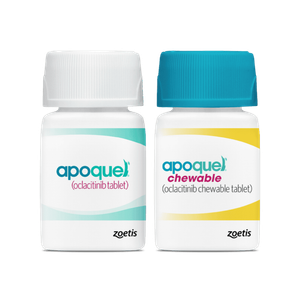
- Apoquel® is currently the only medication that contains oclacitinib. Apoquel is a daily oral medication that provides fast-acting and safe allergic itch relief for dogs.
- Prescribed to over 15 million dogs and counting, Apoquel starts relieving allergic itch in as little as 4 hours (based on a model study for flea allergic dermatitis) and controls it within 24 hours.
- Apoquel is approved for dogs 12 months of age and older, for seasonal or long-term term use. It can be used with many other medications — including NSAIDs, vaccines, and allergy shots — but has not been evaluated with other systemic immunosuppressants such as corticosteroids or cyclosporine.
- Apoquel stops allergic itch at the source and works differently from steroids or antihistamines. It blocks the signals that cause allergic itch and inflammation due to allergic and atopic dermatitis, providing relief fast.
- Apoquel can be given with or without food and is available in a tablet or a pork-liver flavored chewable.
Disclaimer: This information is provided for educational purposes only and should not replace professional veterinary advice. Always consult with your veterinarian before starting, stopping, or changing any medication for your pet. Your veterinarian can determine whether this medication is appropriate for your pet's specific condition and health status.
Content review: This content has been written and reviewed by licensed veterinary professionals. For complete prescribing information, consult the official product labeling or speak with your veterinarian.
What is oclacitinib?
Oclacitinib is a pill for dogs that helps control itching and skin inflammation caused by food or environmental allergies. It comes in both hard and chewable tablet forms. Oclacitinib is FDA-approved and currently only made by Zoetis®.
How it works and what it’s used for
Oclacitinib controls the symptoms of allergic and atopic dermatitis. In dogs with food or environmental allergies, their immune system creates a cycle of skin inflammation and itching. Oclacitinib interrupts this cycle by:
- Blocking itch signals to the brain
- Stopping inflammatory cells from moving into the skin
- Reducing redness and inflammation
Allergic dermatitis is a lifelong condition that needs ongoing management. Oclacitinib provides excellent symptom control but does not cure allergies. Veterinarians often recommend an allergy management plan that combines several strategies. This may include:
- Reducing exposure to allergens
- Treating secondary infections
- Supporting good skin and coat health
- Using additional therapies as needed
Oclacitinib plays an important role in controlling itch, but successfully managing canine allergies in the long term often requires addressing these other factors as well.
How is it given?
Apoquel is only for dogs and is given by mouth, with or without food. Your veterinarian may prescribe Apoquel short term for allergic skin flare-ups or long term for ongoing management of atopic dermatitis.
Apoquel comes in different sizes and strengths and is available as hard or chewable tablets. In the US, the packaging lists strengths of 3.6 mg, 5.6 mg, and 16 mg. In Canada, packages are labeled as 3.6 mg, 5.4 mg, or 16 mg based on the strength of each tablet. Each tablet is scored so that it can be split in half. Always follow the directions on the drug label provided by your veterinarian.
The chewable tablets are flavored with pork liver and are not appropriate for dogs on a food allergy trial that excludes pork or for those with a known pork allergy.
Side effects of oclacitinib in dogs
Apoquel is well tolerated in most dogs. The most commonly reported side effects include:
- Vomiting
- Diarrhea
- Appetite loss
- Lethargy
- New lumps on or under the skin
- Blood work changes (such as mild decreases in certain white blood cells)
- Increased thirst
Less commonly reported side effects include:
- Weight loss
- Inflammation of the skin on the feet
- Urinary tract infection
In rare cases, the use of Apoquel may worsen pre-existing cancers. Scientists are still studying the association between oclacitinib and pre-existing cancerous conditions.
Most dogs who take oclacitinib do not have side effects, and when they do occur, they’re typically mild and temporary.
Understanding side effects
Reading through the list of side effects may feel alarming, but it’s important to understand how these lists are created. In clinical studies, every change that occurs is recorded, whether or not the medication is the cause.
For example, if a dog develops diarrhea while in a drug trial, it must be noted, even if the drug wasn’t the cause. Dogs receiving a placebo often show the same kinds of symptoms. Scientists compare the dogs in these groups carefully to determine whether a medication is safe and effective.
Reported side effects are those that are reported to Zoetis by a veterinary professional or pet owner who has administered Apoquel. Though the reported symptoms are seen after giving the medication, it is very difficult to reliably confirm that the medication is the direct cause of the symptom noted.
The list of side effects is comprehensive, but it does not mean your dog is likely to experience them. If you’re still unsure, your vet can help you weigh the risks and benefits for your unique situation.
Are side effects more likely to happen with the first dose?
Some side effects may appear soon after the first dose because it’s the first time the body has been exposed to the drug. Others may not emerge until a medication is used for a longer period of time. Even if a new problem appears shortly after starting a new medication, your vet may need to investigate further to determine whether the medication is truly the cause.
What should I do if I notice changes in my pet right after starting a new medication?
If your pet shows any changes after starting a medication, it’s important to consult your veterinarian to help determine whether the changes are related to the drug or some other cause. This is especially important if you see serious signs like:
- Difficulty breathing
- Trouble standing up
- Severe vomiting or diarrhea
- Pale gums
- Seizures
- Collapse
These signs are rarely related to oclacitinib, but they always require immediate veterinary attention. Decisions about stopping, adjusting, or switching a medication are safest when made with guidance from your vet.
Where can I find more information?
The drug label and package insert contain the most important information, including the list of side effects seen during scientific studies. These studies are done in a controlled environment to limit external factors from influencing the data. Clinical studies are designed to carefully measure both the benefits and potential risks of a medication in a controlled environment.
You can find more details about Apoquel on the Zoetis website.
Drug interactions with oclacitinib
Oclacitinib has not been tested in dogs receiving some medications that are commonly used to treat skin infections, like corticosteroids and cyclosporines. It does not appear to have any significant drug interactions with other common pet medications, such as nonsteroidal anti-inflammatories, anti-infectives, parasiticides, antifungals, and allergen-specific immunotherapy. However, studies are limited. Always check with a veterinarian before giving your pet any new medications, and make sure your vet is aware of all other medications and supplements you give your pet.
Risk factors
Oclacitinib is one of the most commonly prescribed medications for control of allergic itch in dogs. It has been studied in many scientific trials, including a five-year safety review done after it was already approved. The findings match the earlier safety studies, showing that the medication works and is safe under real-world conditions.
Overall, oclacitinib is well tolerated in dogs, but as with any medication, some dogs may be at higher risk for side effects. Your veterinarian can determine whether it’s the right choice for your dog. Some of the main concerns include:
- Species and age: Oclacitinib is only for use in dogs over 12 months of age.
- Allergies: Apoquel chewable should not be given to dogs with a pork allergy or during a food-allergy trial that excludes pork.
- Existing and pre-existing health conditions: Oclacitinib is not considered safe for use in dogs with serious infections or parasitic skin infestations. Veterinarians may be hesitant to recommend oclacitinib to a dog with a history of cancer or other chronic disease. If your dog has a chronic illness, always talk to your vet before starting any new medication.
- Breed considerations: There are no known breed-specific risks for oclacitinib.
- Pregnancy and nursing: Oclacitinib has not been tested for safety in pregnant or lactating dogs.
Your veterinarian is the best person to ask about medication safety, as they know your dog’s health and can give advice that fits their needs.
Safety and overdose information
There are important safety details you need to follow if you give your dog medications that contain oclacitinib (Apoquel).
Human safety
- Not for human use; keep out of reach of children.
- Wash hands immediately after handling tablets.
- In case of accidental eye contact, flush immediately with water or saline for at least 15 minutes and then seek medical attention.
- In case of accidental ingestion, seek immediate medical attention.
Storage
- Apoquel should be stored at controlled room temperature between 20° to 25° Celsius (68° to 77° Fahrenheit) with excursions between 15° to 40° Celsius (59° to 104° Fahrenheit).
- Do not use after the expiration date on the label.
- Dispose of unused or expired medication according to local regulations or as directed by your veterinarian or pharmacist.
Use and administration
- For use in dogs only. Use oclacitinib only as directed by a veterinarian and follow the label instructions for dosing.
- Confirm that your pet’s species, age, and weight match the prescribed dose.
- Do not give Apoquel to dogs with a known allergy to oclacitinib or any listed ingredient. Apoquel Chewable contains pork liver flavoring; this may be incompatible with pork-free food-allergy trials or dogs with a pork allergy.
- For medical decisions (e.g., whether oclacitinib is appropriate for a specific dog), a veterinarian is the best source of individualized guidance.
Overdosage
Contact your veterinarian/poison control center immediately if your dog receives more than the prescribed amount of oclacitinib.
Talk to your vet
Before starting oclacitinib, tell your vet if your dog has ever had:
- Side effects from other medications
- Lumps or bumps on the skin
- Skin infections
- Severe infections
- Cancer
- Liver or kidney problems
- Frequent upset stomach or other medical problems
Your veterinarian needs to be aware of every medication and supplement your dog receives, including nonprescription products, when prescribing Apoquel. This information helps prevent drug interactions, avoids overlapping or repeated treatments, and guides safe dosing and monitoring. It is also important to let your vet know if your dog is pregnant, nursing, or if you plan to breed your dog.
Accidental ingestion by other pets or people
Veterinary prescription medications are prescribed for an individual pet. A vet determines whether a medication is appropriate after considering the patient’s species, weight, age, physical examination and previously existing conditions, among other details. Never give a veterinary prescription to a person or to a different animal, since the drug may not be safe for them.
If another household pet of any species, including another dog, accidentally receives or ingests the medication, contact a veterinarian, physician, or poison control center immediately for advice.
For complete safety and handling information, including situations when it might be harmful to use this medication, see the package inserts for Apoquel Tablet and Apoquel Chewable.
Emergency contacts:
- Pet Emergency: Contact your local emergency veterinary clinic
- Pet Poison Helpline: (855) 764-7661 (fee may apply)
- ASPCA Animal Poison Control: (888) 426-4435 (fee may apply)
- Human Poison Control: Contact your local poison control center or emergency services
- FDA Adverse Event Reporting: Report suspected adverse reactions to the FDA Center for Veterinary Medicine at 1-888-FDA-VETS or online at www.fda.gov/reportanimalae
- To report a suspected adverse reaction to a veterinary drug in Canada, contact the Veterinary Drugs Directorate (VDD) by calling 1-877-838-7322 or emailing pv-vet@hc-sc.gc.ca Manufacturer: Contact Zoetis Services:
- Canada: 800-461-0917
- US: 1-888-Zoetis1 (1-888-963-8471)
- UK: 0345 300 8034
- or visit https://www.zoetis.com/contact-us
Missed dose
If you miss a dose, give it as soon as possible and continue on the regular schedule from there. Do not double up or add extra doses.
Alternatives to oclacitinib
Currently, the only product that contains oclacitinib is Apoquel for dogs, which is manufactured by Zoetis. Through various scientific studies, Apoquel has shown to be a safe and effective alternative to steroid treatment. Oclacitinib has a different safety profile than steroids and works just as fast.
Since several factors can contribute to itch and dermatitis, a combination of strategies are often needed to manage allergic skin disease. For that reason, your vet may recommend other kinds of medications or products in addition to or in place of oclacitinib. Examples include:
- Prescription oral, topical, and injectable medications
- Over-the-counter medications
- Prescription and over-the-counter shampoos
- Topical (spot-on) treatments
- Oral supplements
Though oclacitinib helps combat the symptoms of itch and inflammation, it does not stop the reaction from happening in the first place. Because allergy symptoms happen when pets come into contact with things they’re allergic to, vets often suggest avoiding common triggers. Flea saliva is a very common allergen, so vets usually recommend regular use of a flea/tick preventative for all pets with any allergies. When a food allergy is suspected, a vet may advise a diet that doesn’t contain ingredients that are common triggers for allergy symptoms.
All of these products have different advantages and disadvantages and play different roles in itch relief and the management of canine allergies. Talk to a veterinarian to determine which options are right for you and your dog’s unique situation.
Associated conditions
Oclacitinib is labeled for the control of itchiness associated with allergic dermatitis and for the control of atopic dermatitis in dogs. It’s important to understand that itch and skin inflammation are symptoms, not diagnoses, and that they can arise from many different conditions:
- Food allergies
- Flea allergy dermatitis
- Environmental and contact allergies
- Acute moist dermatitis (hot spots)
- Ear infections
- Pododermatitis (inflammation of the paws)
- Skin parasites (sarcoptic and demodectic mange)
- Dermatophytosis (ringworm)
- Yeast dermatitis
- Acral lick granuloma
Ocalcinitib does not treat all skin conditions.
Other facts
- If anything unexpected happens when your dog is taking this medication, contact a veterinarian.
- Oclacitinib should be used only for the pet it was prescribed for, and only for the specific condition your veterinarian intended.
- Follow the exact dosing instructions. Never adjust the dose, split doses, or share the medication with other pets.
References
- Kynetec PetTrak - GAH-284: Unique Patient Count Since Launch Custom Report: Apoquel: January 2014 - February 2024.
- Gadeyne C, Little P, King VL, Edwards N, Davis K, Stegemann MR. Efficacy of oclacitinib (Apoquel®) compared with prednisolone for the control of pruritus and clinical signs associated with allergic dermatitis in client-owned dogs in Australia. Vet Dermatol. 2014;25(6):512-518,e86. doi:10.1111/vde.12166
- Data on file: Study Report No. A162R-US-21-C32
- Cosgrove SB, Wren JA, Cleaver DM, et al. Efficacy and safety of oclacitinib for the control of pruritus and associated skin lesions in dogs with canine allergic dermatitis. Vet Dermatol. 2013;24(5):479-e114. doi: 10.1111/vde.12047
- Cosgrove SB, Cleaver DM, King VL, et al. Long-term compassionate use of oclacitinib in dogs with atopic and allergic skin disease: safety, efficacy and quality of life. Vet Dermatol. 2015;26(3):171-179, e35. doi:10.1111/vde.12194.
- Gonzales AJ, Bowman JW, Fici GJ, et al. Oclacitinib (APOQUEL(®) is a novel Janus kinase inhibitor with activity against cytokines involved in allergy. Journal of Veterinary Pharmacology and Therapeutics. 2014;37(4):317-324. doi:10.1111/vp.12101.
IMPORTANT SAFETY INFORMATION: Do not use Apoquel or Apoquel Chewable in dogs less than 12 months of age or those with serious infections. Apoquel and Apoquel Chewable may increase the chances of developing serious infections, and may cause existing parasitic skin infestations or pre-existing cancers to get worse. Consider the risks and benefits of treatment in dogs with a history of recurrence of these conditions. New neoplastic conditions (benign and malignant) were observed in clinical studies and post-approval. Apoquel and Apoquel Chewable have not been tested in dogs receiving some medications including some commonly used to treat skin conditions such as corticosteroids and cyclosporines. Do not use in breeding, pregnant, or lactating dogs. Most common side effects are vomiting and diarrhea. Apoquel and Apoquel Chewable have been used safely with many common medications including parasiticides, antibiotics and vaccines. See full Prescribing Information for Apoquel Tablet at ApoquelPI.com and Apoquel Chewable at ApoquelChewablePI.com.
INDICATIONS: Control of pruritus (itching) associated with allergic dermatitis and control of atopic dermatitis in dogs at least 12 months of age.
Regulatory information:
This product information is based on FDA-approved labeling. For the most current prescribing information, safety updates, and regulatory status, consult the official product labeling or contact the manufacturer directly.
This educational content was developed independently by our veterinary editorial team without financial compensation, input, or approval from any pharmaceutical manufacturer. All information is based solely on FDA-approved labeling, published scientific literature, and independent veterinary professional judgment. While our organization may have separate business relationships with pharmaceutical companies, these do not influence our editorial content or medical recommendations.
Our editorial committee



Online veterinarian and virtual pet care services available on-demand.
Available now on Apple and Play stores.