

Key takeaways
- Afoxolaner is a monthly oral parasite control medication for dogs. It’s used in the NexGardⓇ line, manufactured by Boehringer Ingelheim.
- By killing fleas, it helps prevent flea infestations and diseases associated with fleas, such as flea allergy dermatitis and tapeworms.
- Afoxolaner also helps prevent tick-borne illnesses in dogs by killing common tick species.
- Some NexGard products combine afoxolaner with other active ingredients to make them effective against additional parasites, like intestinal worms and heartworms.
- Scientific evidence shows afoxolaner is safe and effective when used as directed.
- Puppies who are under eight weeks of age or dogs weighing less than four pounds should not take Nexgard.
- Nexgard is only available by prescription from your veterinarian.
Disclaimer: This information is provided for educational purposes only and should not replace professional veterinary advice. Always consult with your veterinarian before starting, stopping, or changing any medication for your pet. Your veterinarian can determine whether this medication is appropriate for your pet’s specific condition and health status.
Content review: This content has been written and reviewed by licensed veterinary professionals. For complete prescribing information, consult the official product labeling or speak with your veterinarian.
What is afoxolaner?
Afoxolaner is the active ingredient in NexGard, an FDA-approved oral medication for dogs that kills fleas and ticks. NexGard is manufactured by Boehringer Ingelheim Animal Health. Afoxolaner is very similar to esafoxolaner, which is used in topical NexGard products for cats. Guidelines from both the Companion Animal Parasite Council (CAPC) and the Canadian Parasitology Expert Panel (CPEP) emphasize the importance of regular protection against fleas and ticks, given their prevalence and the health risks they pose to both pets and people.
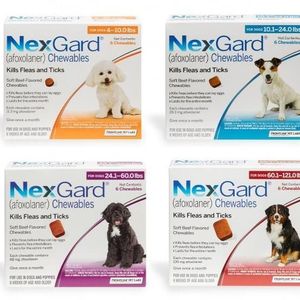
NexGard is a beef-flavoured chewable tablet for monthly use in dogs and puppies eight weeks of age and older that weigh at least four pounds. It’s indicated for the treatment and prevention of flea infestations, and the treatment and control of certain types of tick. NexGard is indicated for the prevention of Lyme disease infections as a direct result of killing carrier ticks. NexGard is manufactured by Boehringer Ingelheim and is available by veterinary prescription only.
Important safety information: Afoxolaner belongs to the isoxazoline class of drugs. The FDA reports that this class of drug has been associated with neurologic adverse effects, like tremors, ataxia, and seizures. Seizures have been reported in dogs receiving isoxazoline class drugs, even in dogs without a history of seizures. Caution is advised when prescribing this drug for dogs with a history of seizures or neurological disorders. Research into a potential link between isoxazolines and seizures is ongoing, and experts continue to evaluate safety data to better understand these reports. The overall consensus is that isoxazolines are generally safe and effective when used as directed.
Images of Afoxolaner
Take action

How it works and what it’s used for
Afoxolaner kills fleas and ticks by affecting their nervous systems, leading to rapid paralysis and death. It’s used to prevent and treat flea infestations as well as control tick-borne illnesses by killing common tick species. Some NexGard products combine afoxolaner with other medications (i.e., milbemycin oxime, moxidectin, pyrantel) to make them effective against additional parasites, like heartworms and certain kinds of intestinal worms.
Specific products vary, but they include:
- NexGard Chewables for Dogs: Contains only afoxolaner and is used against fleas and ticks
- NexGard PLUS Chewables for Dogs: Contains afoxolaner, moxidectin, and pyrantel and is used against fleas, ticks, heartworms, roundworms, and hookworms
In addition to fleas (Ctenocephalides felis), afoxolaner is also used to treat and control the following tick species:
- Black-legged (deer) tick (Ixodes scapularis)
- American dog tick (Dermacentor variabilis)
- Lone star tick (Amblyomma americanum)
- Brown dog tick (Rhipicephalus sanguineus)
- Asian longhorned tick (Haemaphysalis longicornis)
Off-label use notice: While Nexgard is FDA-approved for the prevention and treatment of fleas and ticks, veterinarians may prescribe it for conditions beyond its approved indications, including:
- Demodectic mange
- Sarcoptic mange
- Ear mites
- Off-label use means using an FDA-approved medication at a dosage or for a condition or species that differs from what appears on the official drug label. Some geographical jurisdictions may differ in their official drug labels. While veterinarians often prescribe medications for off-label uses based on their clinical judgment, your veterinarian can determine whether this medication is appropriate for your pet’s specific needs.
How is it given?
NexGard products for dogs are given once monthly as flavored chews and are available in different strengths depending on the weight of the dog.
NexGard can be administered with or without food. Care should be taken that the dog consumes the complete dose, and treated animals should be observed for a few minutes to ensure the entire dose is taken. If all or part of a dose is lost or if vomiting occurs within two hours of administration, redose with another full dose.
For flea treatment and prevention, you can begin giving your dog NexGard at any time of the year. In areas where fleas are common, monthly treatment for the entire year without interruption is recommended. To minimize the likelihood of flea reinfestation, it’s important to treat all animals within a household with an appropriate flea control product.
For tick treatment and control, treatment with NexGard may begin at any time of the year.
Always follow the directions on the drug label provided by your veterinarian.
Side effects of afoxolaner in dogs
Nexgard is tolerated well in most dogs.
Common adverse effects (may affect 1–10 percent of dogs) include:
- Vomiting (with and without blood)
- Diarrhea (with and without blood)
- Dry/flaky skin
- Lethargy
- Appetite loss (anorexia)
Seizures are an adverse effect that are rare/of unknown frequency (scientific evaluation is ongoing to determine the association).
Most dogs who take Nexgard experience no side effects, and when they do occur, they are typically mild and temporary.
Understanding side effects
Reading through the list of side effects may feel alarming, but it’s important to understand how these lists are created. In clinical studies, every symptom that occurs is recorded, whether or not the medication is the cause. For example, if a dog develops diarrhea while in a trial, it must be noted, even if the diarrhea was due to something unrelated. Dogs receiving a placebo often show the same kinds of symptoms. Scientists compare these groups carefully to determine whether a medication is safe and effective.
Reported side effects are those that are reported to Boehringer Ingelheim by a veterinary professional or pet owner who has administered Nexgard. Though the reported symptoms are seen after giving the medication, it’s difficult to confirm that the medication is the direct cause of the symptom noted.
The list of side effects is comprehensive, but it doesn’t mean your dog is likely to experience them. If you’re still unsure, your vet can help you weigh the risks and benefits for your unique situation.
Are side effects more likely to happen with the first dose?
Some side effects appear soon after the first dose because this is the first time the body has been exposed to this drug. Others may not emerge until a medication is used for a longer period of time. Even if a symptom appears shortly after starting a new medication, your vet may need to investigate further to determine whether the medication is truly the cause.
What should I do if I notice changes in my pet right after starting a new medication?
If your pet shows new symptoms after starting a medication, veterinary input is important for understanding whether the change is related to the drug or due to some other cause. This is especially important if you see serious signs needing urgent action like:
- Severe vomiting or diarrhea
- Difficulty breathing
- Trouble standing up
- Pale gums
- Seizures
- Collapse
These symptoms are rarely related to Nexgard, but they always warrant immediate professional evaluation. Decisions about stopping, adjusting, or switching a medication are safest when made with guidance from your vet.
Where can I find more information?
The drug label and package insert contain the most significant information, including the list of side effects seen during scientific studies. These studies are done in a controlled environment to limit external factors from influencing the data. Clinical studies are designed to carefully measure both the benefits and potential risks of a medication.
Though the package label has extensive information, your vet is the best resource to guide you on whether this medication is right for your dog, since they can take into account your dog’s individual condition and circumstance.
For more details about Nexgard, visit the Boehringer Ingelheim website.
Drug interactions with afoxolaner
Nexgard does not appear to have any significant drug interactions with other common pet medications, including vaccines and anesthetics. However, studies are limited. Always check with a veterinarian before giving your pet any new medications, and make sure they are aware of all other medications and supplements you give your pet.
Risk factors
Nexgard is widely used and generally well-tolerated in dogs, but just like with any medication, some dogs may be at a higher risk for side effects than others. Your veterinarian can determine whether it’s the right choice for your dog. Some of the main concerns include:
- Age and size: Nexgard is not approved for puppies under eight weeks of age or any dog weighing less than four pounds. Follow weight and age guidelines exactly.
- Existing health conditions: Veterinarians may recommend using caution when giving Nexgard to a dog with a history of seizures, as some dogs have had seizures while on this medication, even if they haven’t had one before. Afoxolaner is processed by the liver, but no specific risks are listed for pets with liver or kidney disease. If your dog has a chronic illness, check with a veterinarian before starting any new medication.
- Breed considerations: There are no known breed-specific risks for afoxolaner. Afoxolaner is generally safe for dogs with MDR1 drug sensitivity when given as directed.
- Pregnancy and nursing: The safety of afoxolaner for use in pregnant and nursing animals has not been established.
Your veterinarian is the best person to ask about medication safety, as they know your dog’s health and can give advice that fits their needs.
Safety and overdose information
There are important safety details you need to follow if you give your dog medications that contain afoxolaner (Nexgard).
Human safety
- Not for human use; keep out of reach of children.
- Wash hands immediately after handling tablets.
- In case of accidental eye contact, flush eyes immediately with water or saline for at least 15 minutes and then seek medical attention.
- In case of accidental ingestion, seek immediate medical attention.
Storage
- Nexgard should be stored at or below 30° Celsius (86° Fahrenheit) with excursions permitted up to 40° Celsius (104° Fahrenheit).
- Do not use after the expiration date on the label.
- Dispose of unused or expired medication according to local regulations or as directed by your veterinarian or pharmacist.
Use and administration
- For use in dogs only. Use afoxolaner only as directed by a veterinarian and follow the label instructions for dosing.
- Confirm that your pet’s species, age, and weight match the prescribed dose.
- Do not give Nexgard to dogs with a known allergy to afoxolaner or any of its listed ingredients. Nexgard Chewables contain beef flavoring; this may be incompatible for dogs undergoing a food allergy trial that excludes beef or dogs with a known beef allergy.
- For medical decisions (e.g., whether afoxolaner is appropriate for a specific dog), a veterinarian is the best source of individualized guidance.
Overdosage
Contact your veterinarian/a poison control center immediately if a pet receives more than the prescribed amount.
Talk to your vet
Before starting this or any medication, tell your vet if your dog has ever had:
- Side effects on other medications
- An upset stomach
- Liver or kidney problems
- Other medical problems, including allergies, or liver or kidney disease
Make sure your vet knows:
- All other medications and supplements you currently give or are planning to give your dog, including those that don’t require a prescription
- If your dog is pregnant or nursing, or if you plan to breed your dog
When prescribing Nexgard, your vet needs to be aware of every medication and supplement your dog receives, including nonprescription products. This information helps prevent drug interactions, avoids overlapping or repeated treatments, and guides safe dosing and monitoring. It’s also important to let your vet know if your dog is pregnant or nursing, or if you plan to breed your dog.
Accidental ingestion by other pets or people
Veterinary prescription medications are prescribed for an individual pet. A vet determines whether a medication is appropriate after considering the patient’s species, weight, age, physical examination, previously existing conditions, and other details. Never give a veterinary prescription to a person or to a different animal, since the drug may not be safe for them.
If another household pet of any species, including another dog, accidentally receives or ingests the medication, contact a veterinarian, physician, or poison control center immediately for advice.
For complete safety and handling information, including situations when it might be harmful to use this medication, see the package insert for the Nexgard product containing afoxolaner.
Emergency contacts:
- Pet Emergency: Contact your local emergency veterinary clinic
- Pet Poison Helpline: (855) 764-7661 (fee may apply)
- ASPCA Animal Poison Control: (888) 426-4435 (fee may apply)
- Human Poison Control: Contact your local poison control center or emergency services
- FDA Adverse Event Reporting: Report suspected adverse reactions to the FDA Center for Veterinary Medicine at 1-888-FDA-VETS or online at www.fda.gov/reportanimalae
- To report a suspected adverse reaction to a veterinary drug in Canada, contact the Veterinary Drugs Directorate (VDD) by calling 1-877-838-7322 or emailing pv-vet@hc-sc.gc.ca
- Manufacturer: Contact Boehringer Ingelheim Animal Health at: - Canada: 1-800-567-1885 - US: 1-800-325-9167 - UK: +44 (0) 1344 424600 - Global Office: +49 6132 77 0 or visit https://www.boehringer-ingelheim.com/contact-us
Missed dosage
If you miss a dose, give it as soon as possible and continue on the regular schedule from there. Do not double up or add extra doses.
Alternatives to afoxolaner
Based on your pet’s individual circumstance and condition, your vet may recommend other kinds of medications and products in addition to or instead of Nexgard. Your vet may also take into account ease of administration when recommending an alternative to Nexgard.
Isoxazolines are a group of modern flea and tick medicines that all work in a similar way (they kill parasites on your dog after the parasite bites). Common options include sarolaner (SimparicaⓇ), afoxolaner (NexGard/NexGard PLUS), fluralaner (BravectoⓇ chews and some topical forms), and lotilaner (CredelioⓇ, Credelio Quattro). All target fleas and several tick species, but they differ in dosing schedules, tick-species coverage, and add-on protections.
Most products are given monthly, though some fluralaner products last up to 12 weeks for certain ticks. Some products bundle heartworm and intestinal worm prevention (e.g., Simparica TRIOⓇ, NexGard PLUS, Credelio Quattro), while single-ingredient versions focus on fleas and ticks only.
Age/weight minimums and exact label claims vary by product and country, so the best fit often comes down to your dog’s size and lifestyle, and which parasites are common where you live. Isoxazoline products carry similar important safety language, noting that rare neurologic events have been reported. Overall, regulators consider them safe and effective when used as directed.
Alternative or additional treatments outside of the isoxazoline family include:
- Prescription oral and topical (spot-on) medications
- Over-the-counter medications
- Topical treatments
Compared with older, traditional flea products (e.g., over-the-counter pyrethroid or fipronil/imidacloprid spot-ons), isoxazolines are systemic medicines that kill fleas quickly after a bite, cover multiple tick species, and keep working with routine bathing. Recent veterinary guidance often prefers an oral isoxazoline as a first-line option, though many products remain effective when used as labeled.
All of these products have different advantages and disadvantages. Talk to a veterinarian to determine which options are right for you and your unique situation.
Associated conditions
Fleas are associated with:
- Flea allergy dermatitis
- Anemia
- Tapeworms
- Flea-borne bacterial infections (such as bartonellosis)
- Skin wounds and infections from scratching and licking, including hot spots
- Plague
The ticks that afoxolaner is effective against can spread diseases, including:
Other Facts
- If anything unexpected happens when your dog is taking this medication, contact a veterinarian.
- Afoxolaner should be used only for the pet it was prescribed for and only for the specific condition your veterinarian intended.
- Follow the exact dosing instructions. Never adjust the dose, split doses, or share the medication with other pets.
- Afoxolaner is designed to work against external parasites such as fleas and ticks but does not treat internal parasites such as gastrointestinal worms or heartworms.
- Preventing fleas is better than treating an existing infestation. Afoxolaner works best when it’s started before a pet is exposed to fleas or ticks. Year-round use of flea and tick control is recommended for all dogs.
- If your dog has fleas, it’s necessary to treat all pets in the household. Fleas live in the home environment, not just on the pet. Ask a veterinarian about safe and effective treatment for every pet in your home.
- Talk to a veterinarian if you are planning international travel with your pet to ensure you can keep your pet protected against parasites while abroad.
References
Regulatory information
This product information is based on FDA-approved labeling. For the most current prescribing information, safety updates, and regulatory status, consult the official product labeling or contact the manufacturer directly.
This educational content was developed independently by our veterinary editorial team without financial compensation, input, or approval from any pharmaceutical manufacturer. All information is based solely on FDA-approved labeling, published scientific literature, and independent veterinary professional judgment. While our organization may have separate business relationships with pharmaceutical companies, these do not influence our editorial content or medical recommendations.
Our editorial committee


Online veterinarian and virtual pet care services available on-demand.
Available now on Apple and Play stores.