Why dogs dig and when it’s a sign of anxiety



Key takeaways
- Digging is normal for dogs, but panic-driven digging may signal anxiety.
- Recognizing where, when, and how digging occurs helps differentiate normal behavior from distress.
- With veterinary guidance, behavior modification, environmental management, and sometimes medication, dogs may overcome anxiety-related digging and return to calm, normal behavior.

Digging is a normal canine behavior. Many dogs dig for play or exploration, to cool off, to make a comfortable resting spot, or for instinct-driven nesting behaviors. However, it can be frustrating or destructive when it results in holes in the yard, torn flowerbeds, damaged carpet or bedding, or scratched doorways.
Some dog owners may wonder whether their dog’s digging could point toward a deeper concern, such as anxiety. This is especially true when the behavior appears focused on exits or happens when the dog is left alone or during fear-triggering events like storms or fireworks.
If your dog frequently digs, it’s good to know:
- Why dogs dig, and when it may indicate anxiety
- Signs of anxiety-related digging in dogs
- How anxiety-driven behaviors are treated in dogs
Because dogs dig for many different reasons, identifying the underlying motivation is essential. In some cases, digging is a symptom of a deeper issue, like separation anxiety or storm phobia (where the dog is panicking and trying to escape), rather than stimulation-seeking. In these situations, addressing the anxiety itself becomes the true priority. When the underlying anxiety is treated, destructive digging typically improves as the dog becomes more comfortable and secure.
Anxiety-related digging is treated through a combination of behavior modification, environmental control and regulation, and anxiety medication. Each dog is unique and has their own triggers and responses to therapies and training.
The most effective way to treat a dog’s problematic digging is to work with a veterinarian or board-certified behaviorist to identify the underlying cause and determine an appropriate treatment plan. Virtual vet visits allow a vet to review evidence of your dog’s behavior in your own home to determine if the digging is likely anxiety-driven or something else. Virtual visits are also a convenient way for owners to check in with information on their dog’s progress and response to therapies.
Why dogs dig, and when it may indicate anxiety
Digging is a natural canine behavior with many normal motivations. Common reasons include exploration and play, creating a comfortable resting area, hunting or instinct-driven behaviors, and burying or recovering valued items like toys or treats. Pregnant females may dig as part of nesting instinct. Some breeds, especially terriers and other dogs selected for hunting underground prey, are more inclined to dig due to their working heritage. In other cases, owners may notice their dog digging when understimulated or seeking interaction, particularly if the behavior reliably draws attention.
Anxiety can also drive digging behavior, and the context often looks different. Anxiety-related motivations include separation anxiety, fear of loud noises (noise aversion), and stress-related displacement or self-soothing behaviors. For example, a dog in a panic when left alone might claw or dig at doors, window frames, or walls in an attempt to escape; during storms or fireworks, noise-sensitive dogs may dig frantically in a similar, panicky attempt to run away. By contrast, normal digging is usually intermittent, context-appropriate, and occurs without signs of panic or distress.
Signs of anxiety-related digging in dogs
“Dogs digging from boredom or instinct usually focus on outdoor areas like soil, sand, or bedding, and they appear relaxed and engaged rather than frantic,” explains Dr. Jo Myers, a veterinarian on the Vetster platform. “These dogs may dig intermittently, especially when left unsupervised or understimulated, and the behavior typically improves with increased exercise, enrichment, and attention.” In comparison, anxiety-driven digging usually occurs when the dog is left alone or when there are loud sounds, with damage concentrated at exits (e.g., doors, windows, fences) rather than in random outdoor areas.
Other indicators of anxiety in dogs include:
- Panting, drooling, whining, pacing, or destruction focused on escape points
- Trembling, hiding, or salivating during storms or other fear triggers
- Going to the bathroom in the house
Recording details about your dog’s behavior can help determine whether anxiety is contributing to the problem. Short video clips and observations about when the digging occurs and any potential triggers can offer important context. Information about your dog’s environment, such as confinement type, outdoor access, or exposure to loud noises, can also be valuable. These details often help distinguish anxiety-related or panic-driven behaviors from normal digging.
How anxiety-driven behaviors are treated in dogs
Treatment for destructive behaviors linked to anxiety typically involves behavior modification, environmental management, and in some cases, medication. Support from a veterinarian or qualified behavior professional helps ensure treatment is safe, effective, and tailored to your dog’s specific needs. In complex or severe cases, referral to a board-certified veterinary behaviorist may be recommended.
No matter what your dog’s treatment plan looks like, it’s a good idea to track progress with logs or videos to share during follow-up visits. This can help vets adjust strategies as triggers, environment, or anxiety levels change.
Behavior modification
Counterconditioning and desensitizing behavioral training are used to reduce your dog’s sensitivity to anxiety triggers, such as periods of isolation or thunderstorms. Training involves exposing your dog to their trigger a little at a time while using positive reinforcement and rewarding calm behavior. A desensitization training plan can take a long time before results become apparent, and it’s important to avoid any form of punishment, as this can increase fear, anxiety, and confusion.
Environmental management
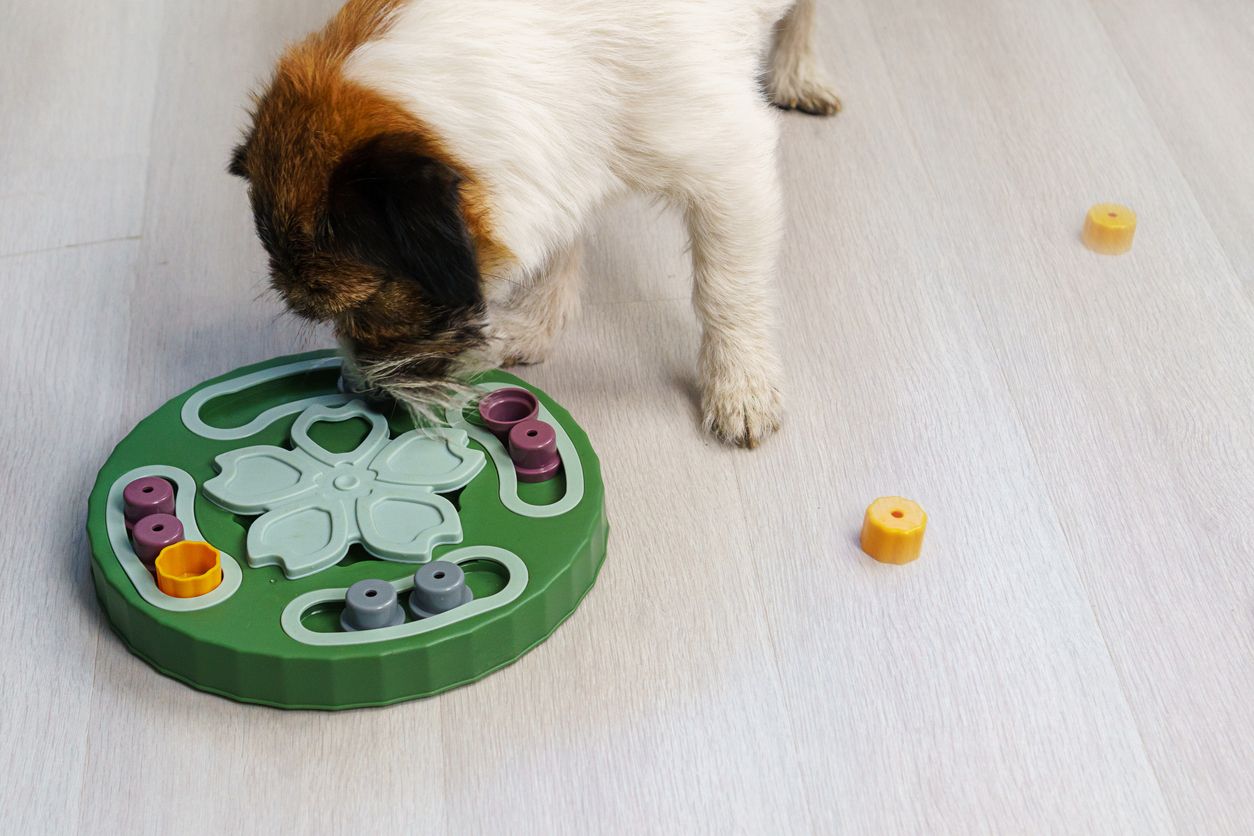
Environmental management can sometimes be enough to ward off undesirable, destructive behaviors such as digging. Until a dog’s anxiety is controlled, restrict access to areas where digging causes damage. Provide structured exercise, scent-based enrichment, and designated digging zones, such as a sandbox with hidden toys. Maintain a predictable daily routine and use calming aids, such as pheromone diffusers or white noise. While away, puzzle toys and other time-consuming games may help distract anxious dogs and redirect their behavior.
Medication
Medication may be recommended when anxiety is significantly affecting a dog’s quality of life or when behavior modification alone is not providing enough relief. Any medication plan should be developed and prescribed by a veterinarian after a full assessment.
Types of medications used for canine anxiety include:
- Long-term options, such as SSRIs (fluoxetine, sertraline) or tricyclic antidepressants (clomipramine)
- Short-acting or situational options, such as trazodone, alprazolam, or dexmedetomidine hydrochloride oromucosal gel (Sileo) for noise-related anxiety
For some dogs, a combination of medications may be appropriate. Regular veterinary follow-up is important to monitor progress, make dosage adjustments, and assess for side effects. Medication is usually most effective when combined with behavior modification and environmental management.
How an online vet can help with anxiety-related behavior problems
An online vet can review video or photo evidence, recommend whether in-person exams or diagnostics are needed, guide behavior modification, monitor progress, and adjust plans. Virtual follow-ups allow convenient, ongoing support for anxiety-related behaviors. In some cases, an online vet can prescribe anxiety medication for your dog.
A veterinarian-client-patient relationship (VCPR) needs to be established before a vet can diagnose a disorder, guide treatment, and prescribe medications. In some regions, a VCPR can be established virtually. In other areas, an in-person visit is required first.
FAQ - Why dogs dig and when it’s a sign of anxiety
Is my dog digging because he’s anxious?
Most dogs dig for normal reasons, such as play, exploration, comfort, or instinct. These behaviors are usually intermittent and not associated with signs of distress. However, some dogs dig when they’re anxious or stressed, and this often appears in specific situations, such as when they’re left alone or during loud or frightening events. Anxiety-related digging may be more intense, frantic, or focused on exits like doors or windows. Observing when, where, and how your dog digs, along with any patterns or triggers, can help a veterinarian determine whether the behavior reflects anxiety or is part of normal canine behavior.
What can you do for a dog with severe anxiety?
Treatment for severe anxiety in dogs usually involves a combination of behavior modification, environmental management, and sometimes, medication prescribed by a veterinarian. Working with a vet or qualified behavior professional helps ensure the underlying cause is identified and an individualized plan is created. Many anxious dogs benefit from structured behavior therapy, adjustments to their daily routine and environment, and appropriate mental and physical enrichment. Medication may be recommended when anxiety is significantly impacting a dog’s quality of life or when behavior therapy alone is not enough.
Why do dogs dig when they are anxious?
Some dogs dig when they feel anxious or frightened. In these situations, digging may serve as a displacement or self-soothing behavior, or it may be part of a panic-driven attempt to escape, such as with separation anxiety or noise aversion. Anxiety-related digging often appears intense, focused, and tied to specific stressors. Most digging, however, is linked to normal motivations, like exploration, play, comfort, or instinct. A veterinarian can help determine what’s driving your dog’s digging and discuss appropriate next steps.
Disclaimer: This article, its content, and its related references do not constitute veterinary advice and should not be considered a substitute for veterinary care. If your pet is showing any symptoms that could indicate a medical emergency, please seek immediate emergency care.