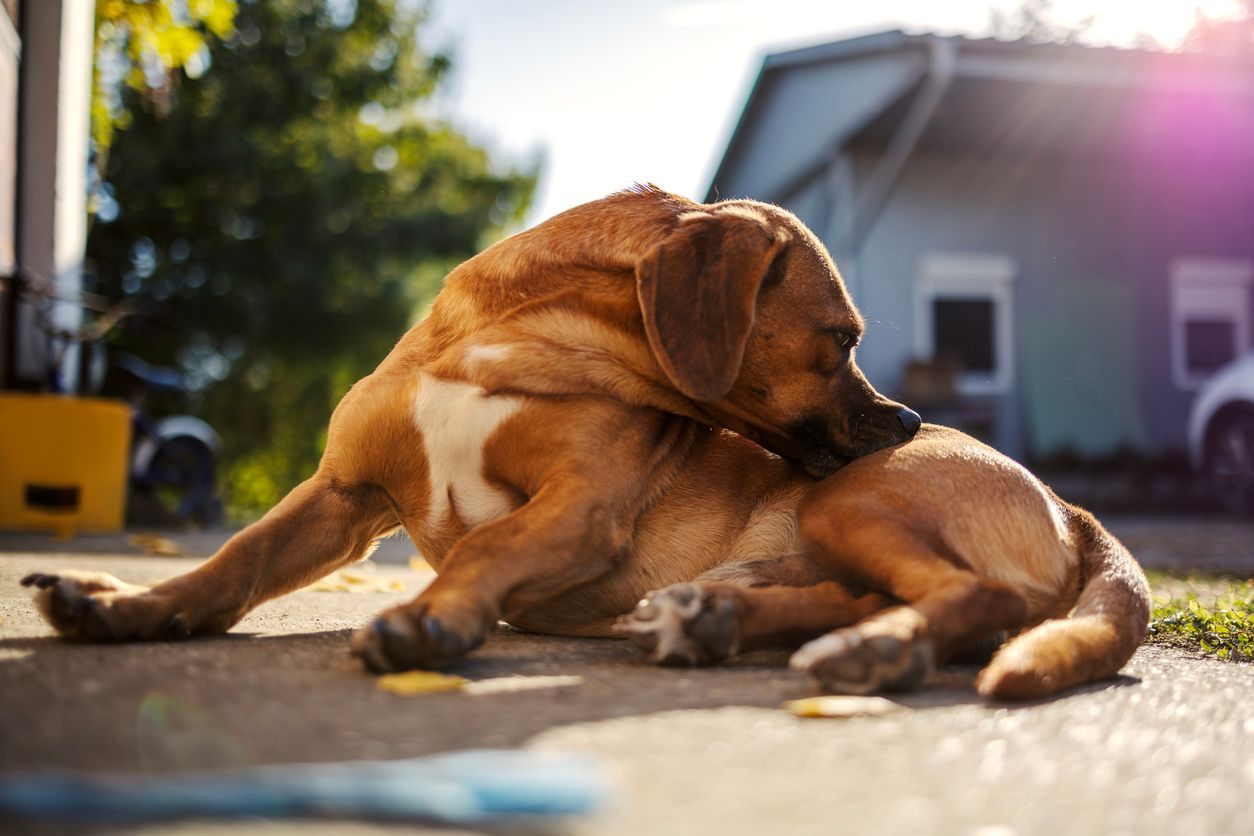
What to do if my dog keeps getting fleas even after treatment


Fully eliminating a flea infestation can be difficult and frustrating for pet parents. Multiple factors can complicate flea control in dogs. Most flea treatments target adult fleas and do not kill the eggs, larvae, and pupae, so treatment must last long enough to ensure the entire flea population has been eliminated (typically a minimum of three months). It’s also essential that all pets in the household receive treatment, and that the products are administered appropriately and on time every month. For pet parents battling fleas, we’ll cover:
- Why flea treatments may appear not to work
- The most effective way to get rid of a flea infestation
- How an online veterinarian can help you treat your dog’s fleas
Some dog owners try to manage flea problems on their own using over-the-counter products or home remedies. However, consulting a veterinarian early can save time, money, and frustration by ensuring you choose an effective product, understand how to use it correctly, and know what results to expect. Fleas often persist after treatment due to the treatment being applied incorrectly or at the wrong dosage, the treatment being stopped too soon, or because the flea-control product being used isn’t effective. An online vet can help choose an effective product, ensure you are using it correctly, and offer guidance to help control a flea infestation.
Why fleas may persist after treatment
There are four main reasons why a dog’s flea treatment may seem not to work:
- Using an ineffective flea-treatment product
- Using an effective product incorrectly
- Not treating all the pets in the household
- Stopping treatment before the flea population is eliminated
Treating fleas is not as simple as a single treatment. In order to keep fleas at bay long term, a vet-recommended flea-control product must be used correctly and consistently. Using a vet-recommended product will ensure it actually works, and with it, you’ll get the professional guidance you need to know how to use it and what to expect.
Even with an effective flea treatment, pet parents may still see fleas on their dog for weeks or even months. Fleas may become more visible immediately after giving a product as they become agitated from the treatment. Most dog flea products kill fleas when they bite rather than repelling them, so owners may continue to spot fleas as they jump onto the dog or even people in the home.
Seeing fleas for some time after treatment does not mean that the product is ineffective, only that the dog has not been treated long enough to kill the entire flea population in the home. Fully eradicating a flea infestation takes several months of diligent treatment because of the flea’s life cycle and how flea products work, and many pet owners discontinue treatment too soon.
The flea life cycle
Knowing the flea life cycle and how flea treatments work can help owners understand why their treatment plan either isn’t working as expected or appears to be ineffective.
There are four stages to a flea’s life cycle: egg, larva, pupa, and adult. Adult fleas live on mammalian hosts, such as dogs and cats, while flea eggs, larvae, and pupae live in the environment.
Different active ingredients in flea-control products target different life stages. However, the eggs, larvae, and pupae, which make up about 95 percent of a flea population, are highly resistant to all forms of treatment and are very difficult to kill. Fleas can grow from eggs to adults in as little as three weeks under ideal conditions, but pupae may remain in their protective cocoons for several months if environmental factors, such as temperature and humidity, aren’t ideal. As a result, it’s necessary to continue using a flea-control product until all the pupae have hatched into adults, which can then be killed.
How to get rid of a dog’s flea infestation
If your dog’s flea treatment doesn’t seem to be working, talk to a veterinarian to determine what the problem may be. Multiple factors can make a flea infestation difficult to manage, including:
- Which product you’re using
- How you use a product and for how long
- The presence of other untreated pets in the household
Get vet-recommended flea control
Not all over-the-counter (OTC) flea-control products are effective or safe. Packaging and marketing for OTC flea-control products can be misleading, especially with terms like “natural,” “chemical-free,” or “vet-approved.” These phrases don’t always reflect proven safety or effectiveness. Additionally, not all products are suitable for every dog, even when they are effective. A veterinarian can recommend both OTC and prescription flea products that are safe and effective and fit your dog’s lifestyle, and offer insight on the best options for your budget.
Check that you are using flea products correctly
Flea treatments, even veterinary-recommended products, must be used correctly to work. When giving flea medication, check that:
- The product dosage matches your dog’s weight
- You are administering the product exactly as directed
- Oral products are not spit out, topical products do not get washed off, and flea collars are touching the skin
- The product is not expired
For flea-control products to work, they must be given on time and exactly as directed. Missing a dose, administering a dose late, or not giving a dose correctly can mean your dog not being protected against fleas.
Give all pets flea treatment and prevention
One of the most common reasons why a dog keeps getting fleas even after treatment is because there’s another animal in the house who isn’t being treated. Fleas can reproduce on any mammalian animal, including dogs, cats, ferrets, and other household pets. In order to eliminate a flea infestation, all mammalian pets in the home must be considered, even if they’re not showing signs of having fleas.
Fleas lay eggs that land in the environment, where they hatch and develop into adults, which quickly find a suitable host. This means that if one pet has fleas, the entire home has fleas. Even if one pet is being treated, fleas can continue to reproduce on any other available mammalian host, allowing a treated pet to become reinfested again.
In most cases, the same products that are used for prevention are used for treatment of an existing infestation. Modern vet-recommended flea-prevention products quickly kill adult fleas before they can reproduce, breaking the reproductive cycle. Therefore, a major part of treating an infestation is ensuring all mammalian household pets are on a safe and effective flea preventative.
It’s important to note that many flea-control products for dogs are toxic to other animals, so make sure you talk to a vet about products that are safe for pets such as cats, rabbits, and ferrets and keep other pets separated when applying topical medications to your dog.
Deep clean the home
Deep cleaning helps to remove flea eggs, larvae, and pupae before they become adults. Meticulously cleaning the home can help eradicate fleas in the environment while pets are being treated. Pet parents can help get rid of fleas in the home by:
- Regularly vacuuming all carpets, rugs, upholstery, curtains, and other fabrics in the home
- Emptying vacuum bags or canisters outdoors immediately after cleaning
- Thoroughly washing bedding, dog beds, and soft toys in hot, soapy water
- Steam-cleaning furniture, carpet, curtains, and other surfaces
Pets still require flea treatment even with deep cleaning of the home; cleaning is not a substitute for adequate flea control in pets.
Stay consistent
It’s important to stay vigilant and consistent when treating fleas to fully eliminate a flea infestation. Do not stop just because you do not see any fleas. The flea population can quickly grow again if even just a few fleas have survived the treatment or if your pet is exposed to new fleas.
Flea pupae can remain in the environment for several months before emerging as breeding adults. It’s best to keep dogs and other pets in the household on year-round flea prevention to maintain a flea-free environment as well as to prevent flea-borne illnesses, flea allergy dermatitis, and anemia.
How an online vet can help pet owners control flea infestations
Online veterinarians can recommend a flea treatment based on your dog’s size, lifestyle, and medical history, and the presence of other pets or children in the home. An online vet can also ensure you’re giving flea products correctly and help you understand what to expect when using them. Online prescriptions may be available in some states at the vet’s discretion.*
Veterinarians can prescribe medications via telehealth when a valid veterinary–client–patient relationship (VCPR) exists. A VCPR can be established remotely in some states and provinces, while in others, an in-person examination is required. Please note that vets are not obligated to write a prescription — this is done at their sole discretion.
FAQ - What to do if my dog keeps getting fleas even after treatment
Why does my dog still have fleas after flea treatment?
There are a lot of reasons why your dog may still have fleas after treatment. Common reasons include using the wrong product, using the right product incorrectly, or not giving a product enough time to work. Even if you’re correctly using an effective product, it takes time to eliminate a flea infestation — usually at least three months. Check with a veterinarian to ensure the flea product you’re using is effective and that you’re using it properly. Once that’s confirmed, keep it up and give it the necessary time to work.
How long can fleas live in the home?
Fleas can survive for more than a year if conditions are right. As eggs and pupae, fleas are resistant to treatment and can survive in the home for several months before hatching into flea larvae or emerging as adults. Since fleas reproduce rapidly and lay large numbers of eggs every day, an infestation can quickly become severe.
Do dog fleas ever fully go away?
Flea infestations take a long time to eradicate, even if they’re being treated properly. To completely get rid of a dog’s fleas, it’s necessary to correctly use a vet-approved flea medication on all mammalian pets in the household for a minimum of three months (often longer), then keep them on prevention. Fleas are unlikely to go away if you are relying on natural or home remedies, are only removing a few of the adult fleas on the pet with a flea comb or shampoo, aren’t treating all the pets in the house, or don’t continue treating over time. Talk to a veterinarian about how to best get your dog’s fleas under control.
Disclaimer: This article, its content, and its related references do not constitute veterinary advice and should not be considered a substitute for veterinary care. If your pet is showing any symptoms that could indicate a medical emergency, please seek immediate emergency care.