Is my dog chewing on wood because of anxiety?


Key takeaways
- Chewing is normal for dogs, but some patterns of wood chewing may signal anxiety or panic.
- Detecting the pattern (when, where, and how chewing occurs) and looking for other associated symptoms helps your vet identify anxiety as the cause.
- With professional guidance, behavior modification, and sometimes medication, many dogs can overcome anxiety-related chewing and feel secure again.

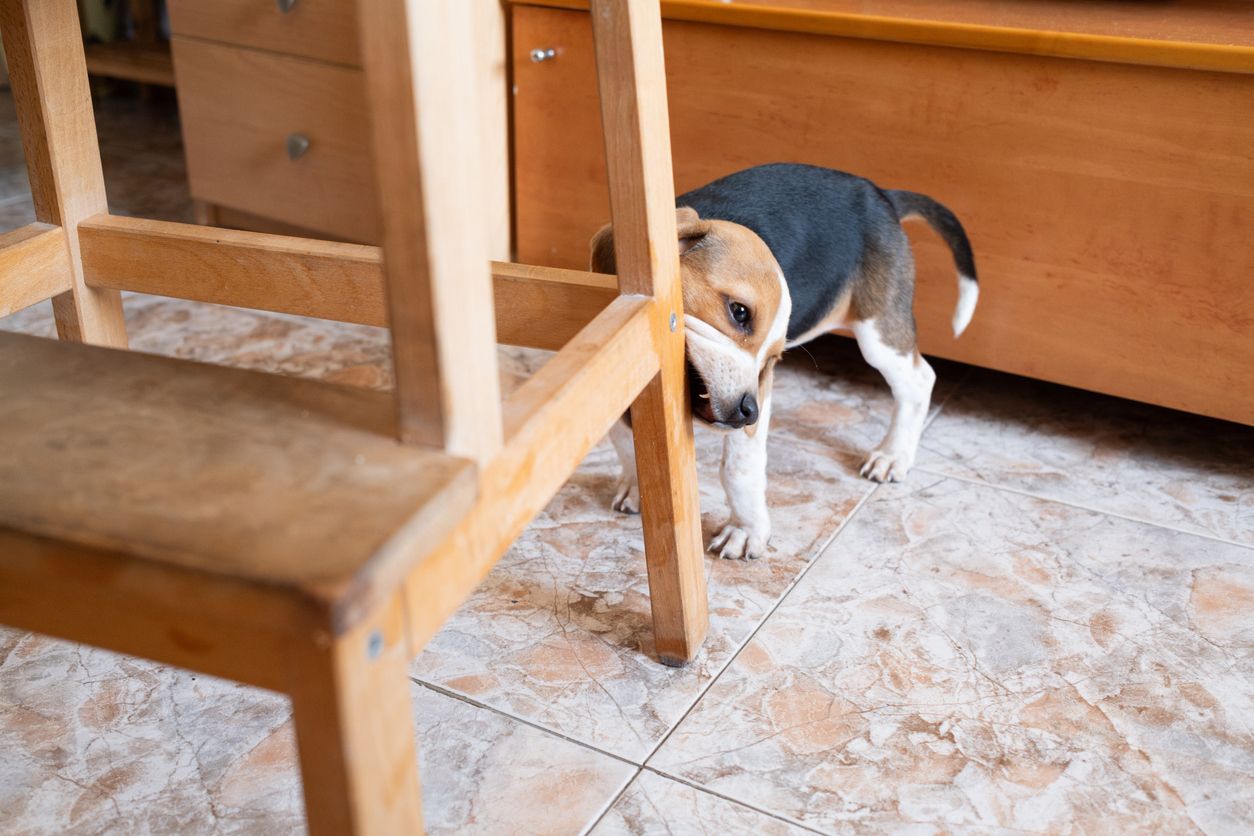
Wood chewing in dogs may present as gnawing on sticks, chewing wood furniture, or even biting at wooden baseboards, door frames, or window trim. Some chewing habits are normal for dogs and are a way for them to play, get mental stimulation, and explore their environment. Even when chewing is normal, it may still become destructive. However, when chewing wood appears to be linked to distress or panic, or occurs in response to triggers like being left home alone or loud noises, it may point to anxiety-related behavior rather than a normal canine pastime. To learn more about destructive chewing in dogs, ask your vet:
- Why dogs chew on wood and when it’s abnormal
- Signs of anxiety-driven chewing in dogs
- How anxious chewing is treated in dogs
Chewing that is hard to interrupt, appears alongside other signs (e.g., panting or drooling), or happens only after specific triggers (e.g., being left alone or when there are loud noises) may indicate your dog’s behavior is linked to anxiety. Noting when and where your dog chews and any other symptoms they may have can help clarify the trigger. Conditions like separation anxiety and noise aversion can include destructive chewing among their symptoms, since some dogs may chew at doors, window frames, or other wood surfaces while trying to escape or cope with fear.
Treating anxious chewing behavior isn’t as simple as providing more chew toys or walks. Treatment for panic- and anxiety-driven chewing involves a combination of behavior modification, environmental changes, and anxiety medication. An online vet can assist with the initial assessment and help determine if an in-person vet visit is needed. If your dog is diagnosed with anxiety, virtual visits are a great way to follow up with your vet about your dog’s progress and response to treatment.
Why dogs chew on wood and when it’s abnormal
Chewing behavior is natural in dogs, and there are several reasons why a dog may chew on objects:
- Normal exploration and play, especially in puppies
- Relieving teething discomfort in puppies during tooth eruption
- Relieving boredom or understimulation
- Learned behavior or as a way to get attention
- Response to fear or distress (panic or anxiety)
- Sign of a compulsive behavior disorder
- Medical causes, such as pica or nausea due to pancreatitis
Even when your dog’s chewing is a normal behavior, it can still result in damage around the home. Understanding the reason behind the chewing helps identify the most effective way to manage it. If your dog’s chewing seems excessive, is difficult to redirect, or is tied to specific situations, it may indicate their behavior is linked to an underlying issue rather than simple play or exploration.
Certain patterns can suggest your dog’s chewing is abnormal:
- It only happens after recognizable triggers, like loud noises or being left alone.
- Damage is concentrated around doors, window frames, or other exit points, reflecting panic-driven behavior.
- It’s repetitive, intense, or difficult to interrupt.
- It often leads to self-injury or damage to the mouth.
- It’s accompanied by other signs of stress, discomfort, or illness.
A veterinarian can help determine whether your dog’s chewing behavior is within the range of normal or may be associated with anxiety, compulsive tendencies, boredom, or something else. Professional guidance can be especially helpful when chewing results in injury, appears to be escalating, or is challenging to manage.
Signs of anxiety-driven chewing in dogs
Separation anxiety and noise aversion are two anxiety-related conditions where dogs may show chewing behaviors linked to distress. In dogs with separation anxiety, chewing typically occurs only when the dog is alone. In dogs with noise aversion, chewing may appear during or immediately after exposure to loud or unpredictable sounds. In both conditions, damage often occurs around doors, window frames, or other exit points, suggesting the dog may be panicking or attempting to escape.
Chewing as a result of anxiety is usually accompanied by additional signs. To help detect whether your dog’s chewing is driven by anxiety, note behaviors such as pacing, whining, panting, drooling, restlessness, vocalizing, house soiling, or attempts to escape. Dogs with separation anxiety may also shadow their caregivers, show distress during pre-departure cues, or have accidents when left alone. Dogs with noise aversion may hide, tremble, seek constant reassurance, or remain hypervigilant during or after loud sounds.
How anxious chewing is treated in dogs

Treatment for anxiety-driven chewing in dogs depends on the underlying cause. Professional support from a veterinarian or a board-certified veterinary behaviorist is the best way to confirm what’s driving the behavior and to find the treatment approach with the greatest chance of success. If the wood chewing turns out to be associated with separation anxiety or another behavior disorder, professional guidance is the best way to access safe and effective treatment, which usually takes time and includes behavior modification, environmental management, and medication. Sometimes referral to a board-certified veterinary behaviorist is recommended.
Behavior modification
Behavior modification refers to training strategies that help dogs change how they react to situations that cause fear, anxiety, or stress. These methods focus on teaching new, calmer behaviors to gradually reduce your dog’s emotional response to triggers.
For anxiety-related chewing, behavior modification commonly involves desensitization and counterconditioning. This means introducing the dog to very small, carefully controlled versions of the trigger, keeping them below the point where they show any signs of anxiety, then pairing the potentially stressful situation with positive experiences. Examples include extremely short periods of being alone or very low-volume recordings of noises. While the dog remains comfortable and relaxed, these exposures are paired with treats or praise. The difficulty is increased gradually and only at a pace the dog can handle.
Punishing your dog for undesirable behavior is not recommended, since it can increase fear, worsen anxiety, and make progress more difficult.
Environmental management
Environmental management refers to adjusting the dog’s surroundings and daily routine to make anxiety-driven chewing less likely while behavior modification is underway. These strategies help reduce opportunities for unwanted chewing and support a calmer, more predictable environment for your dog.
This may include limiting access to wood or other items the dog tends to chew and providing safe alternatives, such as appropriate chew toys and food-puzzle feeders. When access to wood can’t be controlled, some caretakers use pet-safe deterrent sprays, although their effectiveness is variable. Maintaining a consistent daily routine for meals, play, rest, and potty breaks can help some anxious dogs feel more secure. Certain calming aids, such as pheromone diffusers or body wraps, may also support relaxation.
A vet can help identify which environmental strategies, enrichment options, and calming aids are most appropriate for your dog’s needs and situation.
Medication
Medication can play an important role in treating anxiety-driven chewing by helping dogs feel calm enough to benefit from behavior modification and environmental management. “Medication is used to support behavior modification and is not used as a replacement, meaning training is a necessary part of treatment whether a dog is recommended medication or not,” explains Dr. Jo Myers, a veterinarian on the Vetster platform.
Commonly used medication options include:
- Daily long-term maintenance medications for chronic anxiety disorders, such as SSRIs (fluoxetine, sertraline) or tricyclic antidepressants (clomipramine)
- Short-acting or situational medications, such as trazodone, alprazolam, or dexmedetomidine hydrochloride oromucosal gel (Sileo), for predictable events like fireworks or storms
- Combinations of long-term and short-acting medications, depending on the triggers and how severe the anxiety is
Regular follow-up with the prescribing vet is important to monitor progress, adjust dosing, and watch for side effects. Many dogs take medication for several months while behavior modification takes effect, and some may benefit from long-term medication use. Virtual rechecks with an online vet can make ongoing monitoring convenient.
Over-the-counter supplements or human medications should not be given without veterinary guidance; they may not provide the intended effect, and some can be harmful. A vet can help determine which treatments are appropriate and safe for your dog’s specific situation.
How an online vet can help
Online vets can help with the initial assessment as well as treatment guidance and support for dogs with anxiety. A virtual vet can review videos, photos, and owner observations to identify whether chewing behaviors fit an anxiety pattern or may have another cause.
In order to provide a diagnosis, prescription, or treatment plan, a veterinarian-client-patient relationship (VCPR) needs to be established. In many regions, this relationship can be established remotely. When a VCPR is legally recognized, the vet can diagnose, prescribe medication, and create a treatment plan online. In other jurisdictions, an in-person visit is required before any prescription or formal diagnosis can be made.
Once a VCPR is established, virtual vets can offer professional advice on managing anxiety-driven chewing with behavior modification and environmental changes, and explain when prescription therapy may be appropriate and guide owners through the next steps. Virtual visits can also be a convenient way to follow up with progress reports and behavioral logs. Virtual care supports consistent, evidence-based management of anxiety-related behaviors from home.
FAQ - Why dogs chew on wood, and when it’s a sign of anxiety
Is it okay for dogs to chew on wood?
Chewing on sticks or other wooden items can be a normal behavior for some dogs, especially puppies, who explore the world with their mouths or chew to ease teething discomfort. However, wood can splinter easily and may lead to injuries, such as cuts in the mouth, broken teeth, or intestinal obstruction if pieces are swallowed. For this reason, chewing on wood can be unsafe, even when the behavior itself is normal.
Chewing that seems excessive, is difficult to interrupt, or happens only in specific situations (such as when a dog is left alone or when there are loud noises) may be an indication that anxiety or another underlying issue is involved. If you have concerns about your dog’s wood-chewing habits, a veterinarian can help determine whether the behavior is within the range of normal or may be linked to stress, discomfort, or a behavioral disorder.
Why is my dog constantly chewing on wood?
Some dogs chew on wood frequently because chewing is a normal part of exploring their environment or to relieve teething discomfort. When people describe their dog as “constantly” chewing, it often means the behavior feels excessive, is happening more than expected, or is causing damage.
If your dog’s wood chewing seems unusually intense, is difficult to interrupt, causes injury, or appears to happen only in certain situations, it may be an indication that an underlying issue, such as boredom, stress, or anxiety, could be involved. Keeping track of when and where the chewing occurs, possible triggers, and other signs of stress or discomfort can help a veterinarian determine what is contributing to the behavior.
If you’re concerned that your dog’s wood chewing is becoming excessive or unsafe, a veterinarian can help you identify whether the behavior is within the range of normal.
Do dogs grow out of chewing on wood?
Chewing is a normal behavior for both puppies and adult dogs. Many puppies chew more during exploration, play, and teething, and some naturally chew less as they mature and learn to engage with appropriate chew items. However, not all dogs grow out of chewing on wood. Some continue the behavior because it’s enjoyable or has become a habit, while others may show frequent or intense chewing due to factors such as boredom, under-stimulation, stress, or anxiety.
Chewing that results in injury, is difficult to interrupt, or occurs in specific patterns (such as only when a dog is alone or when there are loud noises) may indicate that an underlying behavioral concern needs attention. A veterinarian can help determine whether your dog’s chewing is within the range of normal or not, and can offer guidance on safer chew options and strategies to manage the behavior.
Disclaimer: This article, its content, and its related references do not constitute veterinary advice and should not be considered a substitute for veterinary care. If your pet is showing any symptoms that could indicate a medical emergency, please seek immediate emergency care.