The link between weight loss and nutritional deficiencies in cats


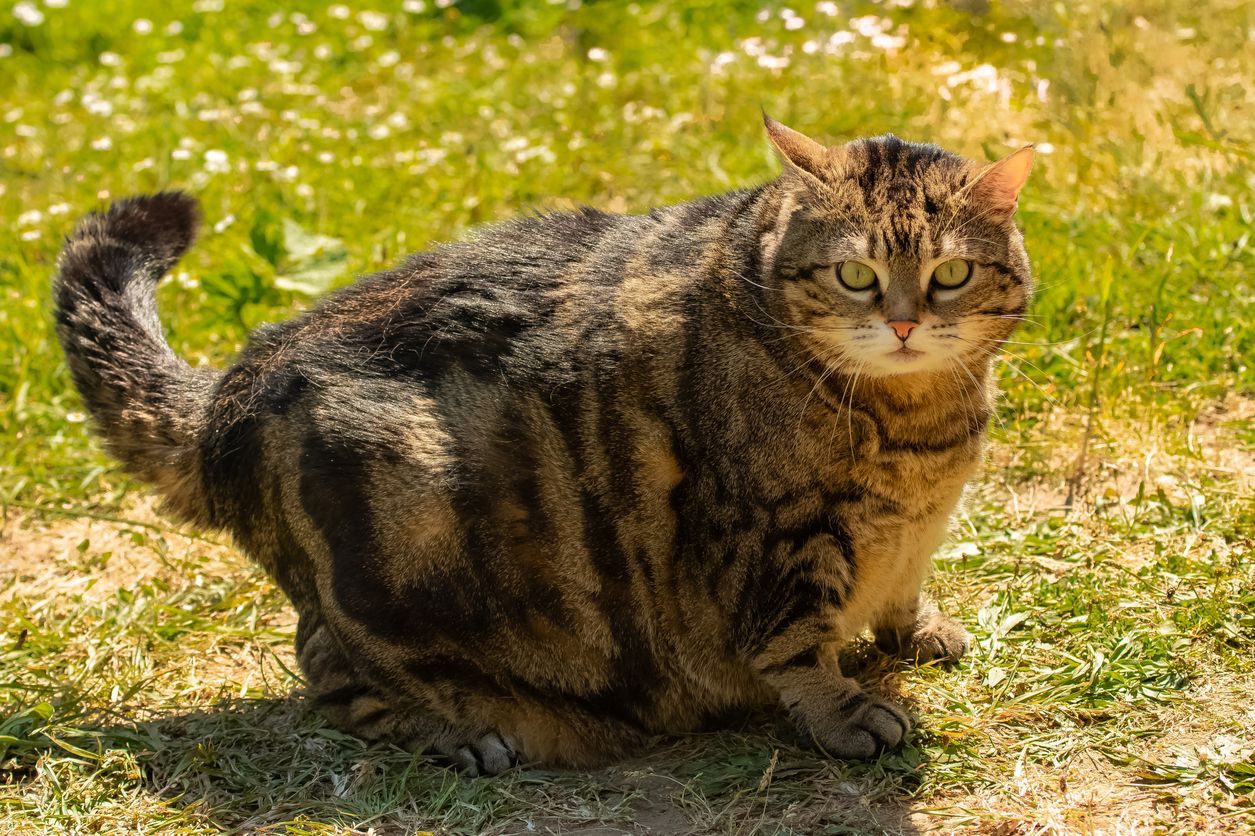
Obesity in cats is very common, and reducing caloric intake is necessary for them to lose excess weight. However, cutting back on an overweight cat’s food intake, even if the food is labeled as nutritionally complete and balanced, can result in nutritional deficiencies if the portion given to the cat is smaller than the quantity used to determine the food’s nutritional adequacy. If you’re trying to help your cat get to a healthy weight, read on to learn:
- What a cat’s ideal weight is
- How cats can have a deficiency in essential nutrients
- Why reducing portion size can lead to a nutritional deficiency
- How to safely help your cat lose weight
It’s important for cat owners to work with a veterinarian to create a safe and effective plan to help overweight cats reach their ideal weight. Some cats may benefit from switching to a cat food formulated for weight loss, which can help them feel full as well as provide adequate nutrient levels while reducing calorie intake.
What is an ideal weight for cats?
A cat’s ideal body weight is determined by their body condition score rather than a numerical reading on a scale. A body condition score chart is a nine-point rating system with a cat’s ideal weight falling at a score of four or five. At this score, the ribs are not visible but can be easily felt without much fat over them. Cats at a healthy weight also have a well-defined waist and an abdominal tuck without excess abdominal fat, though cat owners should know that it’s often more difficult to identify an abdominal tuck in a cat who has a prominent primordial pouch, as this low-hanging skin flap can easily be mistaken for fat.
Obesity in cats is very common. Cats are considered obese when they weigh 20 percent more than their ideal weight. Obese cats have excess fat deposits on their ribs, belly, and waist. Research suggests it’s common for cat owners to misjudge their pet’s body condition, often underestimating weight issues because it can be difficult to determine without knowing what to look for. This is why guidance from a veterinarian is important when evaluating a cat’s weight and overall health. Feline obesity can lower a cat’s overall life expectancy and quality of life, and puts them more at risk for various health issues.
What is a nutritional deficiency?
A nutritional deficiency occurs when a cat doesn’t have enough of one or more essential nutrients. In most cases of nutritional deficiency in cats, the cat’s diet does not lack essential nutrients. Instead, a medical condition either prevents them from absorbing or properly utilizing a nutrient, or causes excess nutrient loss through the stool or urine. It’s rare for a healthy cat to develop a nutritional deficiency if they’re eating a commercial diet.
Diets formulated to meet standards specified by the Association of American Feed Control Officials (AAFCO) are nutritionally complete and balanced for the majority of cats. Many commercial cat foods are AAFCO compliant. To find a nutritionally balanced diet, look for the AAFCO seal on the food’s label. This statement tells consumers more about the nutritional adequacy and suitability for their pet’s needs than any other part of the label, including the ingredients list and guaranteed analysis.
Healthy cats who are eating AAFCO-compliant foods at standard portions for their body size are highly unlikely to have a nutritional deficiency. However, cutting food intake in an attempt to help an obese cat lose weight may on occasion lead to nutritional deficiencies due to the reduced portion no longer containing enough nutrients for the cat’s body size.
As a general rule, deficiencies develop gradually rather than suddenly. “It typically takes several weeks or longer for the effects of a dietary change, whether beneficial or harmful, to become apparent,” explains Dr. Jo Myers. “Because of this, nutritional deficiencies are rarely considered emergencies at their onset. However, because signs can be subtle at first, deficiencies can go unnoticed for an extended period of time and may eventually lead to severe or life-threatening health issues that require emergency care.”
How caloric restriction for weight loss can lead to nutritional deficiencies in cats
In order to lose weight, cats need to burn more daily calories than they ingest. However, simply feeding your cat less food may lead to health problems as a result of nutritional deficiency. Most regular cat foods are formulated as maintenance diets, meaning they’re designed to keep a healthy cat at the same weight rather than help them lose weight. If the portion is reduced significantly below the recommended amount, it lowers the intake of nutrients along with calories. Over time, this might increase the risk of nutritional deficiencies even if the food itself is complete and balanced when fed at the intended amount.
It can be complicated to determine if cutting an overweight cat’s portion size may lead to deficiencies in essential nutrients. Though AAFCO diets are formulated for the average cat, nutrient needs vary between individuals. Factors such as age, physical activity level, metabolism, overall health, and breed can influence how much of a given nutrient a cat needs. This makes it difficult to predict which, if any, nutrients might fall below the cat’s individual requirement without a detailed nutritional assessment.
You should talk to a veterinarian before reducing your cat’s portion size or changing their food. A veterinarian can help determine how much to feed your cat based on their individual needs in order to help them lose weight, prevent nutrient deficiencies, and avoid losing weight too quickly.
Safe weight loss for overweight cats
It’s important to work with a veterinarian to first determine that your feline companion needs to lose weight, then create a safe weight-loss plan. Cutting caloric intake is essential for weight loss. Some cats may be able to slowly cut back on their normal food, while others may benefit from switching to a cat food that’s formulated for weight loss. These foods are designed to restrict calories while still providing the right amount of nutrients.
Cats who do not eat enough, whether due to health issues or limiting food intake, are at risk of a dangerous condition called hepatic lipidosis, or fatty liver disease, in addition to nutritional deficiencies. Unlike dogs and humans, who are more tolerant of short-term fasting, a cat can get very ill within a couple of days of not eating enough.
Fatty liver disease occurs when fat is broken down in the body too quickly as a result of fasting or prolonged lack of food, overwhelming the liver and causing illness. In addition to several other health risks associated with feline obesity, overweight or obese cats are more at risk for fatty liver disease than cats at a healthy weight.
It’s important for pet parents to work with a veterinarian while helping their cat lose weight, not only to avoid nutritional deficiencies but also to ensure a safe rate of weight loss. An online vet can help by creating a weight-loss program for your cat based on their individual needs. Pet owners can check in regularly with virtual vet visits to track progress and adjust the plan as needed.
FAQ - The link between weight loss and nutritional deficiencies in cats
How do you make a safe weight-loss plan for cats?
It’s important to work with a veterinarian when helping your cat lose excess weight. While caloric restriction is needed, lowering portion size can potentially lead to nutritional deficiencies, even with high-quality foods. In addition, rapid weight loss can cause serious health issues. You should always work with a vet to choose a food and portion size that will help your cat lose weight at a healthy rate while reducing the risk of nutrient deficiency. Helping an adult cat lose excess weight can help improve their quality of life, reduce their risk of various health conditions, and extend their life expectancy.
What happens if a cat doesn’t eat enough?
If a cat doesn’t eat enough, even for just a couple of days, they can develop a life-threatening condition called hepatic lipidosis, or fatty liver disease. Hepatic lipidosis in cats results when the liver is overwhelmed by processing fat for energy. The liver is then unable to filter toxins from the body, leading to widespread organ damage and illness. In addition to fatty liver disease, long-term inadequate food intake may also eventually lead to nutritional deficiencies, although this is less common and typically develops more slowly.
What’s the best diet to help a cat lose weight?
Weight-loss foods may be beneficial for cats who need to lose extra weight. These foods restrict calorie intake while at the same time help cats feel full and minimize the risk of a nutrient deficiency. Asking a vet to help you choose the right weight-loss food and portion size ensures your cat loses weight at a safe rate and the food is nutritionally balanced.
Disclaimer: This article, its content, and its related references do not constitute veterinary advice and should not be considered a substitute for veterinary care. If your pet is showing any symptoms that could indicate a medical emergency, please seek immediate emergency care.